
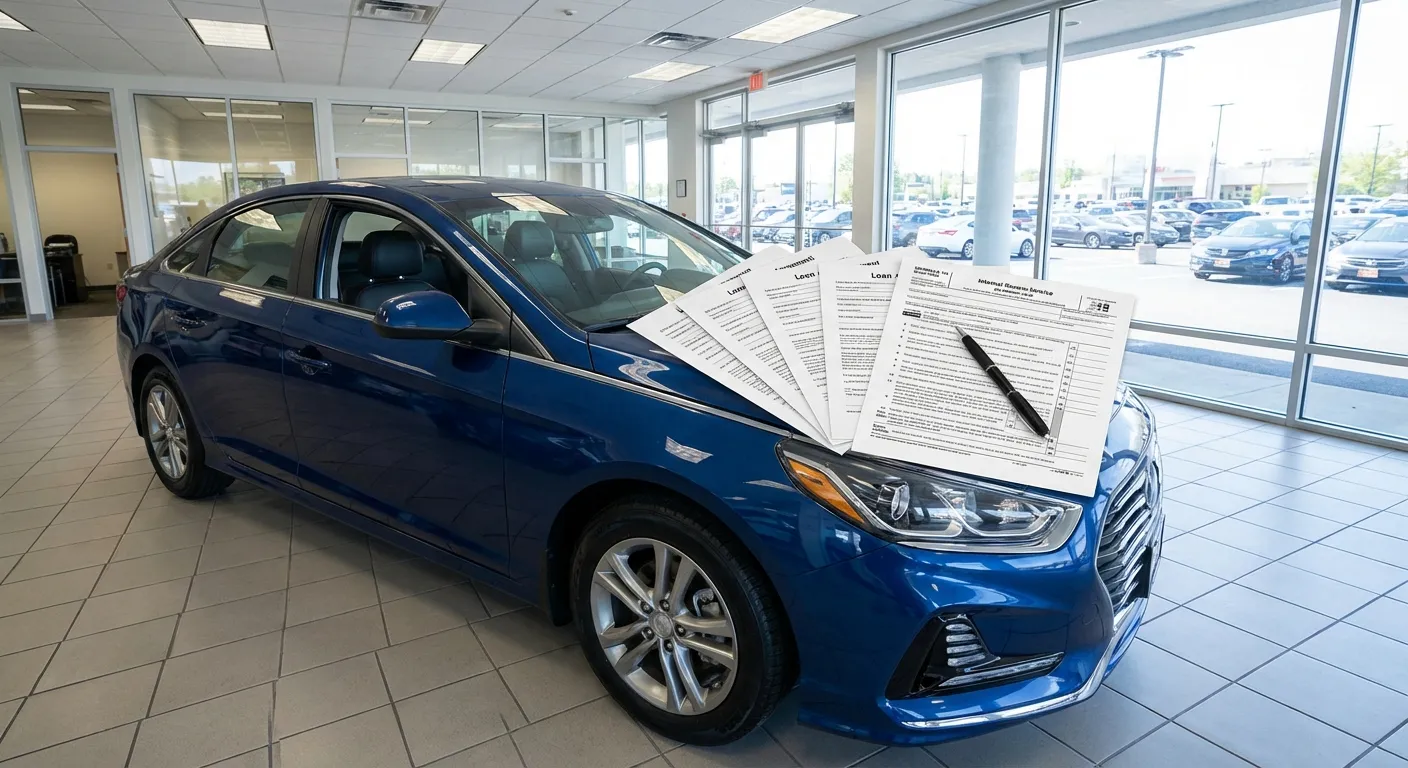
Can you deduct car loan interest on your taxes? Starting with the 2025 tax year (filed in early 2026), yes. The "One, Big, Beautiful Bill" (OBBB), signed into law on July 4, 2025, created a new deduction allowing eligible taxpayers to deduct up to $10,000 per year in qualified car loan interest. The deduction applies to qualifying new vehicles purchased between 2025 and 2028, and it's available whether you take the standard deduction or itemize.
This is a significant change. Car loan interest was never deductible for personal vehicles before the OBBB. Mortgage interest has been deductible for decades, but auto loan interest only qualified if the vehicle was used for business. Now, if you bought a qualifying new car and financed it, the interest you paid during 2025 can reduce your taxable income this filing season. The IRS has already issued guidance, and lenders will begin sending Form 1098-VLI for the 2026 tax year for anyone who paid $600 or more in qualifying interest.
Who Qualifies for the Deduction
The deduction isn't available to everyone. Both you and your vehicle need to meet specific criteria.
Income limits apply. The deduction phases out for higher earners. Single filers start losing the deduction at $100,000 of modified adjusted gross income (MAGI) and it disappears entirely at $150,000. Joint filers phase out between $200,000 and $250,000. The reduction works out to $200 less in deduction for every $1,000 of income over the threshold.
Here's a concrete example from the IRS: A single filer with $120,600 in MAGI who paid $12,000 in qualifying interest would first hit the $10,000 cap, then subtract $4,120 for the phase-out (20.6 increments of $1,000 over $100,000, at $200 each), claiming a $5,880 deduction. For a deeper look at how this and other new deductions affect your filing, our guide on filing taxes for free in 2026 walks through the entire process.
Filing status matters. The $10,000 cap is the same for all filing statuses. Married filing jointly doesn't double it. If both spouses have qualifying vehicle loans, the combined deduction still maxes at $10,000.
Which Vehicles Qualify
Not every new car purchase makes the cut. The vehicle requirements are specific and worth checking before you assume your loan interest qualifies.
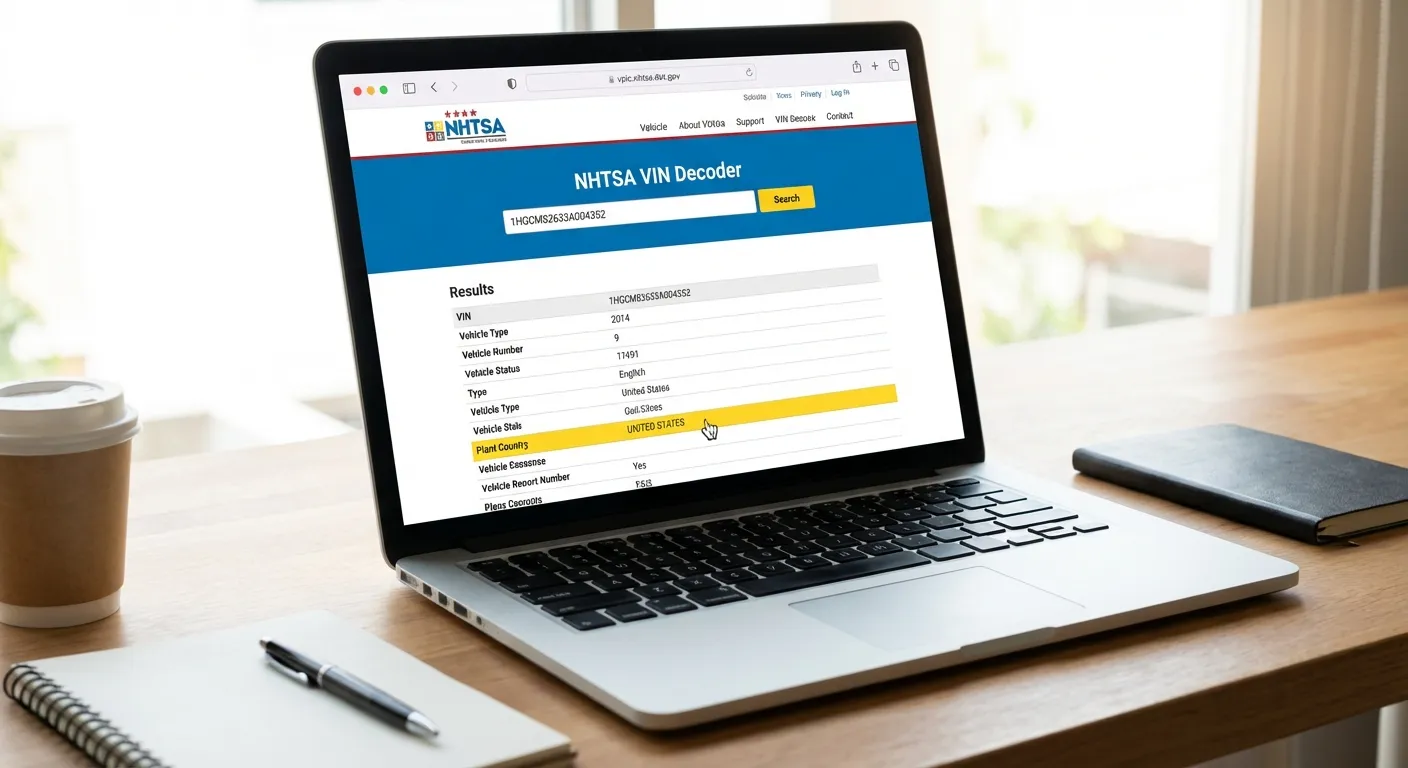
Final assembly must be in the United States. This is about where the vehicle was assembled, not where the brand is headquartered. A Toyota Camry assembled in Georgetown, Kentucky qualifies. A BMW X3 assembled in Spartanburg, South Carolina qualifies. A vehicle from an American brand assembled in Mexico does not. To verify your vehicle's assembly location, check the window sticker (Monroney label) or enter your VIN at the NHTSA VIN Decoder.
The vehicle must be new. Used cars don't qualify. The IRS defines "new" as a vehicle whose original use begins with you, the taxpayer. If the vehicle was previously registered or titled (even by a dealership as a demo or loaner), it doesn't count.
Weight and type restrictions exist. The vehicle must have a gross vehicle weight rating under 14,000 pounds and be a car, minivan, van, SUV, pickup truck, or motorcycle. It must be designed for use on public roads. ATVs, golf carts, and off-road vehicles don't qualify.
Personal use is required. The vehicle must be used more than 50% of the time for personal purposes. If you use it primarily for business, the standard business vehicle deduction rules apply instead. You can't double-dip by claiming both the OBBB deduction and business vehicle deductions on the same car.
How to Claim It on Your Tax Return
The mechanics of claiming the deduction are straightforward, but you need to know where to look.
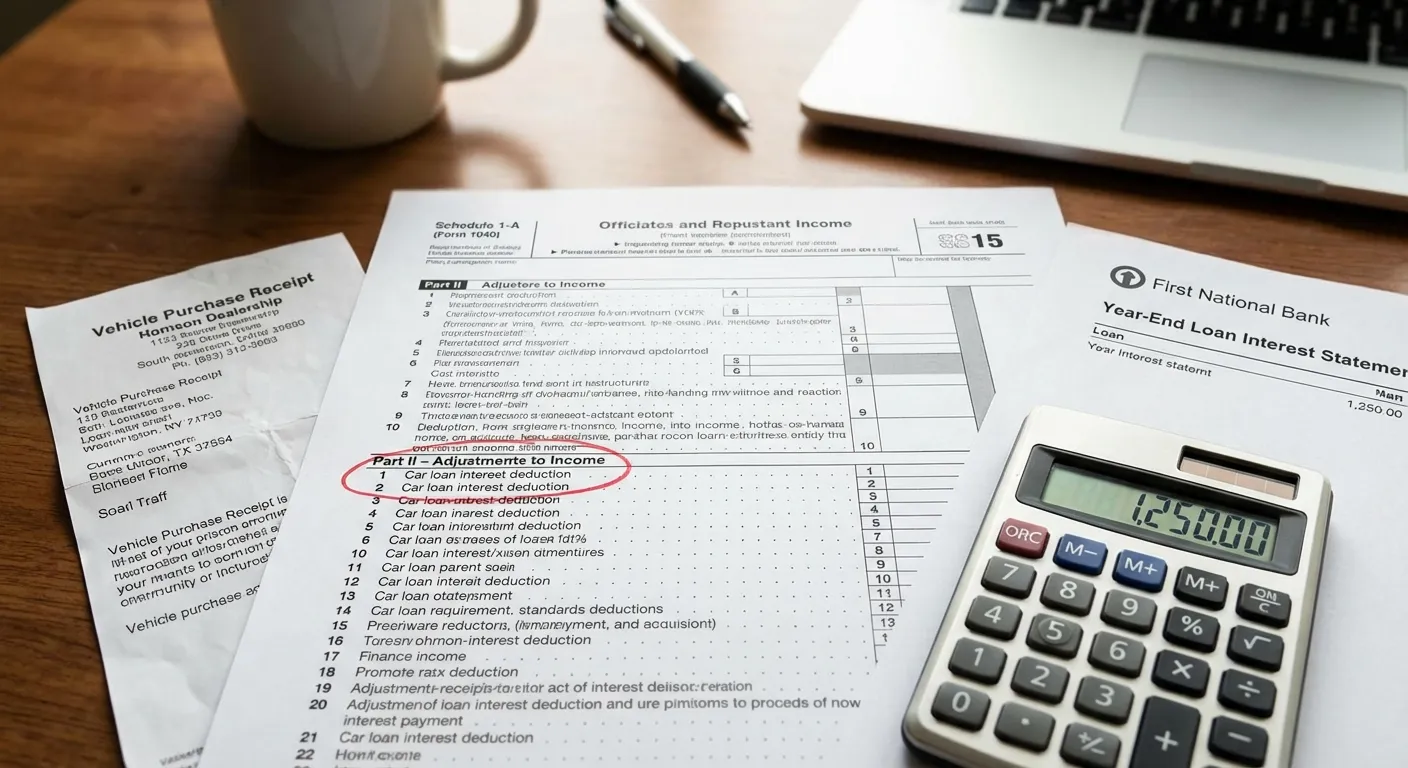
File Schedule 1-A. This is a new form created specifically for the OBBB deductions (car loan interest, no tax on tips, and no tax on overtime). Schedule 1-A attaches to your Form 1040. If you're using tax software, the program should prompt you when you indicate you paid car loan interest.
You'll need your VIN. The form requires your vehicle identification number to verify the vehicle meets the assembly and type requirements.
Gather your interest documentation. For the 2025 tax year, your lender may not issue a formal 1098-VLI (that requirement starts with the 2026 tax year). Instead, check your year-end loan statement or contact your lender for a summary of interest paid during 2025. Starting with the 2026 tax year, lenders must send Form 1098-VLI to anyone who paid at least $600 in qualifying interest.
Refinancing, Leasing, and Other Special Cases
A few common situations deserve clarification since the rules have specific carve-outs.
Refinanced loans can still qualify. If you refinance a qualifying vehicle loan, the interest on the refinanced amount generally remains eligible for the deduction, as long as the original loan and vehicle met all requirements. However, only interest on the outstanding balance as of the refinance date qualifies. If you rolled negative equity from another vehicle into the refinance, the interest on that portion doesn't count.
Leases don't qualify. Lease payments are not loan interest, and the OBBB deduction applies exclusively to interest on loans secured by a first lien on the vehicle. If you're debating between leasing and financing, this deduction tips the math toward financing for buyers who meet the income thresholds.
Cosigned loans follow the borrower. If you cosigned a loan for someone else, only the primary borrower who uses the vehicle can claim the deduction. Cosigners can't claim interest on a vehicle they don't use.
The 2026 standard deduction increased again this year, and the car loan interest deduction stacks on top of it. You don't need to itemize to claim it.
How Much Could You Actually Save
The tax savings depend on your marginal tax rate and how much qualifying interest you paid. Here's a rough breakdown for someone in different tax brackets who paid the maximum $10,000 in deductible interest:
- 12% bracket: $1,200 in tax savings
- 22% bracket: $2,200 in tax savings
- 24% bracket: $2,400 in tax savings
- 32% bracket: $3,200 in tax savings
Most car buyers won't hit the full $10,000 cap in a single year. On a $35,000 loan at 6.5% interest, you'd pay roughly $2,200 in interest during the first year. At the 22% bracket, that's about $484 in tax savings. Not life-changing, but it's money you wouldn't have gotten back before.
The Short Answer
The OBBB car loan interest deduction is a meaningful new benefit for buyers who financed a qualifying vehicle, but the eligibility rules are strict: the vehicle, your income, and your filing approach all need to line up. Claim it on Schedule 1-A whether you take the standard deduction or itemize. Before filing, verify your vehicle's assembly location using the NHTSA VIN Decoder and gather your interest documentation from your lender.
Sources
- One, Big, Beautiful Bill Act Provisions - Internal Revenue Service
- Treasury, IRS Provide Guidance on the New Deduction for Car Loan Interest - Internal Revenue Service
- IRS Rules for the OBBB Car Loan Interest Deduction - TurboTax
- How the New Auto Loan Interest Deduction Works - Bipartisan Policy Center