
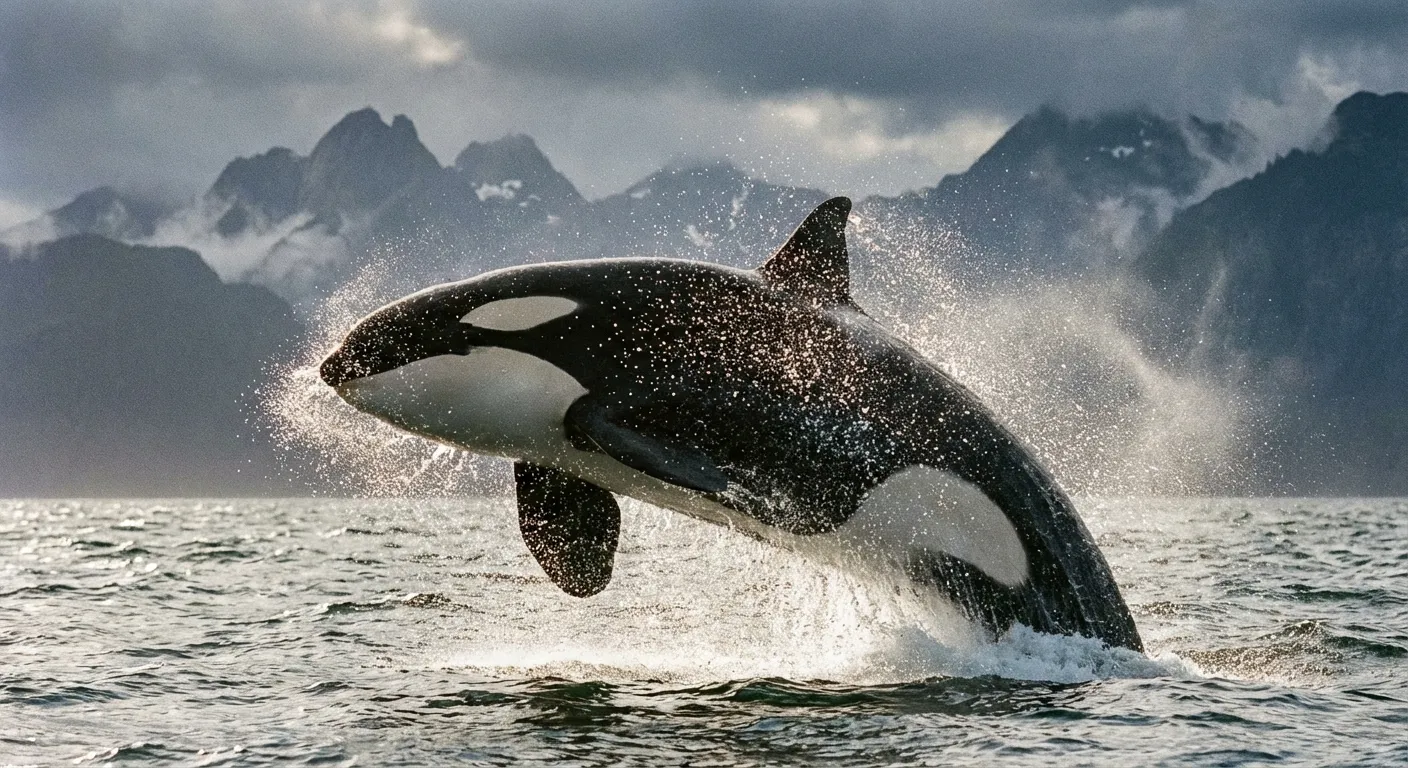
Tool use was once considered the defining characteristic of humanity. When Jane Goodall first observed chimpanzees using sticks to extract termites in the 1960s, it shattered the assumption that tools were our exclusive domain. Intelligence, it turns out, takes many forms across the animal kingdom. Since then, the club of tool-using animals has expanded to include crows, elephants, dolphins, and even certain fish. In 2025, scientists added another member: the orca.
The observations come from marine biologists including researchers at the Center for Whale Research studying orca populations in various ocean environments. The behaviors documented range from using objects to manipulate prey to employing found items in apparent play. While each individual observation might be dismissed as incidental, the pattern across multiple populations and contexts points to something that demands a closer look: goal-directed object manipulation in a marine predator whose body plan offers no obvious advantage for grasping or wielding tools.
What Counts as Tool Use
Defining tool use is trickier than it might seem. The classic definition involves using an external object to modify another object or the environment. A chimpanzee using a stick to fish for termites meets this definition clearly. A sea otter using a rock to crack open shellfish qualifies. But the boundaries get blurry with animals that use parts of their own bodies in unusual ways, or that modify their environment without using a separate object.
Researchers generally agree that true tool use requires several elements: the object must be external to the animal, it must be manipulated or held in some way, and its use must be directed toward a specific goal. Additionally, many scientists look for evidence that the behavior is learned rather than purely instinctive, and ideally, evidence that it is innovative, arising in response to new challenges.
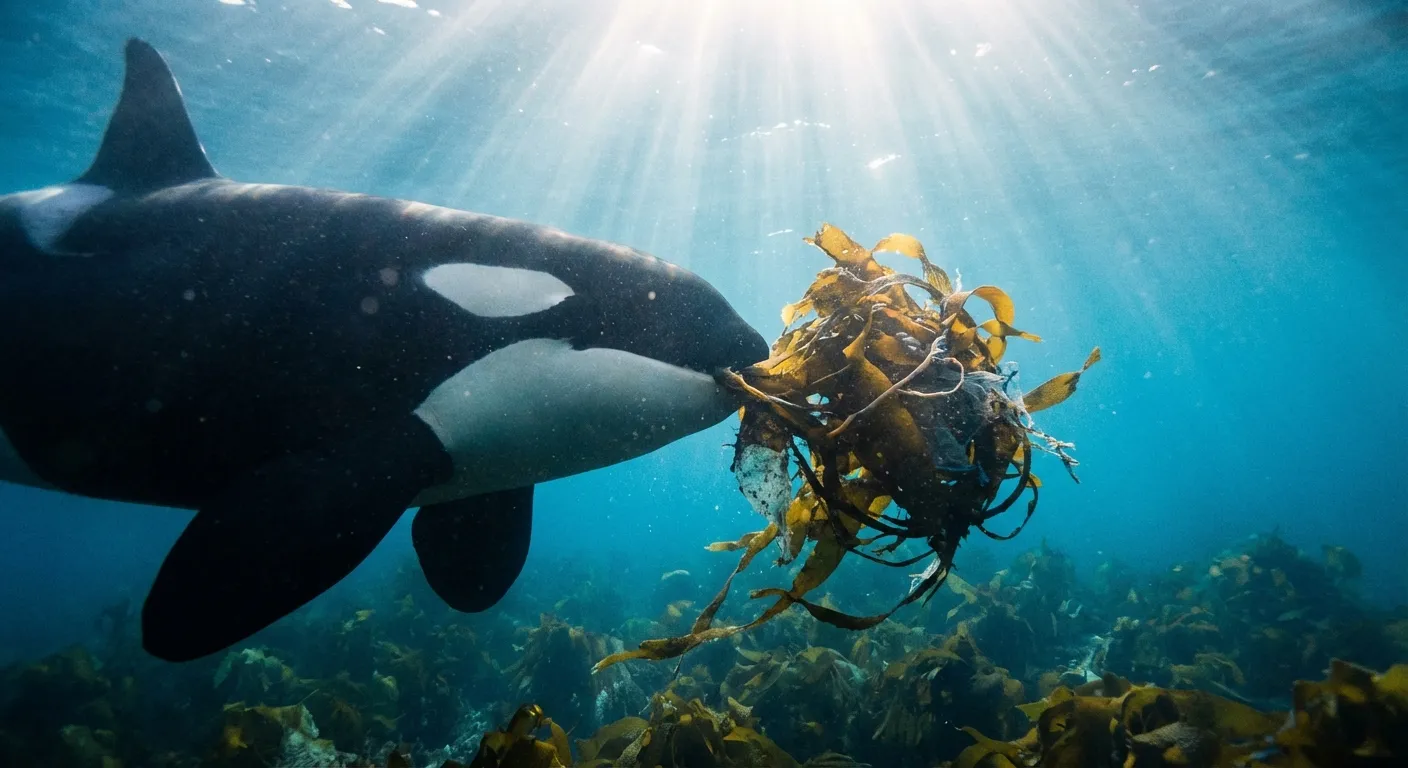
The orca observations documented in 2025 appear to meet these criteria. Researchers observed killer whales manipulating objects in ways that were clearly goal-directed and appeared to reflect learning and problem-solving rather than instinct. The specifics vary by population and individual, but the overall pattern suggests a species capable of the flexible, context-dependent behavior that characterizes tool use in other intelligent animals.
The Intelligence of Orcas
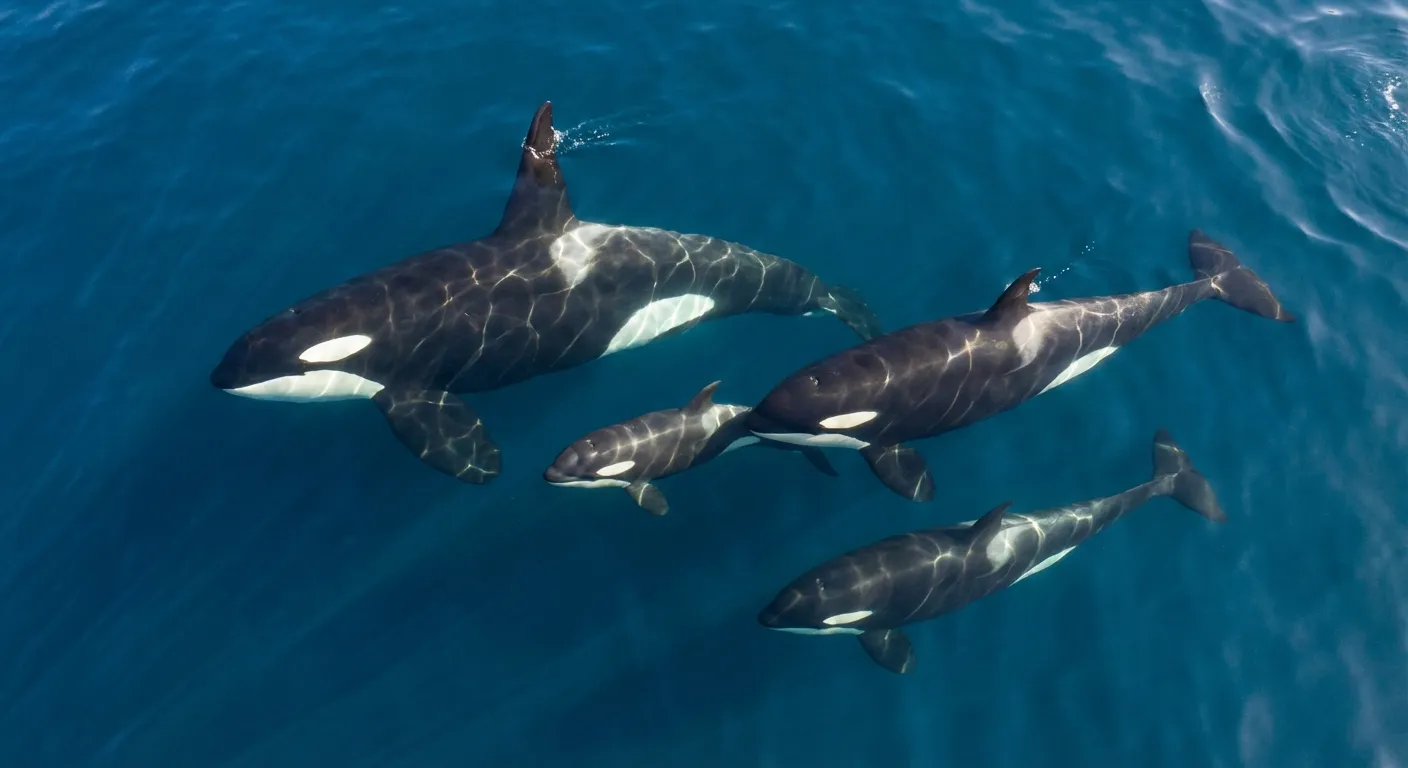
The cognitive foundation for tool use in orcas was already well established before these observations. Their brains are among the largest of any animal, second only to sperm whales among cetaceans. More importantly, their brains show complex development in regions associated with social cognition, emotional processing, and self-awareness. Orcas in captivity have demonstrated self-recognition in mirrors and the capacity to understand abstract concepts.
What sets orcas apart from other brainy marine mammals, however, is the specificity and diversity of their learned behaviors. Different populations specialize in different prey and have developed sophisticated methods to catch them. Some populations in Patagonia intentionally beach themselves to grab seals, a behavior that requires precise understanding of tidal conditions and individual courage that must be taught to young whales. Others near Antarctica create waves to wash seals off ice floes, coordinating their actions in ways that suggest planning and communication. Resident orcas in the Pacific Northwest share salmon through a distribution protocol that favors older females, a behavior with no genetic basis that must be socially maintained.
This behavioral diversity matters for interpreting tool use. In species with rigid instincts, an unusual behavior is likely a one-off anomaly. In a species that already maintains dozens of population-specific learned techniques, tool manipulation fits a pattern: orcas routinely invent new solutions and transmit them socially. The question is not whether orcas are capable of tool use but why it took scientists so long to document it.
Why Marine Tool Use Is Rare
Tool use is surprisingly rare in marine environments. While many aquatic animals are intelligent, the constraints of underwater life make tool manipulation difficult. Objects behave differently in water than in air. Fins and flippers are not designed for grasping. The lack of stable surfaces makes it hard to use objects as platforms or anvils.
Dolphins, orcas' smaller relatives, have shown some tool use, most famously the bottlenose dolphins of Shark Bay, Australia, who wear sponges on their snouts to protect against stings while foraging. But even this behavior is rare, found only in specific populations and passed down through limited family lines. Most dolphins, despite their intelligence, do not use tools.
The orca observations suggest that tool use in cetaceans may be more common than previously recognized, or that orcas have crossed a cognitive threshold that allows them to overcome the constraints that limit tool use in other marine animals. Either possibility is scientifically important. If tool use is more common, we have been underestimating cetacean cognitive abilities. If orcas are special, we need to understand what makes them different.
Cultural Transmission
One of the most important aspects of tool use in animals is whether it is transmitted culturally. A behavior that arises spontaneously in one individual is interesting. A behavior that is taught and learned across generations is transformative. It suggests the capacity for cumulative culture, where innovations build on each other over time.
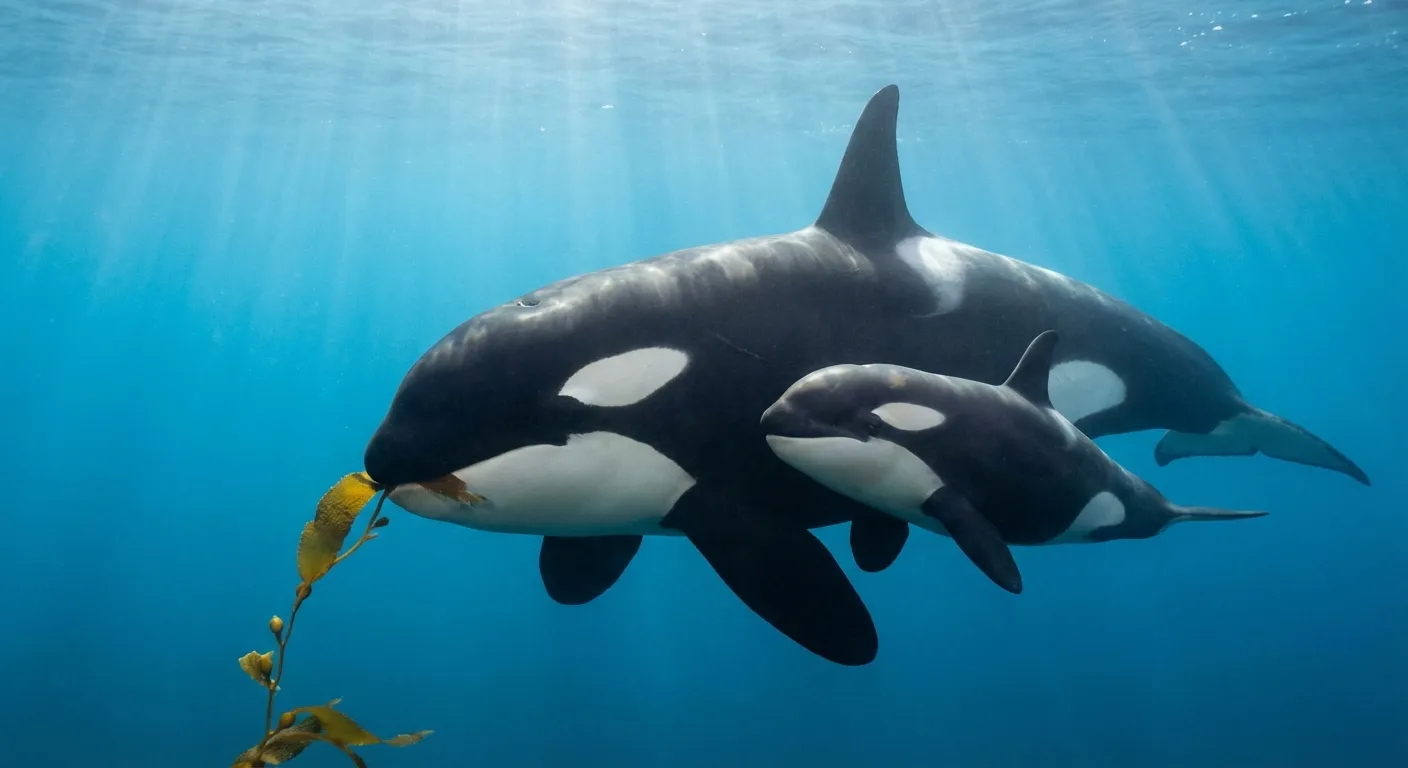
The critical test is whether tool-use behaviors appear in juveniles who have spent time with tool-using adults but not in juveniles from populations where no tool use has been observed. Early data from the 2025 observations is suggestive: the researchers documented tool manipulation primarily in pods where at least one adult female had been observed using objects in prior seasons. Juveniles in those pods showed rudimentary versions of the same behaviors, consistent with social learning rather than independent invention.
If this pattern holds up under systematic study, orca tool use would represent something rare in the animal kingdom: a culturally transmitted technology in a non-primate species. New Caledonian crows manufacture tools with regional design variations passed between generations, and that discovery reshaped our understanding of avian cognition. Culturally transmitted tool use in orcas would have a comparable impact on how we understand cetacean minds, particularly because orcas already maintain the most complex documented non-human cultures on Earth.
What This Means for Conservation
The discovery of tool use in orcas adds urgency to conservation concerns. Several orca populations are endangered, threatened by pollution, declining prey populations, and habitat degradation. The Southern Resident orcas of the Pacific Northwest, one of the most-studied populations, number fewer than 75 individuals. Other populations face similar pressures.
When we lose an orca population, we lose more than individuals. We lose culture. As we continue to discover new species at unprecedented rates, the unique dialects, hunting techniques, and social structures of each population represent thousands of years of accumulated knowledge. If tool-using behaviors are part of this cultural heritage, their loss would be even more significant. We would be losing not just animals but innovations, ideas encoded in behavior rather than text.
This perspective reframes conservation. Protecting orcas is not just about preserving biodiversity in an abstract sense. It is about recognizing that these animals have built something worth preserving: cultures with histories, traditions, and now, perhaps, technologies of their own.
Why It Matters
Orca tool use is a strong case for convergent cognitive evolution. Tool manipulation has now been documented in primates, corvids, cetaceans, and fish, lineages that diverged hundreds of millions of years ago and share no common tool-using ancestor. The consistent emergence of this behavior across such distant branches of the tree of life indicates that sufficient social complexity, brain size relative to body mass, and environmental pressure reliably produce tool use as an outcome, regardless of body plan.
The practical consequence is methodological. Until now, cetacean intelligence has been inferred primarily from social behavior, communication complexity, and captive problem-solving tests. Those methods are valuable but indirect. Tool use provides a directly observable, field-documented metric that places orcas alongside chimpanzees and New Caledonian crows in the small group of animals demonstrating flexible, goal-directed object manipulation. That comparison gives researchers a concrete framework for designing cross-species cognitive studies, and it strengthens the case for long-term orca behavioral monitoring programs that have historically received a fraction of the funding directed toward primate research.
The policy implications are equally concrete. Current conservation frameworks protect orca populations based on genetics and population size. Tool-use data adds a new dimension: behavioral heritage that cannot be restored once lost. If regulators begin treating culturally distinct orca populations as irreplaceable repositories of learned knowledge, the legal and financial calculus around shipping lanes, fishery quotas, and pollution controls in orca habitats changes significantly. The question shifts from "how many orcas can we afford to lose?" to "what knowledge disappears if this population declines?"