
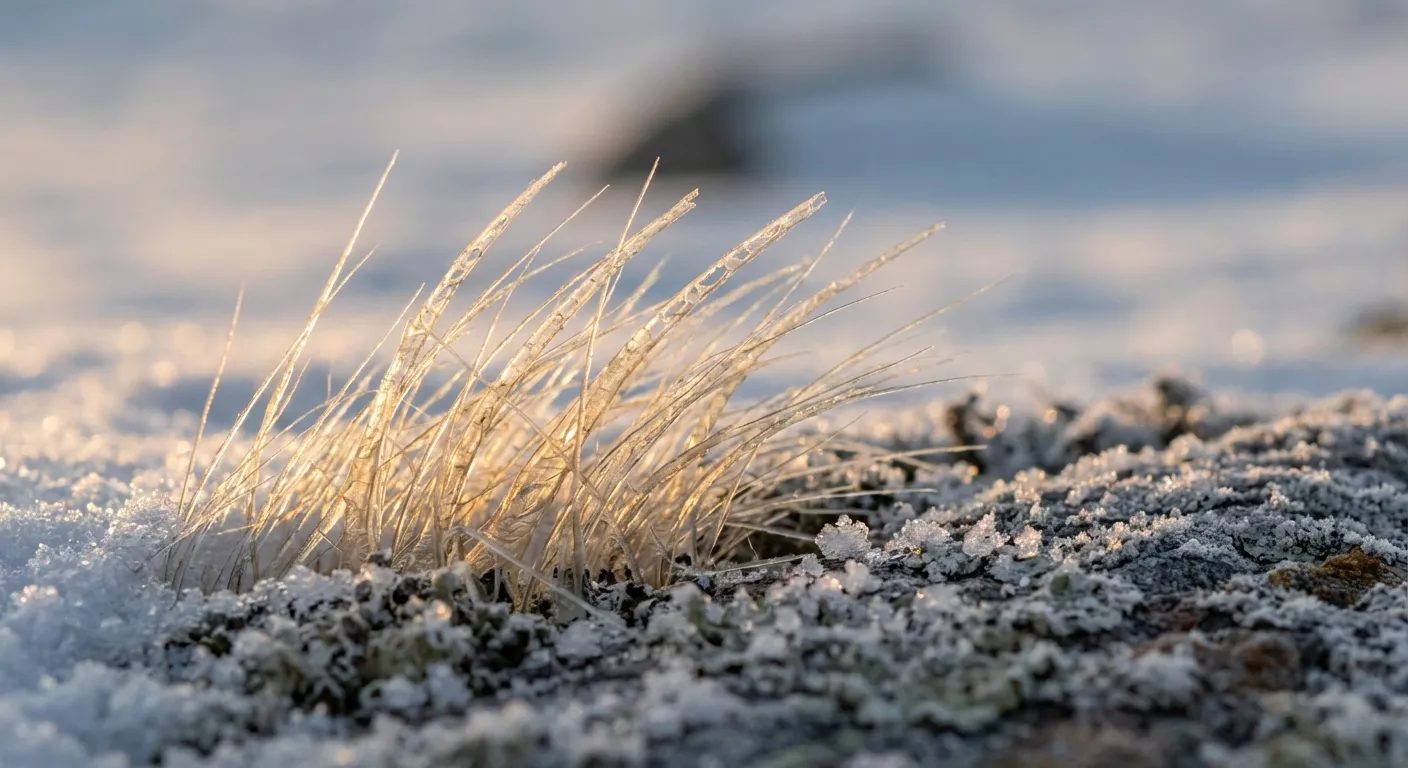
When polar bears emerge from the Arctic Ocean after swimming in near-freezing water, something remarkable happens: almost nothing. They shake off the water, it slides away, and within moments their fur is dry. No ice crystals form. No frozen clumps weigh down their coat. The bears resume walking across the ice as if they'd never been wet at all.
For years, scientists attributed this to the structure of polar bear fur, its hollow hairs and dense undercoat that trap air and insulate against cold. But recent research by engineers at the University of British Columbia revealed something more surprising: polar bear fur has built-in de-icing technology. The natural oils coating each hair, the sebum that would make human hair look greasy and unwashed, actually repel ice formation at the molecular level. When researchers tested unwashed polar bear fur against professional ski equipment, the fur performed comparably to the best synthetic anti-icing materials available.
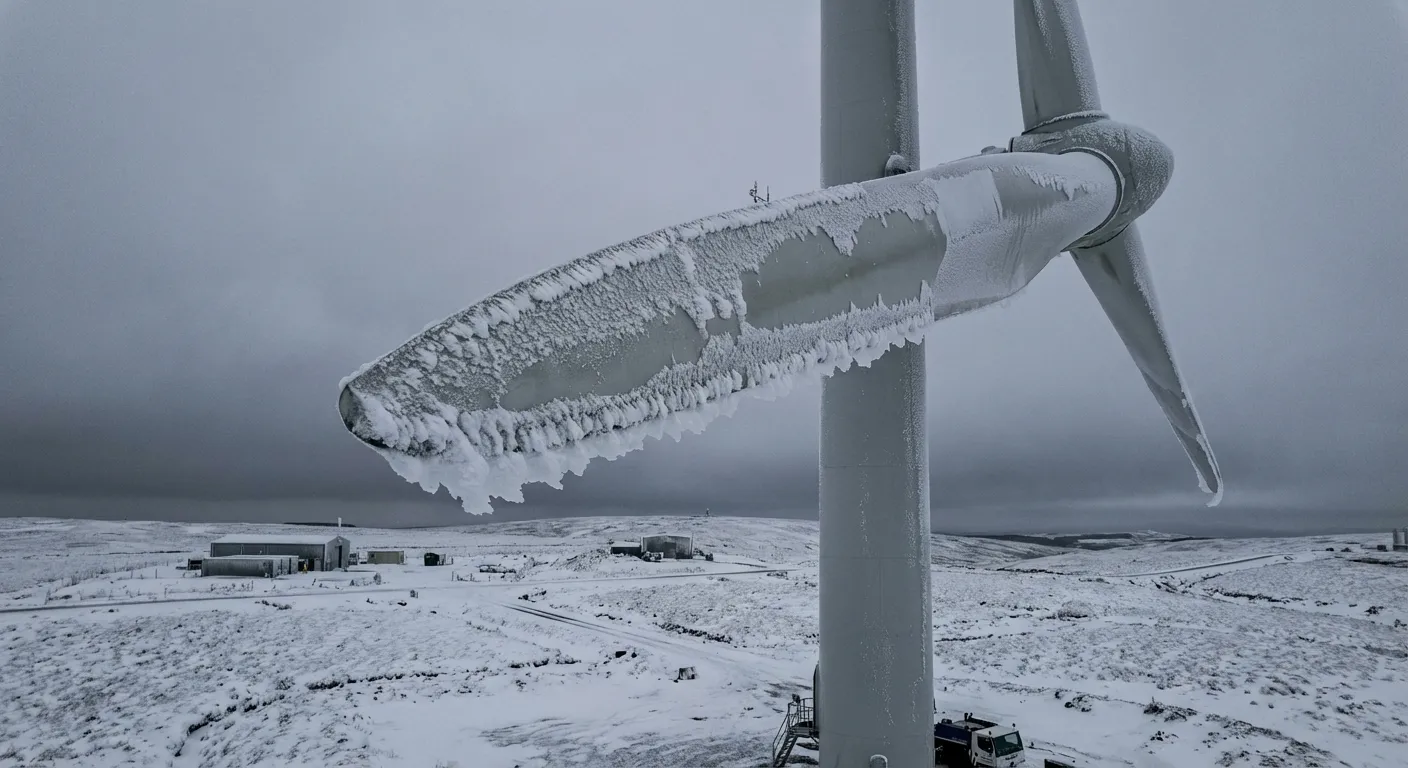
The discovery opens new possibilities for biomimicry, the engineering practice of copying solutions from nature. Understanding how polar bear sebum prevents ice formation could lead to new coatings for aircraft wings, wind turbines, power lines, and any other surface where ice accumulation causes problems. Once again, evolution has solved a problem that engineers are still working on, a pattern seen across biology from mushroom-driven bioelectronics to self-healing materials.
The Ice Problem
Ice formation is a bigger engineering challenge than most people realize. When water transitions from liquid to solid, it doesn't just sit there. Ice adheres strongly to most surfaces, and once it starts forming, it tends to grow. A thin layer of frost becomes a thick layer of ice. Aircraft wings accumulate ice that changes their aerodynamic profile and can cause crashes. Wind turbines become unbalanced and must shut down. Power lines sag and snap. Roads become treacherous.
The standard solutions are energy-intensive and imperfect. Aircraft use heated leading edges and de-icing fluids. Roads get salted, which damages vehicles and ecosystems. Wind turbines either shut down during icing conditions or use heaters that reduce their energy output. Nobody has found a passive solution that prevents ice from forming in the first place.
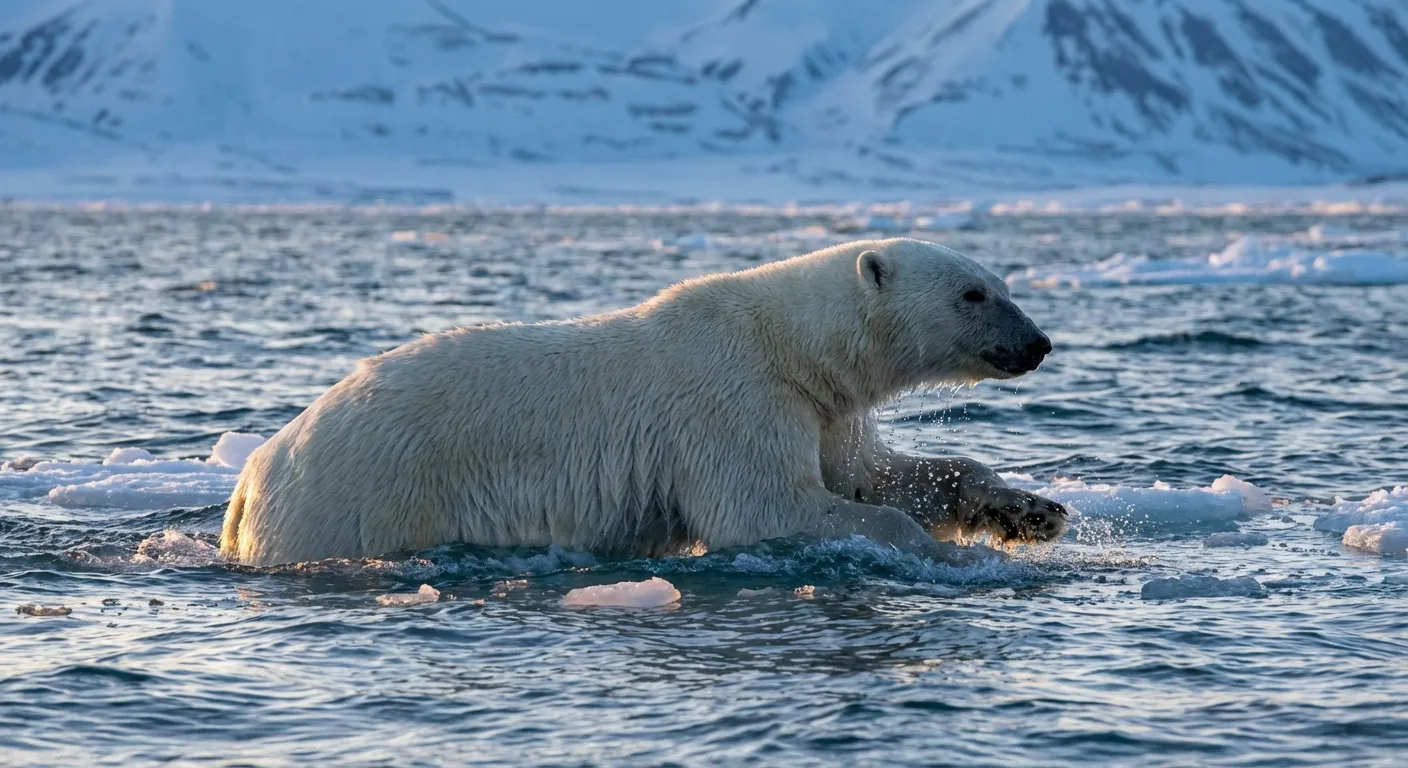
Polar bears face this problem constantly. They live in an environment where temperatures routinely drop below minus 30 degrees Celsius. They swim in water that hovers just above freezing. If their fur accumulated ice the way most materials do, the added weight would make swimming dangerous and the frozen coat would lose its insulating properties. A polar bear with icy fur would be a dead polar bear.
The Sebum Solution
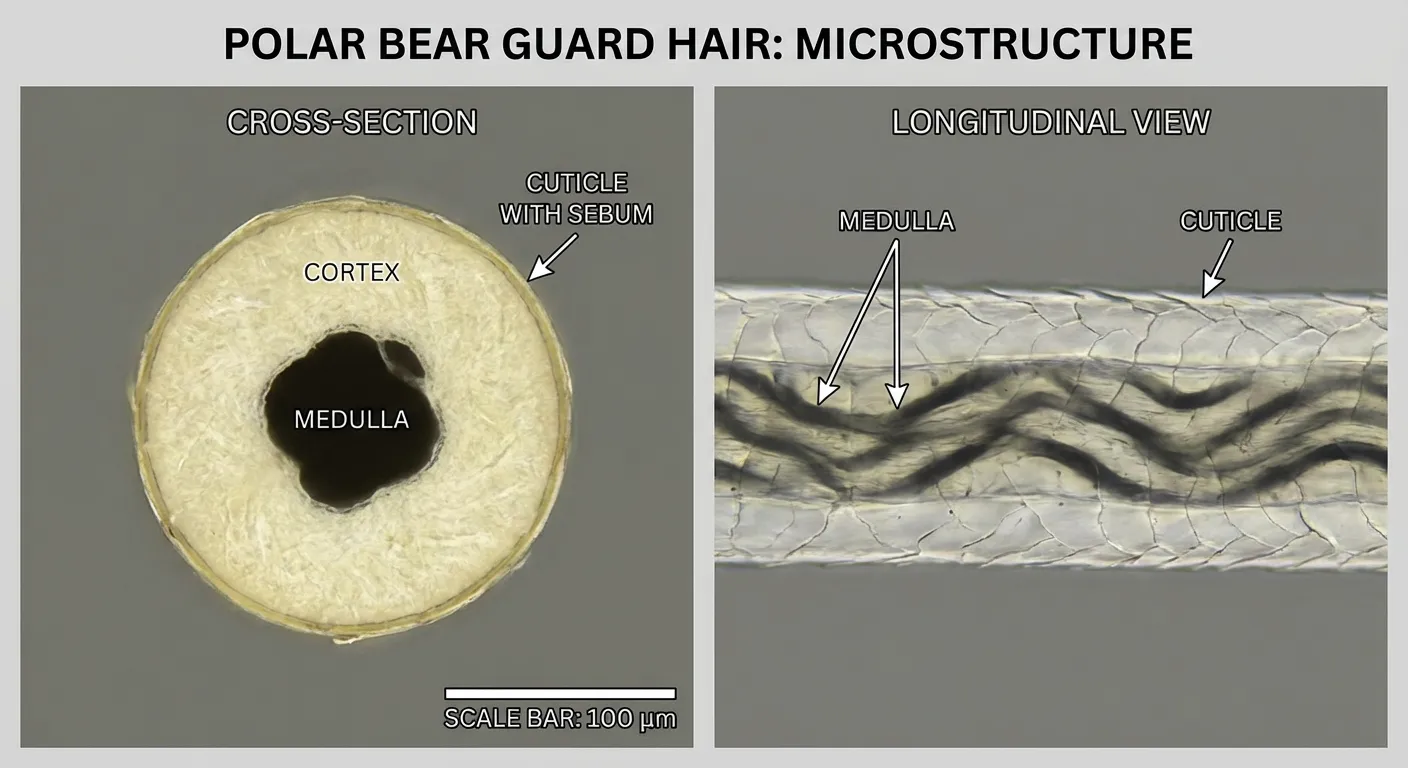
The key to polar bear fur's ice resistance turned out to be something researchers initially considered a nuisance: the natural oils that coat every hair. Sebum, produced by sebaceous glands in the skin, gives mammalian hair its natural sheen and water resistance. In humans, excessive sebum is what makes hair look oily and unwashed. We shampoo it away.
Polar bear sebum is different. While the basic chemistry is similar to other mammals' sebum, containing fatty acids, wax esters, and cholesterol, polar bear sebum appears to have been optimized by evolution specifically for ice resistance. When researchers tested clean, degreased polar bear fur, it accumulated ice like any other surface. When they tested fur with its natural oils intact, ice formation was dramatically reduced.
The mechanism involves how water molecules interact with the oily surface at extremely low temperatures. On most surfaces, water molecules can arrange themselves into the hexagonal crystal structure of ice. The sebum coating on polar bear fur disrupts this arrangement, preventing the nucleation events that start ice crystal growth. Water droplets bead up and roll away before they can freeze in place.
Testing Against Technology
The most striking finding came when researchers compared polar bear fur to synthetic anti-icing materials. Professional ski equipment, which uses carefully engineered surface treatments to prevent ice buildup, performed about as well as unwashed polar bear fur. The bear's natural solution, evolved over hundreds of thousands of years, matched what human engineers had developed with modern chemistry and materials science.
In some conditions, the polar bear fur actually outperformed the synthetic materials. At extremely low temperatures where even treated surfaces start to accumulate ice, the sebum coating continued to work. The researchers speculated that this might be because the sebum remains slightly fluid even at very low temperatures, maintaining its ice-disrupting properties, while synthetic coatings can become brittle and crack.
The comparison highlights both the power of evolutionary engineering and the potential for biomimicry. Evolution doesn't design solutions from first principles. It iterates through random variations, keeping what works and discarding what doesn't. Over millions of generations, this process can produce solutions that are remarkably well-optimized for specific problems, even if no conscious designer was involved.
Beyond Bears
Polar bears aren't the only animals with ice-resistant adaptations, part of the remarkable survival strategies that wildlife have evolved for extreme conditions. Penguins have similar properties in their feathers. Arctic fish produce antifreeze proteins that prevent ice crystals from forming in their blood. Even some plants have developed ice-resistant surfaces that keep their leaves functional in freezing conditions.
What makes polar bear sebum particularly interesting for engineering applications is that it's a relatively simple chemical coating rather than a complex biological structure. Antifreeze proteins would be difficult to synthesize at industrial scales. The microscopic textures of penguin feathers would be challenging to replicate on aircraft wings. But a sebum-like oil coating could potentially be manufactured and applied to surfaces using existing industrial processes.
Several research groups are now working on synthetic coatings inspired by polar bear sebum. The goal is to identify which specific components of the sebum are responsible for ice resistance and then create artificial versions that can be applied to engineering surfaces. If successful, such coatings could reduce the need for active de-icing systems, saving energy and reducing maintenance costs.
The applications extend beyond obvious targets like aircraft and wind turbines. Heat exchangers, which are essential components of refrigeration and air conditioning systems, often accumulate frost that reduces their efficiency. Power lines in cold regions suffer from ice storms that can collapse entire sections of the grid. Even something as simple as car windshields could benefit from a truly effective anti-icing coating.
What This Means
The polar bear fur discovery illustrates a broader theme in biology: organisms have been solving engineering problems for billions of years. Evolution has experimented with countless solutions to challenges like ice resistance, water repellency, adhesion, structural strength, and energy efficiency. Many of these solutions are more elegant and effective than anything humans have designed.
Biomimicry takes this observation seriously. Rather than reinventing solutions from scratch, engineers can look to nature for inspiration and sometimes direct blueprints. Velcro was inspired by burrs that stuck to a dog's fur. Bullet train noses were redesigned based on kingfisher beaks. Swimsuit materials were modeled on shark skin. Each case involves identifying a natural solution to an engineering problem and adapting it for human use.
Polar bear sebum may join this list. The greasy coating that keeps a bear's fur ice-free in the Arctic could eventually keep aircraft wings clear during winter storms. It's a reminder that the natural world is full of solved problems, if we're willing to look closely enough to find them.
The bears themselves, of course, are indifferent to our engineering challenges. They swim in freezing water, shake off the droplets, and continue hunting seals across the sea ice. They've been doing it for hundreds of thousands of years, using technology that we're only now beginning to understand. Sometimes the best innovations aren't invented. They're discovered.
Sources
- Anti-icing properties of polar bear fur - Science Advances
- Bad hair bears! Greasy hair gives polar bears fur with anti-icing properties - ScienceDaily
- How polar bears survive Arctic conditions - National Geographic
- How Do Polar Bears Keep Ice Off Their Fur? New Study Reveals the Secret - Smithsonian Magazine
- Polar bears have unique ice-repelling fur - EarthSky