

What is an AI agent? An AI agent is software that can complete tasks on its own by making decisions, taking actions, and adjusting its approach along the way. While a regular chatbot waits for you to ask a question and then gives an answer, an AI agent takes a goal you give it and works through multiple steps to accomplish that goal without needing your input at each stage. Think of a chatbot as a reference librarian who answers questions, and an AI agent as a personal assistant who actually goes and gets things done.
The term "AI agent" became one of the most used phrases in technology during 2025 and 2026, with every major tech company announcing agent products. OpenAI launched Operator. Anthropic built computer-use capabilities into Claude. Google introduced Project Mariner. Microsoft embedded agents throughout its Copilot ecosystem. Salesforce built Agentforce. The technology is real, but the marketing hype has made it harder to understand what agents actually do versus what companies claim they can do.
How an AI Agent Differs From a Chatbot
The clearest way to understand AI agents is to compare them with chatbots, which most people have already used.
A chatbot like ChatGPT or Google Gemini operates in a question-and-answer loop. You type something, it responds, and then it waits for your next message. The chatbot generates text but doesn't take actions in the real world. It can tell you how to book a flight, but it can't actually book one.
An AI agent breaks out of that loop. You give it a goal, and it figures out the steps, executes them, evaluates the results, and keeps going until the task is complete. If something goes wrong partway through, the agent adjusts its approach rather than stopping and asking you what to do.
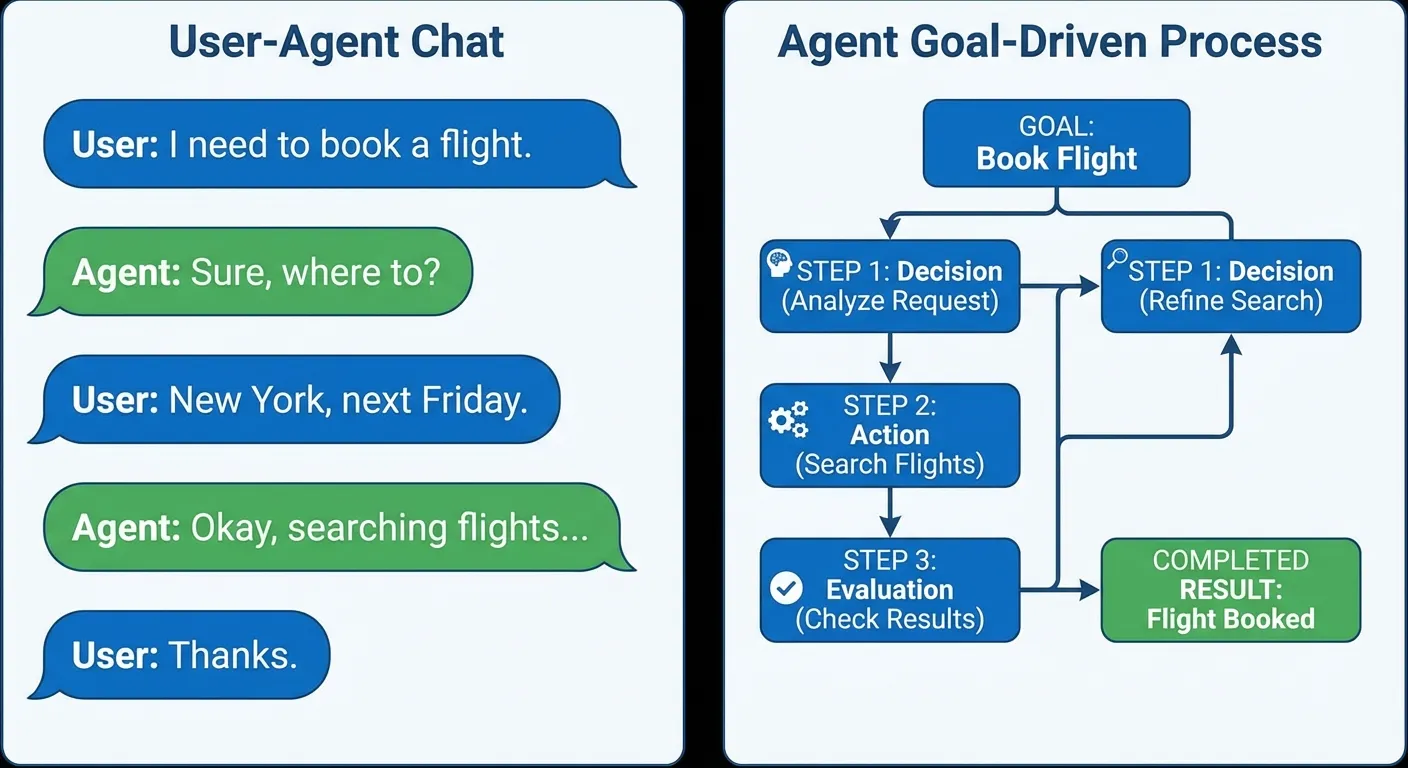
Here is a concrete example. If you ask a chatbot "What's the cheapest flight to Chicago next Friday?", it will search its available information and give you options. You then go to the airline website yourself, enter your details, choose the flight, and complete the booking. If you give an AI agent the same request, it opens a browser, searches flight booking sites, compares prices across multiple airlines, selects the cheapest option that meets your criteria, fills in your passenger details, and completes the purchase. You get a confirmation email without having navigated a single website.
The Building Blocks That Make Agents Work
AI agents aren't one single technology. They combine several capabilities that, together, allow autonomous action.
A language model as the brain. The same large language model (LLM) technology behind ChatGPT or Claude gives the agent its ability to understand your requests, reason about what steps are needed, and make decisions. The LLM processes language, interprets context, and generates plans.
Tools for interacting with the world. An agent connects to "tools" that let it take real actions: browsing websites, sending emails, reading and writing files, calling software APIs, or controlling a computer's mouse and keyboard. Without tools, an LLM can only generate text. Tools are what transform it from a conversation partner into an actor.
Memory across steps. Unlike a simple chatbot that treats each message independently, an agent remembers what it has already done in a task. It knows which websites it already checked, which approaches failed, and what information it has gathered. This working memory lets it build on earlier steps rather than starting fresh each time.
Planning and reasoning. More capable agents can break a complex goal into sub-tasks, decide the order to tackle them, and change course when obstacles arise. If an agent is booking travel and discovers a flight is sold out, it can search for alternatives rather than reporting failure.
Where You'll Encounter AI Agents in 2026
AI agents have moved from research demos to products that millions of people use daily.
Customer service. When you contact a company's support chat, there's an increasing chance you're interacting with an AI agent rather than a human. These agents can look up your order, process a return, update your account information, and resolve common issues without transferring you to a person. Klarna reported that its AI agent handled two-thirds of all customer service conversations in its first month, performing the equivalent work of 700 full-time agents.
Workplace productivity. Microsoft Copilot agents work inside Word, Excel, Outlook, and Teams to automate workflows. You might tell an agent to "prepare a summary of this quarter's sales data, create a slide deck from it, and email the deck to the marketing team." For more on using AI at work, see our guide on using AI tools at work.
Personal tasks. OpenAI's Operator and similar products can handle personal errands: ordering groceries, scheduling appointments, filling out forms, making restaurant reservations, and managing subscriptions.
Software development. Coding agents like GitHub Copilot Workspace and Anthropic's Claude Code can write, test, debug, and deploy software with minimal human guidance. Developers describe the task, and the agent handles implementation.
What Agents Still Can't Do Well
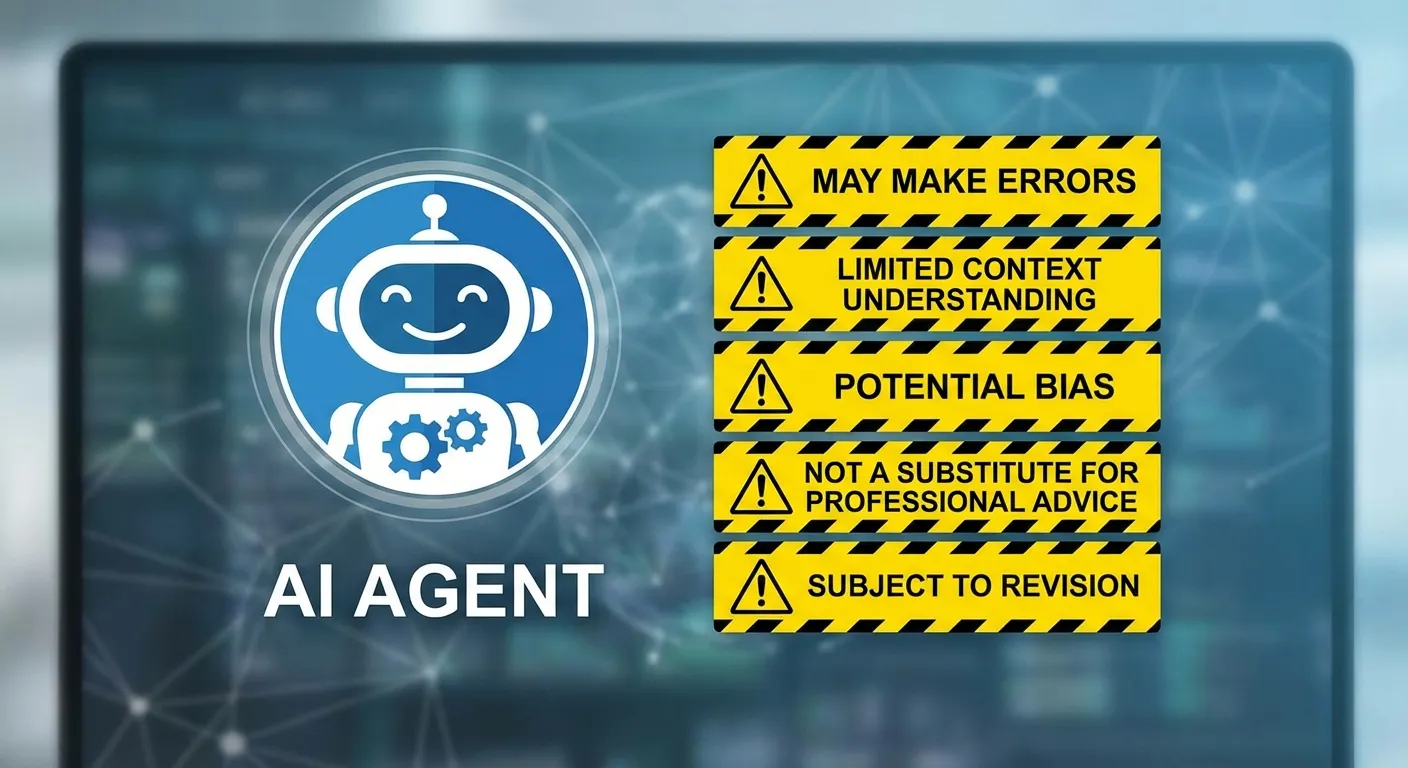
Despite the impressive demonstrations, AI agents have real limitations that matter for everyday use.
Error rates remain significant. Research from Carnegie Mellon University and Anthropic found that agents make mistakes on 15% to 30% of complex multi-step tasks. That might sound acceptable until you consider that one error in a 10-step task can derail the entire result. Agents work best when a human reviews the outcome before it becomes final.
Agents can misunderstand intent. Telling an agent to "clean up my inbox" could mean archive old newsletters, or it could mean delete everything older than a month. Agents make assumptions when instructions are vague, and those assumptions aren't always correct. Precise, specific instructions produce much better results.
Security and access concerns are real. An agent that books flights needs access to your payment information. An agent that manages email needs access to your inbox. Granting that access creates risk if the agent misbehaves or if the service is compromised. Most current agent platforms address this by requiring explicit permission for sensitive actions.
Cost adds up. Running an AI agent requires substantial computing power, and providers charge accordingly. Extended agent sessions for complex tasks can cost several dollars each, making agents expensive for frequent use on low-value tasks.
For more background on how these systems work under the hood, our earlier piece on what AI agents are covers the technical architecture in greater detail.
Should You Start Using AI Agents?
For most people, the answer is yes, but selectively. Start with low-stakes tasks where an error won't cause significant harm: summarizing documents, drafting emails, organizing information, or researching options. As you develop a sense for what agents handle well versus where they struggle, gradually expand to more complex tasks.
Avoid giving agents unsupervised access to high-stakes actions like financial transactions, deleting files, or sending communications on your behalf until you've built trust through simpler tasks. The technology improves monthly, but human oversight remains essential in early 2026.
Summary
AI agents combine a language model with tools for taking real-world actions, and they're already embedded in customer service, workplace productivity, personal assistant products, and software development. The technology works well for many routine tasks but still makes errors on 15% to 30% of complex multi-step activities, so human oversight remains essential. Start with simple, reversible tasks and expand as you learn what agents handle reliably.
Sources
- What AI Agents Really Are - IBM Technology
- Anthropic's Computer Use Research - Anthropic
- FIDO Alliance: AI Agents and Authentication - FIDO Alliance
- OpenAI Operator: Overview - OpenAI
- Salesforce Agentforce - Salesforce