
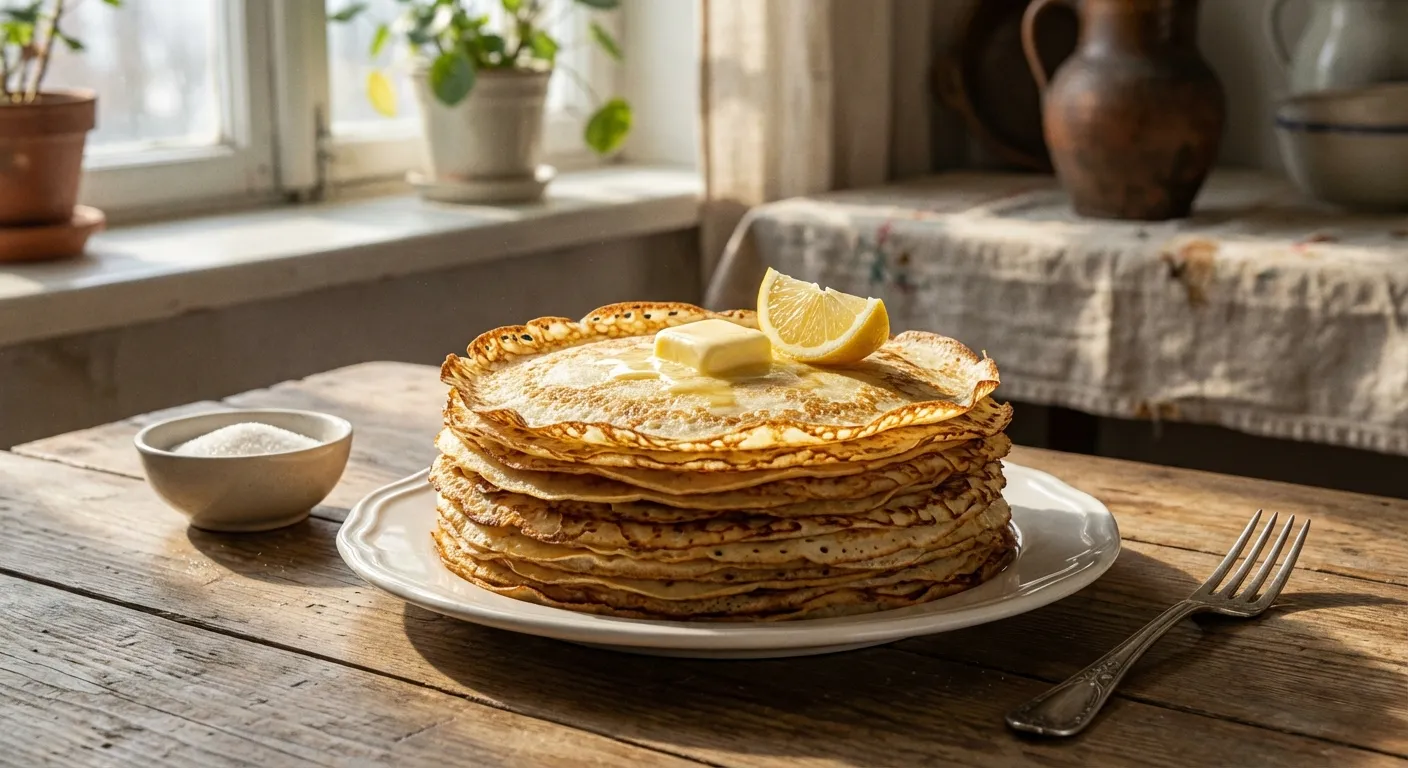
If your social media feed is suddenly full of pancake photos today, there's a reason for it. February 17, 2026 is Shrove Tuesday, the Christian feast day that most of the English-speaking world now calls Pancake Day. But the connection between a religious observance and a breakfast food isn't as random as it sounds, and the history behind the holiday involves far more than batter and frying pans.
The short answer: Shrove Tuesday is the last day before Lent, a 40-day fasting period in the Christian calendar that begins on Ash Wednesday. The word "shrove" comes from "shrive," meaning to confess sins and receive absolution from a priest. Pancakes became the traditional food because Christians needed to use up eggs, butter, and fat before those ingredients were forbidden during the Lenten fast. The tradition dates to at least the 16th century in Britain, though some evidence suggests pancake feasting on this day goes back even further.
Where the Name Comes From
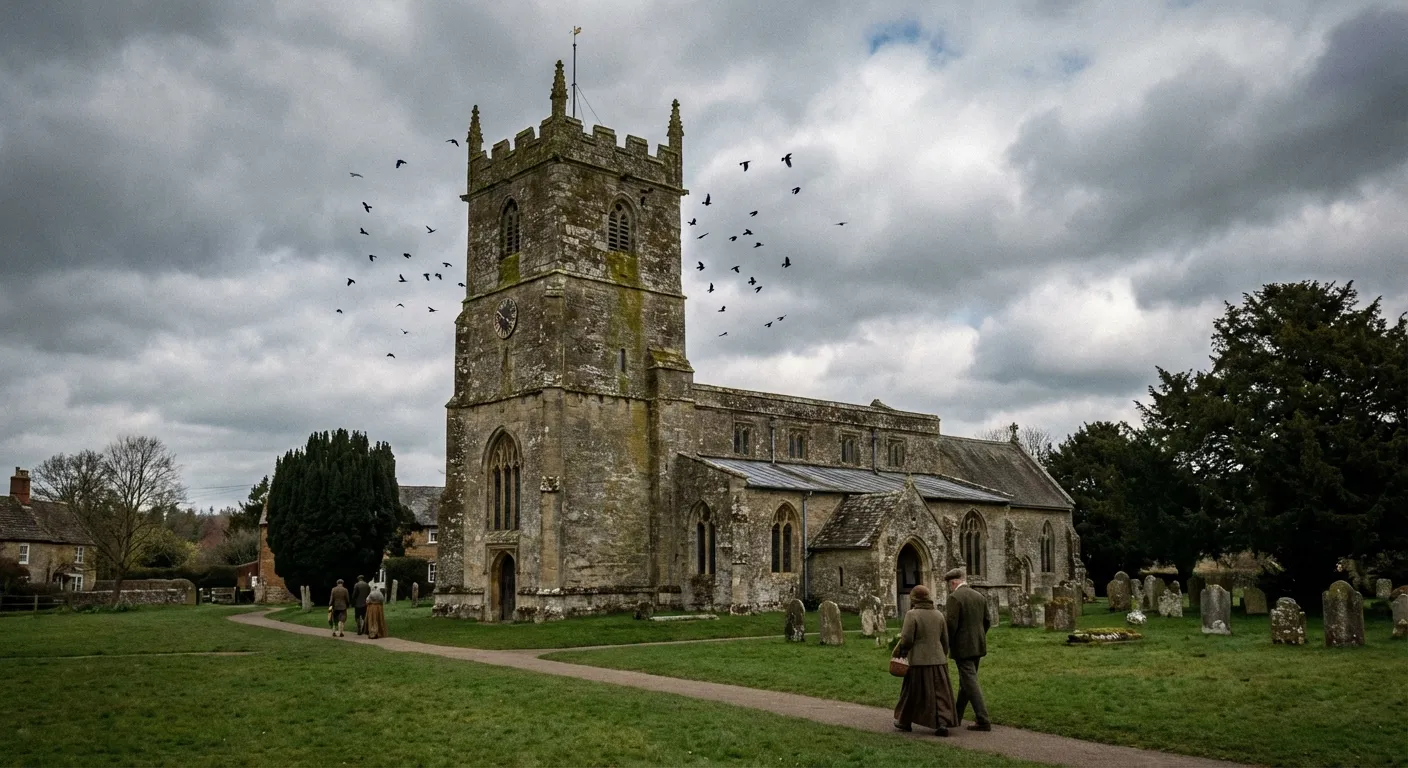
The etymology of Shrove Tuesday traces directly to medieval religious practice. "To shrive" was the act of going to a priest, confessing your sins, and being absolved before the fasting season began. A church bell, known as the "shriving bell" or "pancake bell," was rung to summon parishioners to confession. In many English towns, that bell also signaled the start of pancake-making, which is how the religious and culinary traditions became permanently intertwined.
The day goes by different names depending on where you are. In France, Brazil, and much of the Catholic world, it's Mardi Gras, which translates literally to "Fat Tuesday," a reference to the last opportunity to eat rich, fatty foods before Lent. In Ireland and parts of Scotland, it's Pancake Tuesday. In some Scandinavian countries, the equivalent celebration falls on the Monday before and is called "Fettisdagen" in Sweden, with the traditional food being a cream-filled wheat bun called a semla rather than pancakes.
What unites all these traditions is the same basic premise: tomorrow, the fasting starts. Today, you use up the good stuff.
Why Pancakes and Not Something Else
The pancake connection is entirely practical. During Lent, which commemorates the 40 days Jesus spent fasting in the desert, Christians historically abstained from meat, eggs, fats, dairy products, and sometimes sugar. Fish, bread, and vegetables were the permitted staples. That left households facing a problem on Shrove Tuesday: a pantry full of eggs, milk, butter, and cooking fat that would spoil over the next six weeks if not consumed.
Pancakes solved the problem neatly. A basic batter requires eggs, milk, and flour, cooked in butter or fat. Making a large batch of pancakes was the most efficient way to burn through all the prohibited ingredients in a single afternoon. This isn't speculation or folk legend. Household records from the 16th century document the practice explicitly, and the tradition likely predates the written evidence by at least a century.
The style of pancake varied by region and era. English Heritage notes that Elizabethan-era pancake batter was considerably richer than today's versions, mixing thick cream with egg yolks, a handful of flour, several spoonfuls of ale, and generous quantities of sugar, cinnamon, and ginger. The batter was cooked in brown butter until crisp and dry, producing something closer to a modern crepe than an American-style fluffy pancake. The thin, crepe-style pancake remains the standard in Britain, traditionally served with lemon juice and sugar. Meanwhile, the stacked, syrup-drenched version that Americans associate with the word "pancake" represents a separate culinary tradition entirely.
The Traditions That Went Beyond Breakfast
Shrove Tuesday was never just about food. The day marked the beginning of Shrovetide, a period of celebration, revelry, and social rituals that frequently turned chaotic. Some of these traditions would be unrecognizable, or frankly illegal, by modern standards.
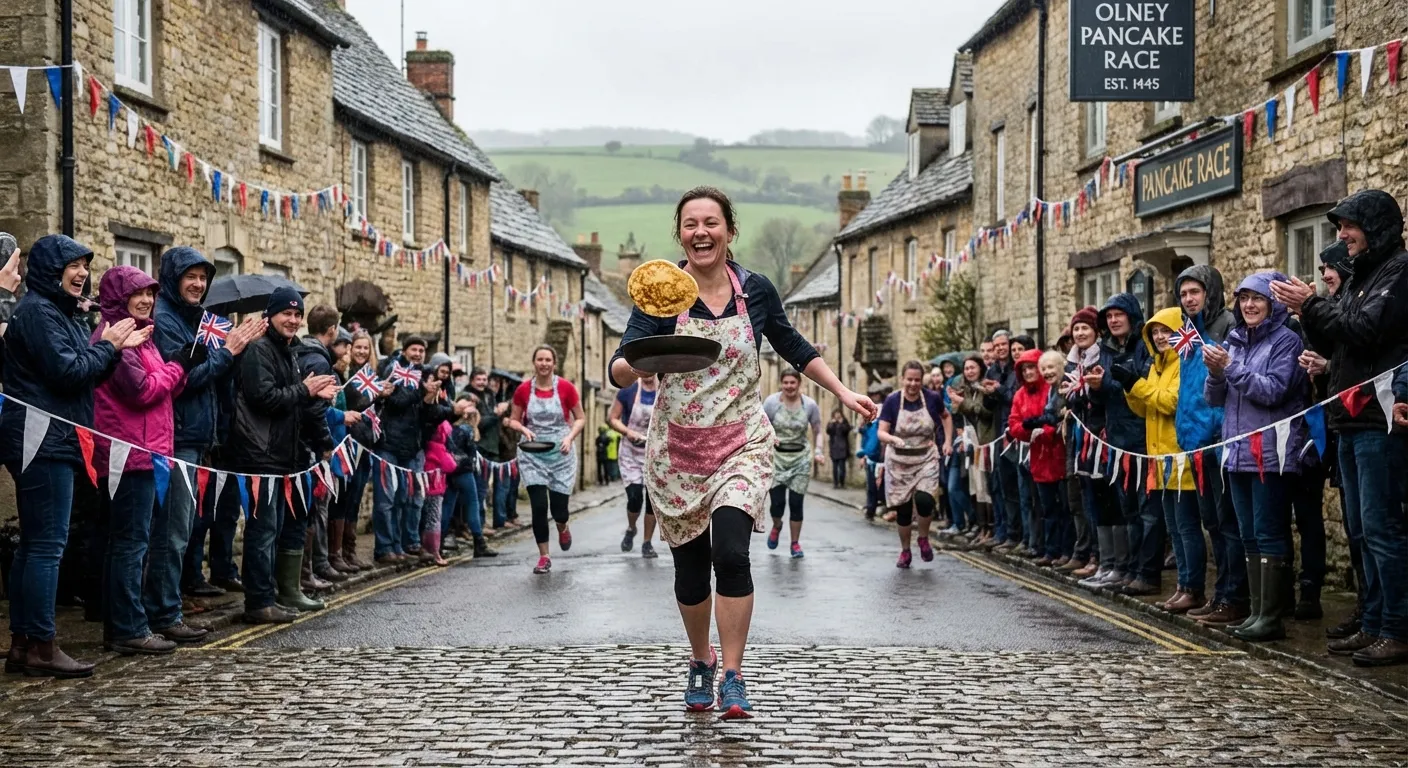
The most famous surviving tradition is the pancake race. According to English Heritage, the legend begins around 1445, when a woman in Olney, Buckinghamshire heard the shriving bell while cooking pancakes and ran to the church still carrying her frying pan. Whether or not that specific incident happened, pancake races became an established custom, with participants running a course while flipping a pancake in a frying pan. The Olney Pancake Race still runs every year and has been twinned with a race in Liberal, Kansas since 1950, creating an informal annual transatlantic competition.
Shrovetide also featured "mob football," a chaotic precursor to modern football played between entire villages with virtually no rules. The Royal Shrovetide Football match in Ashbourne, Derbyshire has been played nearly continuously since at least the 12th century, with goals set three miles apart and teams drawn from those born on either side of the River Henmore.
The Darker Side of Shrove Tuesday
Not all Shrovetide traditions were charming. In Ireland, the day carried a sharp edge of social pressure directed at unmarried people. Since Roman Catholic weddings were prohibited during Lent and Advent, the weeks before Shrove Tuesday saw a frenzy of matchmaking. Anyone who remained single when Lent arrived faced public shaming rituals that, by today's standards, were genuinely cruel.
In Cork and Kerry, "Skellig Night" involved rowdy processions through towns where disguised participants mocked single residents, sometimes attempting to drag them into the streets for public jeering. The joke was that unmarried people should "go to the Skelligs," the remote islands off the Kerry coast where an older calendar supposedly meant Lent started later, giving singles extra time to find a spouse. Satirical broadside ballads were printed naming actual unmarried townspeople, often in offensive terms.
The first Sunday in Lent was even worse. Known as "Chalk Sunday," it involved marking single people with chalk crosses on their backs during public gatherings, particularly on the way to church. Persistent bachelors and spinsters might receive raddle, the red sheep-marking dye that was far harder to wash out than chalk. These customs largely disappeared by the mid-20th century, but they illustrate how deeply the marriage-before-Lent expectation was embedded in community life.
Understanding these traditions reframes Shrove Tuesday as something more than a quaint food holiday. It was a social pressure valve, a day when community norms around marriage, consumption, and religious obligation all converged. The pancakes were the least complicated part.
How Pancake Day Looks Around the World in 2026
The modern observance of Shrove Tuesday varies wildly depending on geography. In Britain, it remains primarily a food-centered event. Supermarkets report that pancake-related ingredient sales spike by 20-30% in the week before Shrove Tuesday, and restaurants, pubs, and chains run special pancake menus. The day has largely been secularized, with many participants unaware of the religious context. If you've ever wondered why certain holiday foods persist long after their original purpose fades, Pancake Day is a prime example.
In the United States, Mardi Gras is the dominant version of the tradition, but it looks nothing like the British observance. Centered on New Orleans, Mardi Gras is a multi-week carnival season involving parades, elaborate costumes, krewes (social organizations that sponsor parade floats), and the famous tradition of throwing beaded necklaces from floats. The food traditions center on king cake, a ring-shaped pastry with a tiny plastic baby hidden inside, rather than pancakes. The religious underpinning is the same, but the cultural expression is entirely different.
Brazil's Carnival, Germany's Karneval, and Italy's Carnevale all fall in the same pre-Lenten window and share the same underlying logic: celebrate hard because the fasting starts tomorrow. What each culture chose to celebrate with, from samba parades to cream buns to pancake races, reflects local ingredients, social customs, and the particular flavor of religious practice in each region.
Key Takeaways
Shrove Tuesday is the day before Ash Wednesday, when the 40-day Lenten fast begins. The pancake tradition started as a practical solution: use up the eggs, butter, and fat that would be forbidden during Lent. The word "shrove" comes from "shrive," meaning to confess and receive absolution.
If you're observing the day today, you're participating in a tradition that stretches back at least 500 years. And if you're just making pancakes because everyone else seems to be, that's perfectly fine too. The ingredients don't care about your theological motivations. For those looking toward tomorrow, understanding seasonal health practices can help make the transition into the quieter Lenten period a little easier.