
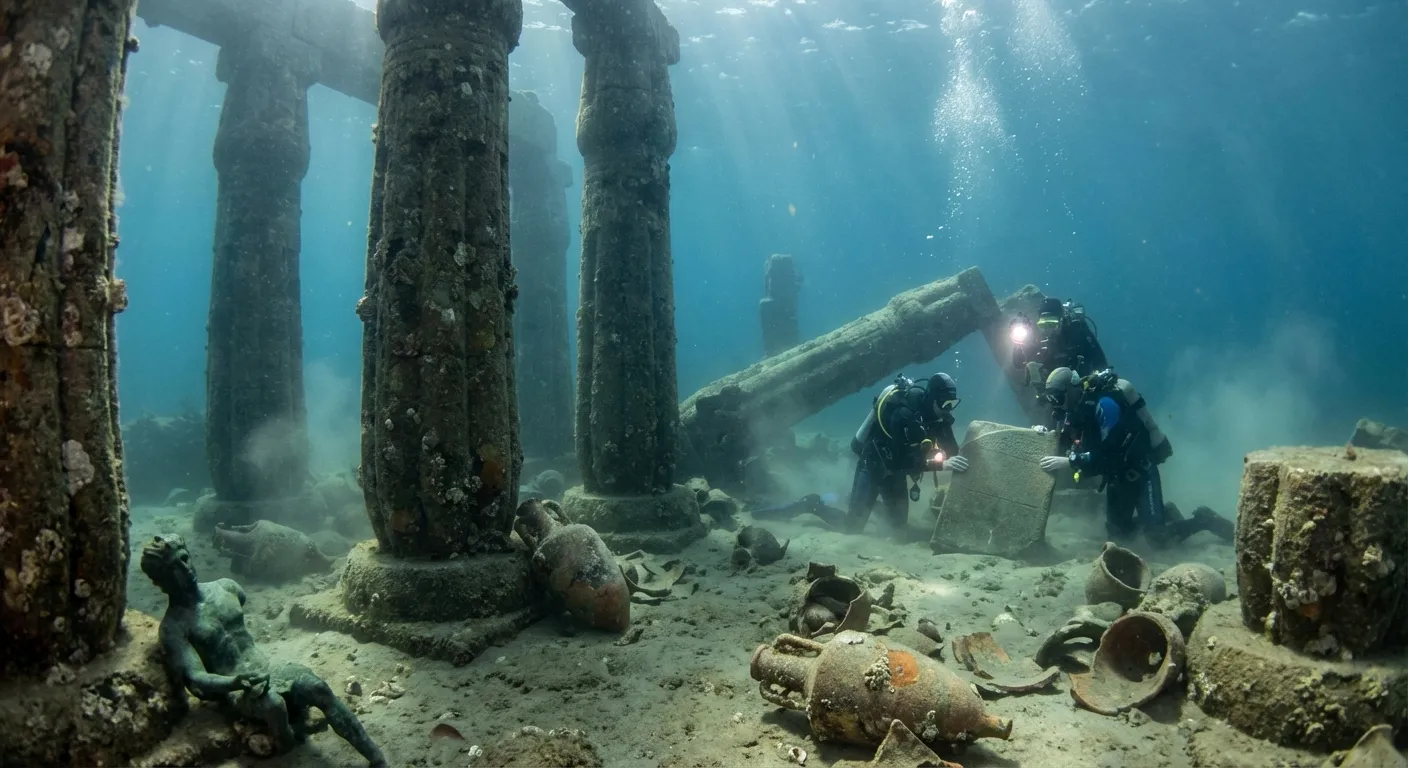
When Bob Ballard discovered the Titanic in 1985, resting two and a half miles beneath the North Atlantic, he proved that the ocean's depths could preserve history in ways nobody expected. The great ship sat almost intact on the seafloor, its debris field telling the story of its final hours better than any written account. Ballard had found a way to read history from the bottom of the sea.
Now, forty years later, Ballard is applying the same techniques to one of archaeology's greatest mysteries: the lost tomb of Cleopatra VII, the last pharaoh of Egypt. Working with archaeologist Kathleen Martinez, who has dedicated her career to this search, the team has uncovered something remarkable near the ruins of Taposiris Magna on Egypt's Mediterranean coast: a sunken landscape that may be the key to solving a two-thousand-year-old puzzle.
Why search the sea for a pharaoh's tomb? Because the Mediterranean coastline of Egypt has shifted dramatically over two millennia. Earthquakes, tectonic subsidence, and rising sea levels have swallowed entire districts of ancient cities. If Cleopatra was buried near the coast, her resting place may now lie beneath the waves, reachable only by the kind of deep-water survey technology that Ballard pioneered.
Why Finding Cleopatra Matters
Cleopatra VII died in 30 BCE, probably by suicide though the exact circumstances remain debated. The Roman historian Plutarch, writing about a century later, recorded that Octavian (later Emperor Augustus) allowed her to be buried alongside her lover Mark Antony in a manner befitting their status. But he never said where.
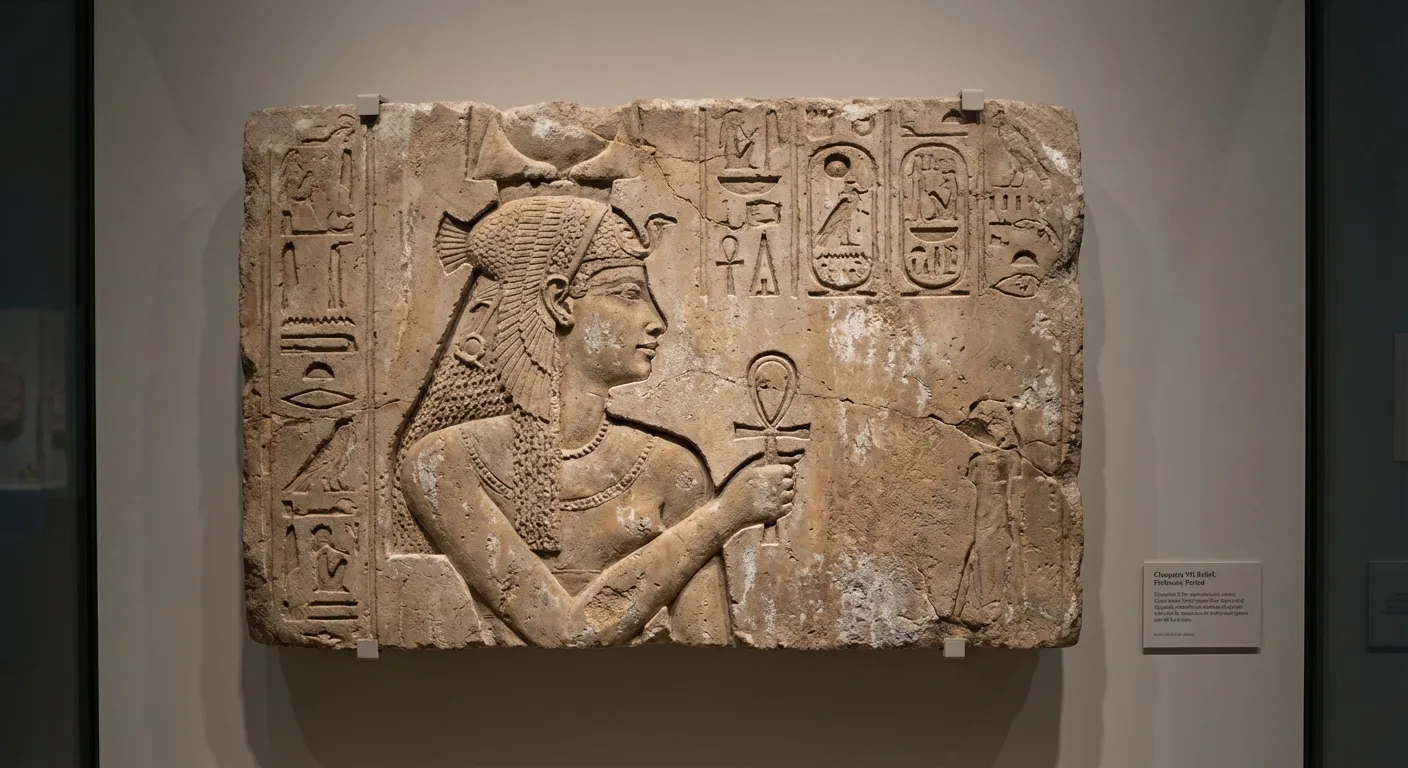
Since then, her burial has left no clear trace in the archaeological record. Unlike Tutankhamun's burial chamber, which was sealed and hidden until 1922, or the pyramids whose hidden chambers are still being discovered today, there is no known inscription, map, or physical marker pointing to Cleopatra's grave. Egyptologist Zahi Hawass has speculated that Augustus destroyed it to erase her memory. Others believe it lies beneath modern Alexandria, buried under centuries of urban development. Still others have argued it was lost to the Mediterranean, as the Egyptian coast has subsided and reformed over the centuries.
Finding Cleopatra would be transformative for multiple reasons. The tomb likely contains not just her remains but those of Mark Antony and potentially a wealth of artifacts from the final years of the Ptolemaic dynasty. It would provide direct physical evidence about a period we know primarily through Roman sources written by her enemies. And it would cap a search that has frustrated archaeologists for generations.
The Taposiris Magna Theory
Kathleen Martinez came to Cleopatra's trail through an unconventional path. Trained as a lawyer in the Dominican Republic, she became obsessed with the Egyptian queen and eventually earned a doctorate in archaeology to pursue the search professionally. Her theory centers on Taposiris Magna, a site about thirty miles west of Alexandria that most Egyptologists had dismissed as unlikely.
Martinez's reasoning is historical and religious. Taposiris Magna was a significant cult center for Osiris, the god of the dead and resurrection. Cleopatra explicitly identified herself with Isis, Osiris's sister-wife, and Mark Antony with Osiris-Dionysus. A burial at a site sacred to Osiris would have carried profound symbolic meaning in Egyptian religious terms, providing the royal couple with the divine associations they cultivated in life.
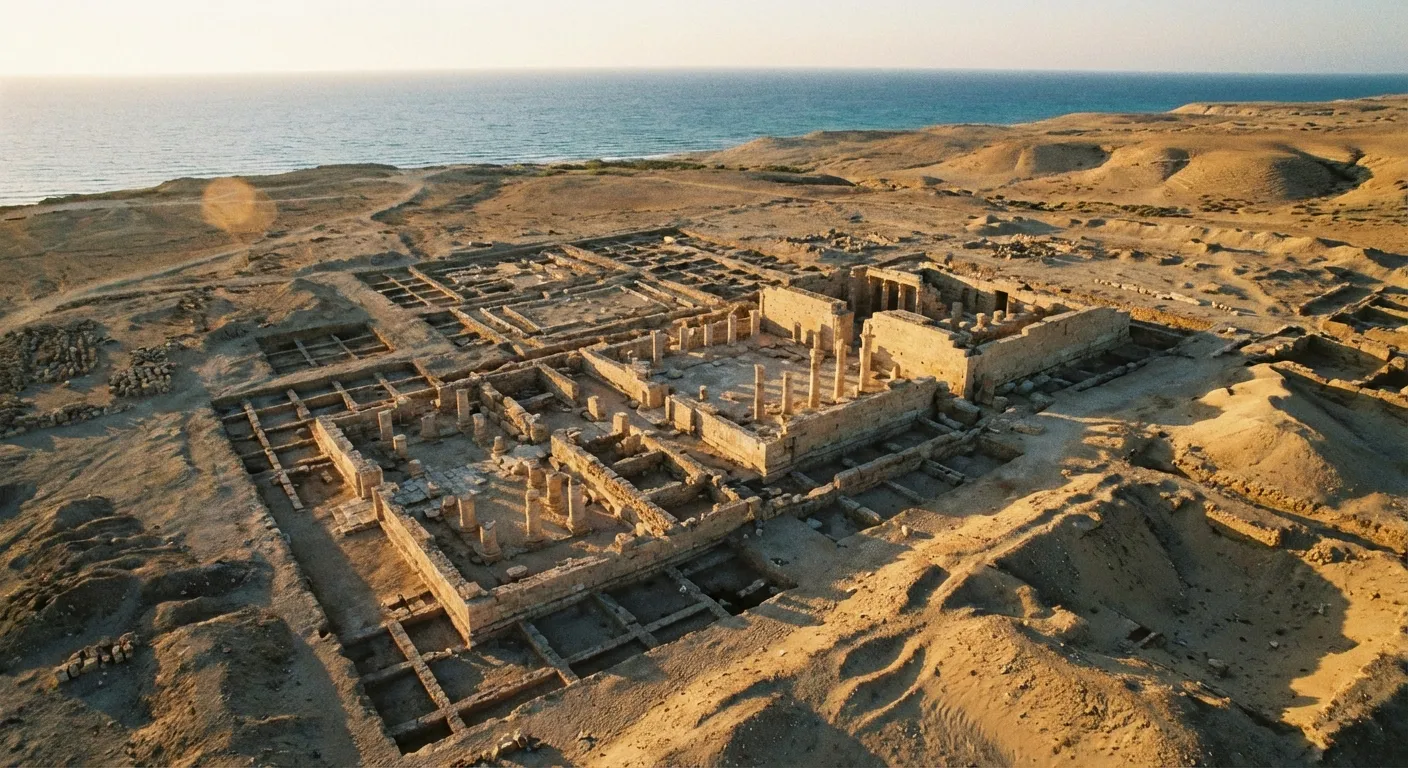
Moreover, the site would have been far enough from Alexandria to potentially escape Octavian's immediate control or later urban development. If Cleopatra's supporters managed to bury her before the Romans could intervene, Taposiris Magna was a plausible destination.
Martinez has excavated at the site for over fifteen years, finding tantalizing clues. Shaft tombs, a potential tunnel leading toward the temple, coins bearing Cleopatra's image, and evidence of high-status burials all suggest the site mattered more than previously believed. But every promising lead on land had reached a dead end, which is what prompted the pivot to the sea.
What the Underwater Survey Found
The collaboration with Bob Ballard shifted the search offshore. His team deployed remotely operated vehicles and side-scan sonar to survey the waters adjacent to Taposiris Magna. Ancient sources describe the area as having a harbor, but no modern survey had ever mapped what remained of it on the seafloor.
What they found exceeded expectations. The submerged landscape included clear evidence of an ancient port: a polished stone floor extending underwater, columns that once supported structures now drowned, amphora (ancient storage vessels) scattered across the seafloor, and multiple anchors that would have secured ships at harbor.
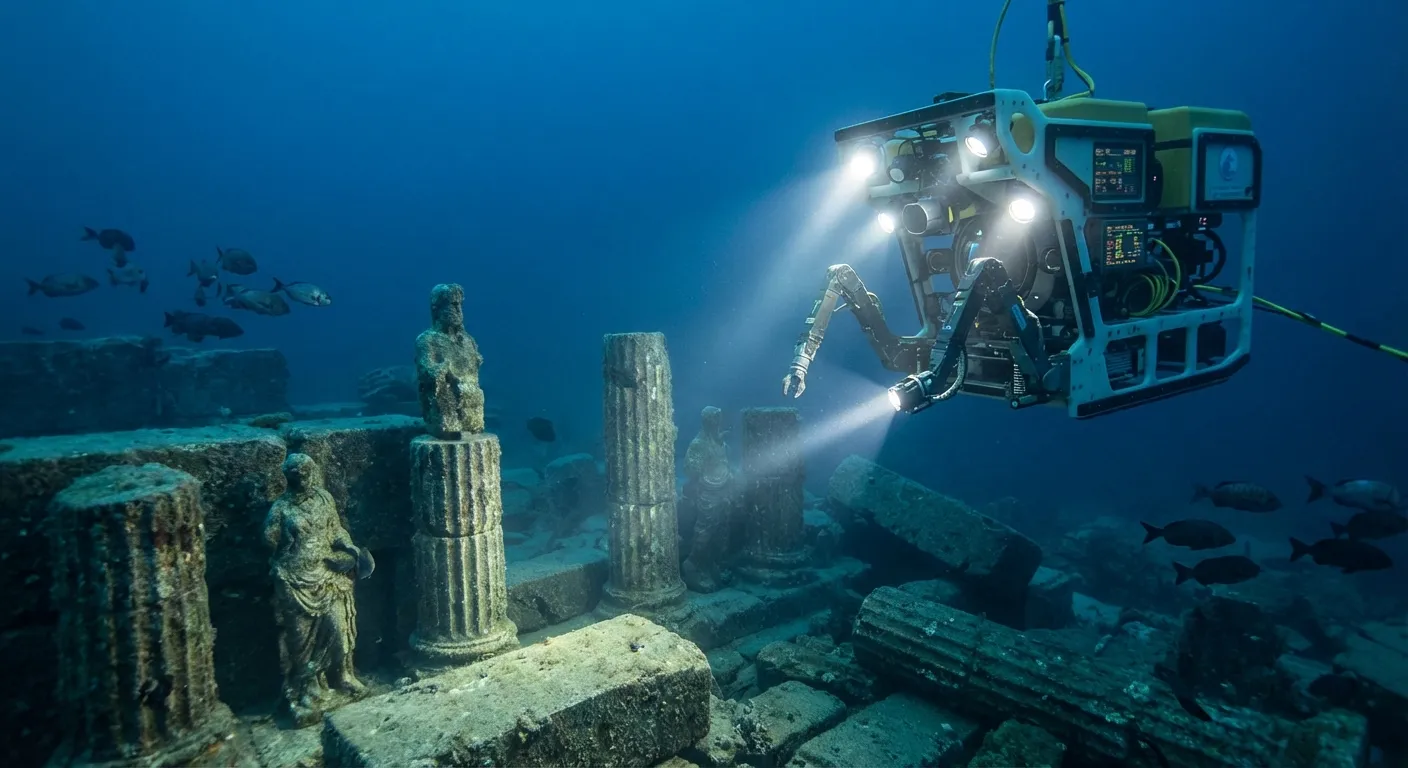
The discovery establishes that Taposiris Magna was more significant in ancient times than its current ruins suggest. A functional harbor indicates trade, wealth, and connection to the broader Mediterranean world. It also means that some of the site's original structures now lie beneath the waves, accessible only through underwater archaeology.
For the Cleopatra search, this has important implications. If the tomb was built near the waterfront, either for symbolic connection to Osiris (who was associated with the life-giving Nile) or for practical access, it might now be submerged. Alternatively, the harbor discovery validates the site's importance and suggests that the land-based excavations are indeed in the right place.
Ballard's team continues to map the underwater terrain, looking for structures or cavities that might indicate buried chambers. The same technology that revealed the Titanic's debris field, creating detailed three-dimensional maps of the seafloor, can potentially identify anomalies that warrant further investigation.
The Challenges Ahead
Even with advanced technology, finding Cleopatra's tomb remains extraordinarily difficult. Two thousand years of earthquakes, flooding, sediment accumulation, and possible deliberate concealment have obscured whatever exists. The Mediterranean has risen significantly since ancient times, and the Egyptian coast has subsided in places, meaning the original ground level is now meters below the current surface or seafloor.
If the tomb was built to resist Roman discovery, it was likely designed to be hidden. Egyptian tomb builders were expert at concealment; the Valley of the Kings tombs, including the recently identified tomb of Thutmose II, went undiscovered for millennia despite their relative proximity to populated areas. A deliberately hidden burial for a politically sensitive figure like Cleopatra might be even more difficult to locate.
There's also the possibility that the tomb was found and destroyed in antiquity. Octavian, who became Emperor Augustus, had every reason to eliminate Cleopatra's memory and deny her the divine status she claimed. Roman authorities might have located and dismantled the burial shortly after her death, leaving nothing to find.
Why This Search Captures Imagination
The hunt for Cleopatra's tomb resonates because it combines so many compelling elements: a legendary historical figure, a mystery that has persisted for two millennia, cutting-edge technology applied to ancient puzzles, and the possibility of transformative discovery just beneath the waves or sand.
Cleopatra herself remains endlessly fascinating. The last independent Egyptian ruler before nearly two thousand years of foreign domination, she was a polyglot scholar who spoke nine languages, a shrewd political operator who allied with two of Rome's most powerful men, and a cultural icon whose image has been contested and reinvented across centuries. Finding her tomb would provide physical evidence about a figure we know primarily through hostile Roman accounts and centuries of later mythology.
The technological dimension adds another layer. Bob Ballard pioneered the use of deep-sea robotics for historical discovery, proving that ships, aircraft, and artifacts thought lost forever could be found and studied. Applying these same tools to one of archaeology's oldest mysteries creates a bridge between the ancient and the cutting-edge, suggesting that solutions might exist for problems that seemed permanently unsolvable.
Where This Leads
The harbor discovery has concretely established three things: Taposiris Magna had direct Mediterranean maritime access, the site was wealthier and more connected than its surviving land ruins suggest, and a significant portion of the ancient complex now lies underwater. These findings validate Martinez's fifteen-year bet on the site and explain why earlier land-only excavations missed critical evidence.
The next excavation seasons will focus on two specific targets. Underwater, Ballard's team plans to use sub-bottom profiling sonar to identify cavities or constructed chambers beneath the harbor sediment, a technique capable of detecting voids and density changes several meters below the seafloor. On land, Martinez's team will extend the tunnel discovered beneath the temple complex, which currently runs 1,300 meters and has not yet reached its terminus.
The probability assessment is more favorable than skeptics have acknowledged. The combination of Cleopatra-era coins, high-status shaft burials, the Osiris cult connection, and now a previously unknown harbor creates a stronger circumstantial case for Taposiris Magna than exists for any competing site. Alexandria's ancient royal quarter lies under a modern city and the harbor floor, making systematic excavation effectively impossible. Taposiris Magna is the only candidate site where comprehensive excavation is both justified by evidence and physically achievable.