
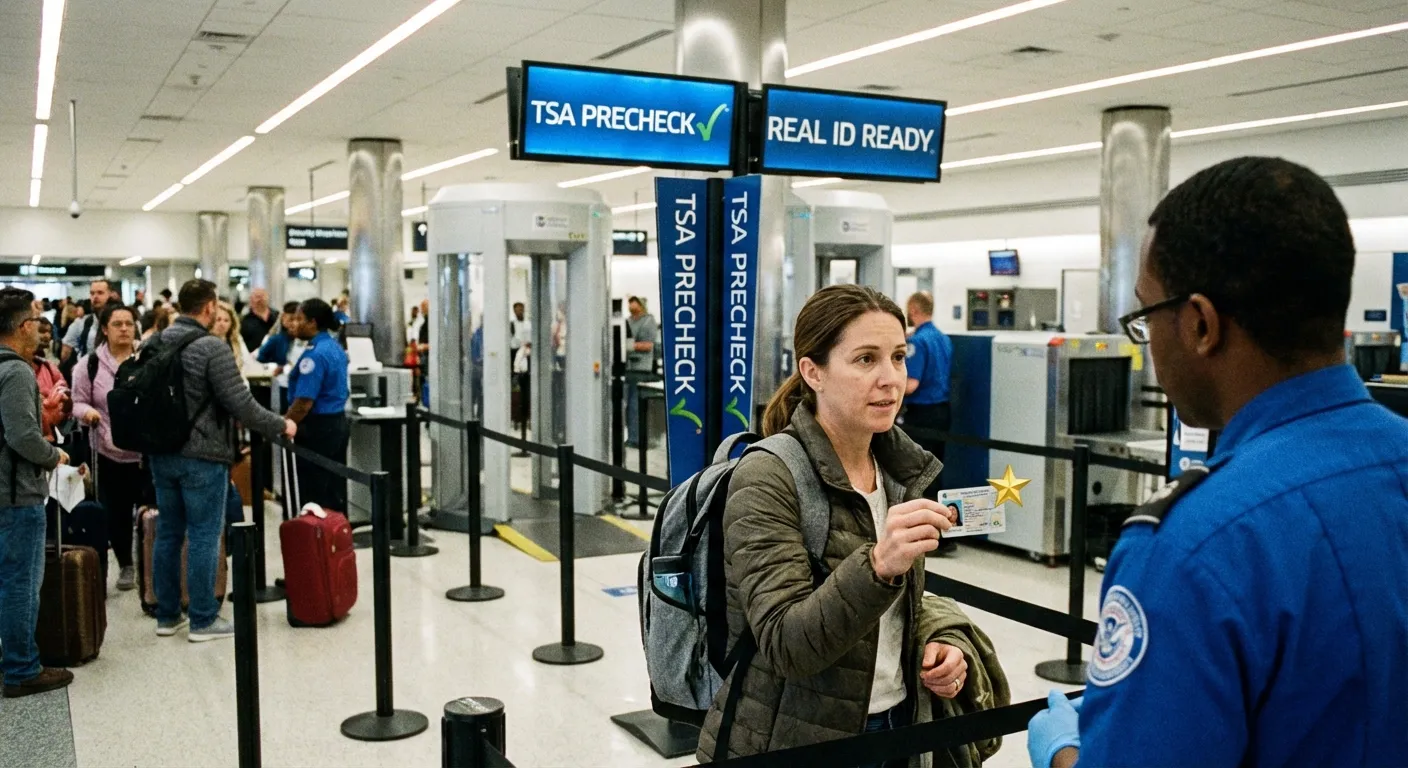
If you've been putting off getting a REAL ID, your grace period is officially over. The enforcement deadline passed in May 2025, and as of February 1, 2026, a new $45 fee kicked in for anyone who shows up to a TSA checkpoint without proper identification. The good news: you can still fly without a REAL ID. The not-so-good news: it's going to cost you time, money, or both.
The short version: Yes, you need a REAL ID (or an acceptable alternative like a passport) to fly domestically in 2026. If you don't have one, TSA's new ConfirmID program lets you pay $45 for a 10-day identity verification window, but expect delays of up to 30 minutes at the checkpoint and no guarantee you'll be cleared to fly.
What Actually Changed and When
The REAL ID Act was signed into law back in 2005, but the enforcement deadline was pushed back repeatedly. The final deadline arrived on May 7, 2025, when TSA began requiring travelers to present REAL ID-compliant identification at security checkpoints. That means a standard driver's license without the REAL ID marking is no longer sufficient for domestic air travel on its own.
The second major shift happened on February 1, 2026, when TSA launched its ConfirmID program. Before this date, travelers without proper ID could still attempt to verify their identity through an informal process at the checkpoint. That informal system is gone now, replaced by a structured program with a $45 price tag.
According to TSA, roughly 6% of domestic air travelers still lack REAL ID-compliant identification. That translates to millions of people affected by the change every year. TSA Administrator David Pekoske noted that the fee structure ensures "non-compliant travelers, not taxpayers, cover the cost" of the additional verification processing.
How to Check If Your ID Is Compliant
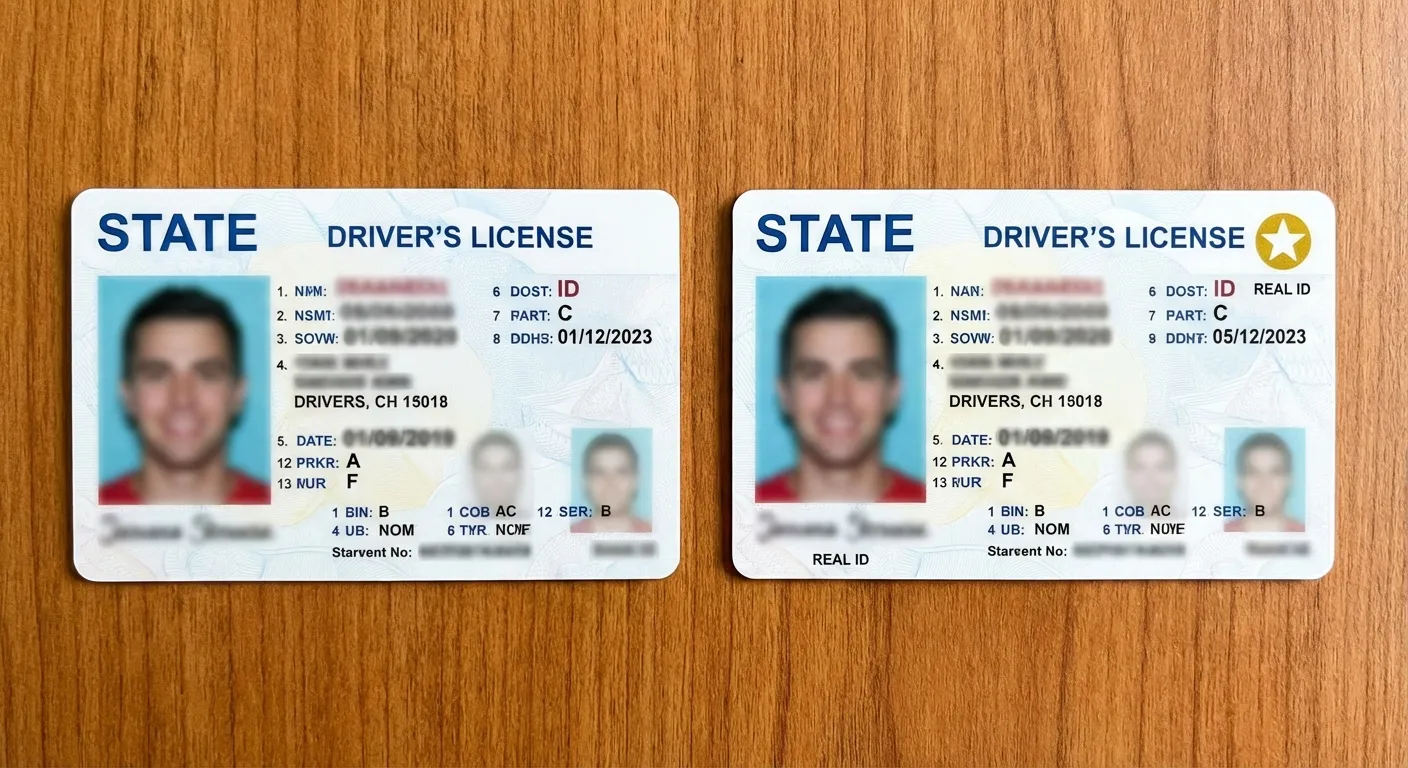
The simplest test: look at the top corner of your driver's license or state ID card. If you see a gold or black star, you have a REAL ID. Some states use slightly different indicators. Michigan, Minnesota, New York, Vermont, and Washington issue "enhanced" driver's licenses marked with an American flag icon and the word "Enhanced," which are also REAL ID-compliant.
If you don't see a star, flag, or "Enhanced" label, your ID likely isn't compliant. You can double-check using TSA's interactive readiness tool at tsa.gov/realid, which walks you through a quick verification based on your state.
It's worth noting that a standard state ID still works for most non-travel purposes. You can buy alcohol, pick up prescriptions, enter state buildings, and handle other everyday tasks with a non-compliant license. The restriction applies specifically to TSA security checkpoints and certain federal facilities.
What Is TSA ConfirmID and How Does It Work
TSA ConfirmID is the agency's new alternative identity verification system for travelers who arrive at a security checkpoint without a REAL ID or other acceptable ID. Here's the step-by-step process:
- Pay the $45 fee online at pay.gov before you arrive at the airport. TSA strongly recommends paying in advance, as the process takes longer without pre-payment.
- Save your receipt. You'll get a confirmation email. Screenshot it, print it, or keep the email accessible on your phone. If you lose your receipt, you may need to pay again.
- Present your receipt and any government-issued ID at the TSA checkpoint, along with your legal name, address, and date of birth.
- Complete additional identity verification at the checkpoint, which may include biographic and biometric screening.
The $45 fee covers a 10-day travel window from your listed travel start date, so a round trip within that window requires only one payment. Payment is accepted via credit card, debit card, bank account (ACH), Venmo, and PayPal. Cash is not accepted at any point in the process.
One critical detail that many travelers miss: paying the fee does not guarantee you'll be allowed through security. TSA states that "passengers whose identities cannot be verified may be turned away at airport security." The fee simply gives you access to the verification process. If TSA can't confirm who you are, you're not flying.

The Hidden Costs Beyond the $45 Fee
The fee itself is straightforward, but the real cost is time. TSA warns that the ConfirmID verification process can take up to 30 minutes at the checkpoint, on top of your regular screening time. If you haven't paid ahead of time, expect additional delays while agents process your payment and verification on-site.
For frequent travelers, those costs add up quickly. A business traveler making two round trips per month without a REAL ID would spend $1,080 per year on ConfirmID fees alone, plus roughly 12 extra hours waiting at checkpoints. Compare that to the one-time cost and single DMV visit required to get a REAL ID, which ranges from free to about $30 depending on your state.
There's also the stress factor. Arriving at the airport knowing your boarding depends on a verification process that could fail adds unnecessary anxiety to an already stressful experience. Travel experts consistently recommend treating ConfirmID as a last resort for forgotten IDs, not a long-term alternative.
Your Alternatives: Other IDs That Work
You don't necessarily need a REAL ID specifically. TSA accepts several other forms of identification that bypass the ConfirmID process entirely:
- U.S. passport or passport card (the most common alternative)
- Trusted traveler cards such as Global Entry, NEXUS, or SENTRI
- U.S. military ID (active duty, reserve, retired)
- Permanent resident card (green card)
- Photo IDs from federally recognized tribal nations
- Digital IDs through Apple Wallet or Google Wallet (accepted at over 250 checkpoints, though you should bring a physical ID as backup)
The passport card deserves special attention as an alternative. It's smaller than a passport book, fits in your wallet, costs $65 for a first-time application (or $30 for renewal), and is valid for 10 years. While it can't be used for international air travel, it works perfectly for domestic flights and is accepted at land and sea borders with Canada, Mexico, the Caribbean, and Bermuda.
If you already have a valid passport, you don't need a REAL ID for domestic flights at all. Just bring your passport to the airport. Many travelers don't realize their existing digital identity tools are expanding to cover physical identity verification as well, with digital driver's licenses gaining acceptance at more checkpoints.
How to Get a REAL ID Before Your Next Trip
If you've decided to get a REAL ID, the process is more straightforward than most people expect. Requirements vary by state, but you'll generally need to bring these documents to your local DMV:
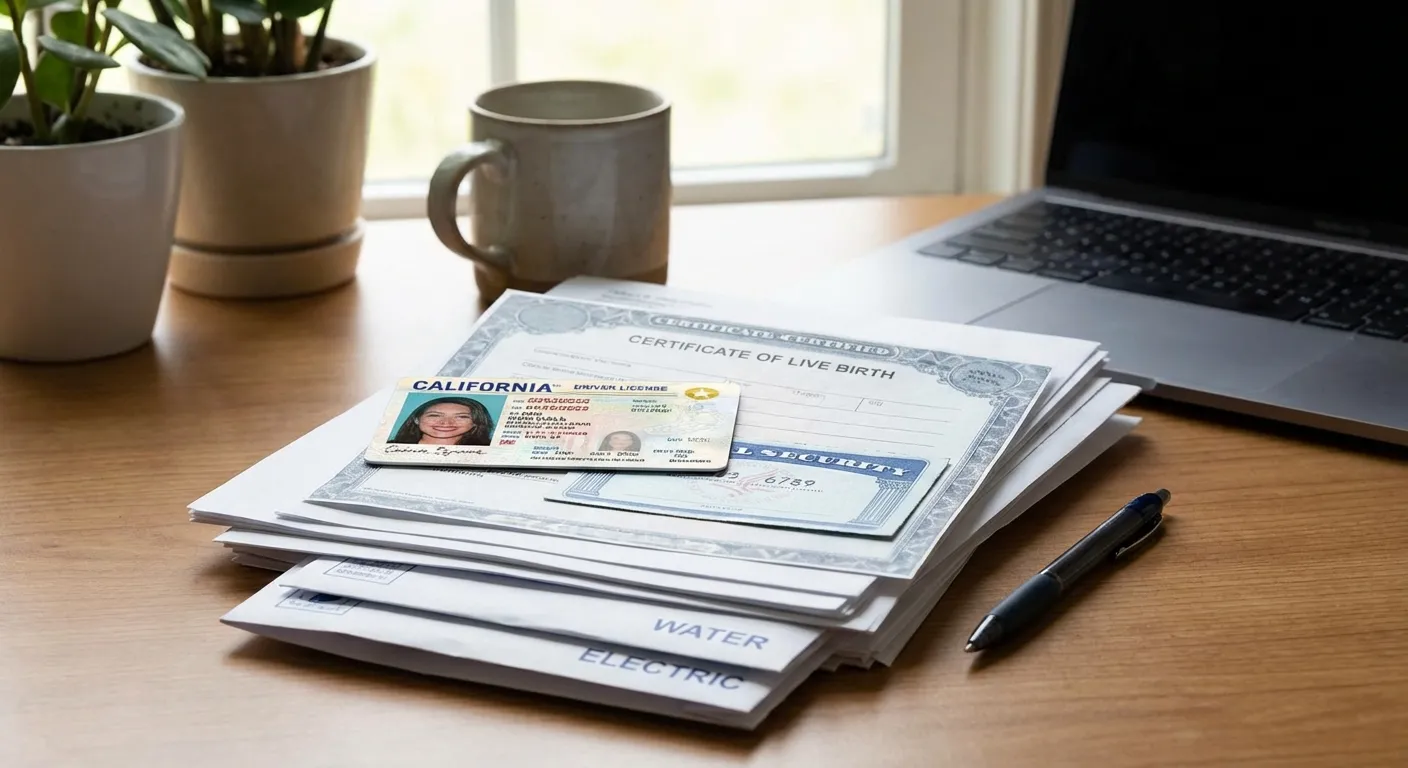
- Proof of identity: An original or certified birth certificate, valid U.S. passport, or permanent resident card
- Proof of Social Security number: Your Social Security card, W-2, or SSA-1099 with your full SSN
- Two proofs of state residency: Utility bills, bank statements, mortgage documents, or government mail showing your current address
- Proof of all legal name changes (if your current name differs from your birth certificate): Marriage certificates, divorce decrees, or court-ordered name change documents
Visit your state's DMV website first. Many states now offer online pre-application, which can significantly reduce your in-person wait time. Some states require appointments, while others accept walk-ins. The cost ranges from nothing (some states absorb the cost into your regular license renewal fee) to approximately $30 for a standalone REAL ID upgrade.
Processing times vary widely. Some states issue your REAL ID on the spot, while others mail it within two to four weeks. If you have a trip coming up soon, check your state's timeline and take steps to protect your identity documents while you're gathering the paperwork.
What Happened to the Old No-ID Process
Before ConfirmID launched, travelers who showed up without ID weren't automatically turned away. TSA officers would attempt to verify identity through an informal process involving questioning, database checks, and additional screening. This process was free but unpredictable, sometimes taking a few minutes and sometimes taking over an hour.
TSA retired that informal system when ConfirmID went live on February 1, 2026. The agency described the change as a modernization effort, replacing an inconsistent manual process with a standardized digital verification system. The $45 fee funds the technology infrastructure behind ConfirmID, including the biographic and biometric verification tools used at checkpoints.
For travelers who frequently forgot or lost their IDs, the old system was admittedly more forgiving. The new system is faster and more consistent, but the fee creates a financial incentive to either get compliant identification or bring your ID every time.
Summary
Do you need a REAL ID to fly in 2026? You need a REAL ID or another acceptable form of identification (passport, military ID, tribal ID, trusted traveler card, or digital ID). If you have none of these, TSA's ConfirmID program lets you pay $45 for a 10-day verification window, but the process adds up to 30 minutes at the checkpoint and doesn't guarantee you'll be cleared to fly.
The most practical path forward: get a REAL ID at your local DMV or renew your passport. Both are one-time investments that eliminate the hassle, fees, and uncertainty of relying on ConfirmID. If you have a trip in the next few weeks and can't get to the DMV in time, bring your passport or pay for ConfirmID online at pay.gov before heading to the airport.
For questions, text "AskTSA" to 275-872 or call 866-289-9673.
Sources
- REAL ID Requirements, Transportation Security Administration
- $45 Fee Option for Air Travelers Without a REAL ID Begins February 1, TSA Press Release
- TSA ConfirmID FAQs, Transportation Security Administration
- What You Need to Know About REAL ID and the May 7 Deadline, PBS News
- No REAL ID Yet? You Can Still Fly, But It May Cost $45, NBC News