
When researchers show babies something new, most infants look at it briefly, process what they're seeing, and move on. But some babies look longer. They stare at novel objects with an intensity that seems almost out of proportion, as if they're trying to extract every possible bit of information from what they're witnessing. What happens to those babies years later? And what does their fixation on novelty tell us about the origins of the mind?
A landmark study, led by developmental psychologist Prachi Shah at the University of Michigan and published in the journal Pediatric Research, followed children from infancy through early childhood to find out. The team measured curiosity by presenting 8-month-old babies with sequences of images and recording how long they looked at novel items versus familiar ones. Babies who showed heightened sensitivity to novelty, spending significantly more time examining things they hadn't seen before, scored higher on standardized IQ tests three years later. The correlation held even after controlling for factors like socioeconomic status and parental education, suggesting that curiosity itself rather than environmental advantages was driving the connection.
This finding challenges a decades-old assumption. The dominant view has long treated intelligence as a capacity, a fixed mental resource that determines how well someone can solve problems or learn new skills. But the Shah study, along with a growing body of supporting research, suggests intelligence might be better understood as an appetite, a drive to seek out and engage with information that shapes cognitive development from the earliest months of life. If that reframing is correct, it has profound consequences for how we raise children, design schools, and think about the human mind itself.
What Infant Curiosity Actually Looks Like
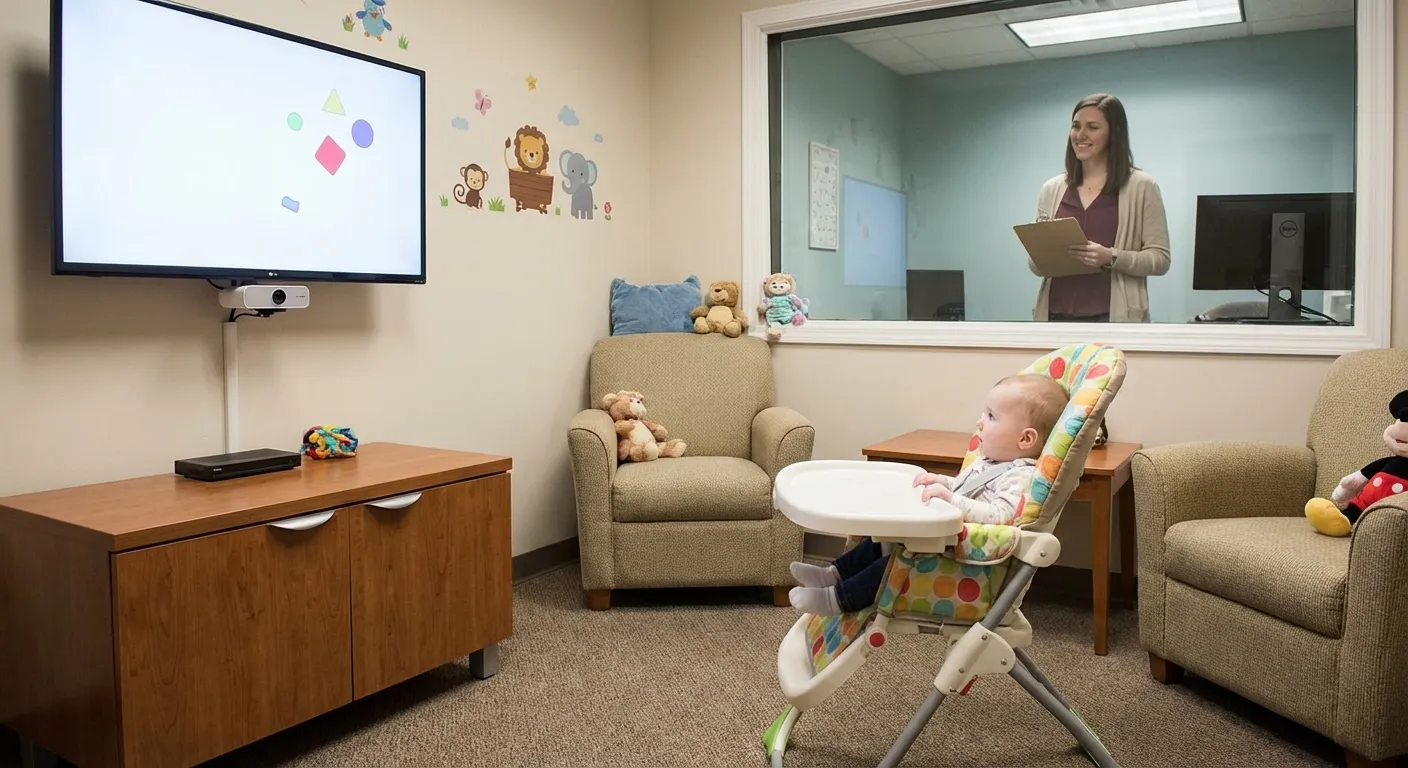
Measuring curiosity in babies requires creativity because infants can't answer questions or follow complex instructions. Researchers rely instead on looking behavior, specifically a phenomenon called habituation. When you show a baby the same image repeatedly, they initially look at it with interest, then gradually look away as they become bored or satisfied. When you then show something new, most babies turn back to look. The degree to which they reorient to novel stimuli, and how long they maintain attention, provides a window into their information-seeking behavior.
The babies who showed the strongest curiosity in the longitudinal study weren't just looking at new things longer. They were processing information more efficiently, habituating to familiar images faster and showing sharper discrimination between novel and familiar items. This suggests their extended looking wasn't simply slower processing. It was deeper processing, a more thorough extraction of information from each new encounter. They were curious and capable, and the combination of drive and capacity appeared to set a trajectory for cognitive development.
The researchers also found that different aspects of curiosity predicted different cognitive outcomes. Infants who showed strong visual preferences for complexity, drawn to intricate patterns over simple ones, developed stronger spatial reasoning abilities. Those who showed heightened responsiveness to social stimuli, particularly faces displaying emotional expressions, developed stronger language skills. Curiosity appears to be not one thing but many, a family of information-seeking behaviors that channel cognitive development in specific directions.
This specificity has important implications for understanding how intelligence develops. Rather than a general cognitive resource that improves across the board, intelligence may emerge from the accumulation of knowledge and skills in particular domains, driven by domain-specific curiosities. The infant who can't stop staring at faces may be building the foundation for social intelligence. The infant drawn to mechanical objects may be developing intuitions about physics. Early curiosity doesn't just predict later intelligence. It may actually shape what kind of intelligence develops.
The Feedback Loop Between Curiosity and Ability
One of the most intriguing aspects of the research is the suggestion of a feedback loop between curiosity and cognitive ability. Curious infants seek out more information, which builds knowledge and skills, which enables them to recognize more novelty, which fuels more curiosity. The cycle also works in reverse: infants who engage less with their environment develop knowledge more slowly, encounter fewer surprises, and have fewer opportunities to become intrigued by what they don't yet understand. Over time, small initial differences in curiosity could compound into large differences in cognitive development, much the way compound interest turns modest deposits into large sums.
This feedback loop helps explain why early intervention programs sometimes show lasting effects on cognitive outcomes. Programs that expose infants to rich, varied environments may not just be providing information directly. They may be activating and strengthening the curiosity systems that drive ongoing information seeking. The baby who experiences more novelty may develop a stronger habit of seeking novelty, creating a self-sustaining cycle of engagement with the world.
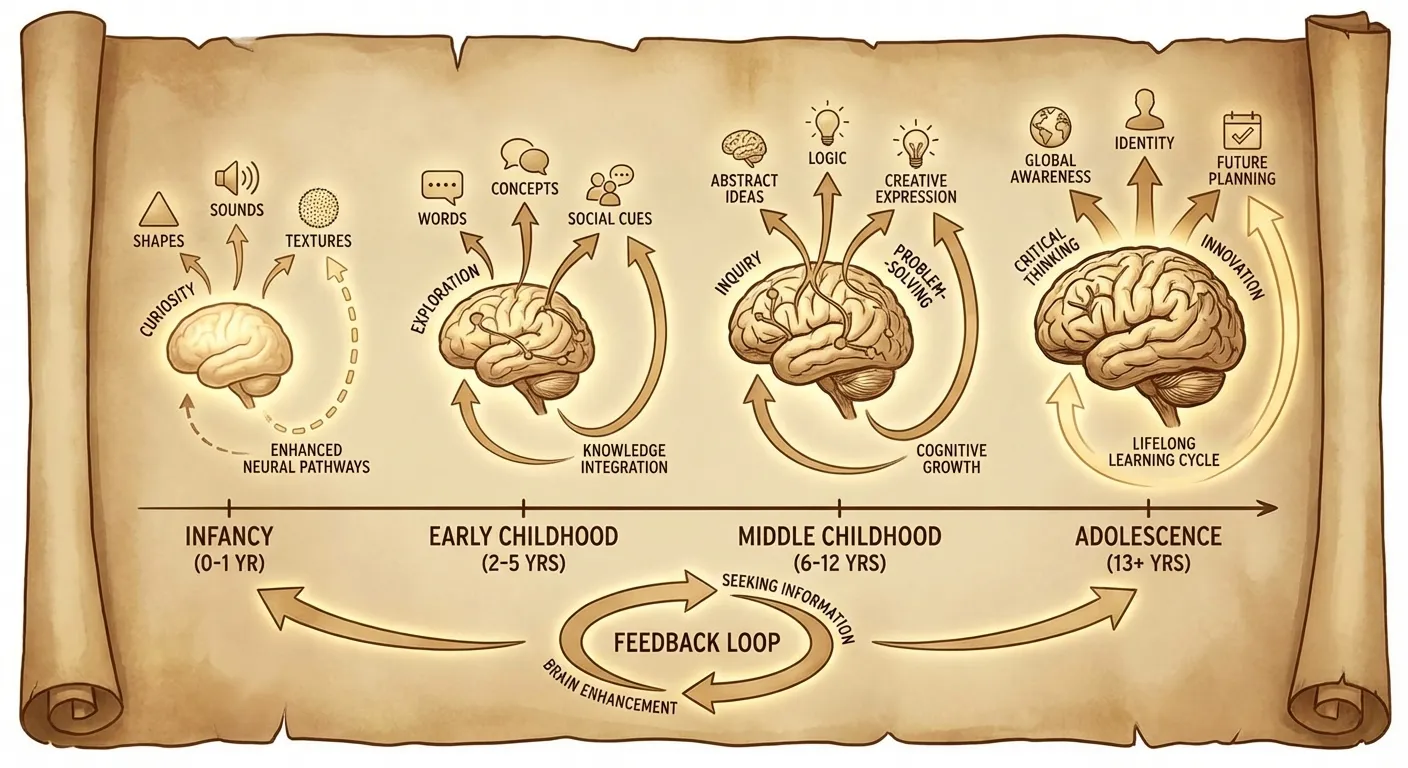
The feedback model also suggests why curiosity differences might be relatively stable over development. Research has found that babies who show high curiosity at 8 months tend to show high curiosity at 12 months, 18 months, and beyond. This stability might reflect an innate trait, but the feedback loop offers an alternative explanation. Once the cycle of curiosity and learning begins, it tends to perpetuate itself. The curious infant becomes the curious toddler becomes the curious child, not necessarily because curiosity is fixed but because early curiosity creates conditions that maintain and strengthen itself.
Understanding this feedback process raises questions about what determines initial curiosity levels. Genetics clearly plays some role, as twin studies show higher correlations in curiosity measures between identical twins than fraternal twins. But environmental factors also matter. Infants who experience responsive caregiving, where adults follow their gaze and engage with what interests them, show higher curiosity than those whose interests are ignored. The initial level of curiosity that starts the feedback loop appears to be shaped by both nature and nurture.
Curiosity and the Brain
Neuroscience research, including work by Matthias Gruber at Cardiff University's Brain Research Imaging Centre, has begun to identify the brain systems involved in curiosity, providing a biological basis for the behavioral observations. Curiosity appears to involve the brain's reward systems, particularly dopamine pathways that also drive other motivated behaviors like eating and social interaction. When we encounter something novel and potentially informative, these systems activate, creating a feeling of interest that motivates exploration and learning. In essence, our brains are wired to find information intrinsically rewarding.
This neurological perspective helps explain why curiosity is such a powerful driver of learning. Information seeking isn't just instrumentally useful, helping us survive and navigate the world. It's also directly pleasurable, at least for brains that are functioning normally. The curious infant staring at a novel object isn't just building cognitive skills. They're also experiencing something that feels good, a satisfaction that comes from encountering and processing new information.
Individual differences in these reward systems may partly explain individual differences in curiosity. Some people's brains respond more strongly to novelty, generating more dopamine and more subjective interest when they encounter new things. These people would naturally seek out more novel experiences, engage more deeply with new information, and potentially develop stronger cognitive abilities as a result. The connection between curiosity and intelligence might trace back, ultimately, to differences in how powerfully our brains reward us for learning.
The brain research also reveals connections between curiosity and other cognitive processes. The same prefrontal regions that support curiosity also support working memory, attention control, and executive function. This suggests that curiosity isn't a separate system but an integral part of the broader cognitive architecture. Highly curious individuals may have more developed prefrontal systems generally, explaining both their information-seeking behavior and their enhanced cognitive performance on various tasks.
What This Means for Nurturing Intelligence
The research on curiosity and intelligence has practical implications for parents, educators, and anyone concerned with cognitive development. If curiosity drives learning and intelligence, then fostering curiosity may be as important as providing information directly. This suggests a shift in emphasis from knowledge transmission to curiosity cultivation, from teaching children what to think to nurturing their desire to think at all.

Some approaches seem particularly promising based on the research. Following children's interests rather than imposing adult agendas appears to strengthen curiosity by validating it and giving it opportunities to develop. Providing environments rich in novelty gives curiosity more to work with, more raw material for the information-seeking process. Modeling curiosity, letting children see adults genuinely interested in learning, may teach them that curiosity is valuable and appropriate at any age.
The research also raises cautions about practices that might suppress curiosity. Environments that emphasize rote learning over exploration, that punish questioning, or that provide so much structure that children have no opportunity for self-directed investigation might be undermining the very drive that powers cognitive development. Efficiency in knowledge transmission could come at the cost of curiosity, and thus at the cost of the self-sustaining learning that curiosity enables.
This connects to broader research on how animals maintain sophisticated cognitive abilities, including the role of curiosity and exploration in their development. Crows, for instance, are famously curious birds whose playful exploration of objects seems to support their remarkable problem-solving abilities. The parallel between avian and human curiosity suggests that the connection between exploration and intelligence may be a fundamental feature of how minds develop, regardless of the specific type of mind involved.
What This Means
If curiosity and intelligence co-evolved, selected together because curious organisms learned more and survived better, then intelligence wasn't primarily designed for taking tests or succeeding in school. It was designed for exploration, for the ongoing project of understanding and predicting a complex world. The sunk cost fallacy and other cognitive biases may represent the dark side of this system. Research on how our brains construct reality through predictive processing suggests that curiosity may be the engine driving the brain's world-modeling capacity. These biases are mental shortcuts that usually serve exploration but sometimes lead us astray.
That evolutionary lens raises a troubling possibility about modern life. Schools that emphasize standardized testing over open-ended inquiry, workplaces that reward compliance over questioning, and screen environments that deliver answers before questions fully form may be systematically under-exercising the very drive that built human cognition. The feedback loop described earlier doesn't just work in childhood. It operates throughout life, meaning that environments which discourage curiosity don't merely fail to stimulate intelligence; they may allow it to atrophy.
This has implications at the population level as well. Societies that value and nurture curiosity might develop more capable populations, not because curious people simply accumulate more facts but because widespread curiosity sustains the self-reinforcing cycle of engagement that keeps minds sharp across generations. Educational systems, cultural values, and even economic structures that affect how much time people have for exploration could all shape cognitive trajectories through their effects on this cycle.
The research also highlights how little we still understand about the earliest months of mental life. Infants arrive with dispositions that differ in measurable, consequential ways, yet most developmental science has focused on what children learn rather than on the drive that makes them learn it. The Shah study and the neuroscience work by Gruber suggest that this drive deserves far more attention, both as a subject of research and as something worth protecting in how we design the environments where children grow up.
For parents watching their babies stare intently at something new, the message is encouraging. That stare isn't empty. It's the visible surface of a profound cognitive process, the beginning of a lifelong feedback loop between seeking and understanding. What those infants are doing, with that seemingly disproportionate focus on a novel object, is not passively receiving the world but actively constructing the mind that will navigate it.
Sources
- Curiosity in infancy predicts later academic achievement - Pediatric Research study by Shah et al. on infant curiosity and cognitive outcomes
- States of curiosity modulate hippocampus-dependent learning00804-6) - Neuron paper by Gruber et al. on curiosity and memory
- How curiosity changes the brain to enhance learning - ScienceDaily coverage of curiosity and dopamine pathways
- Infant attention and later intelligence - Psychological Bulletin meta-analysis on infant habituation and IQ