
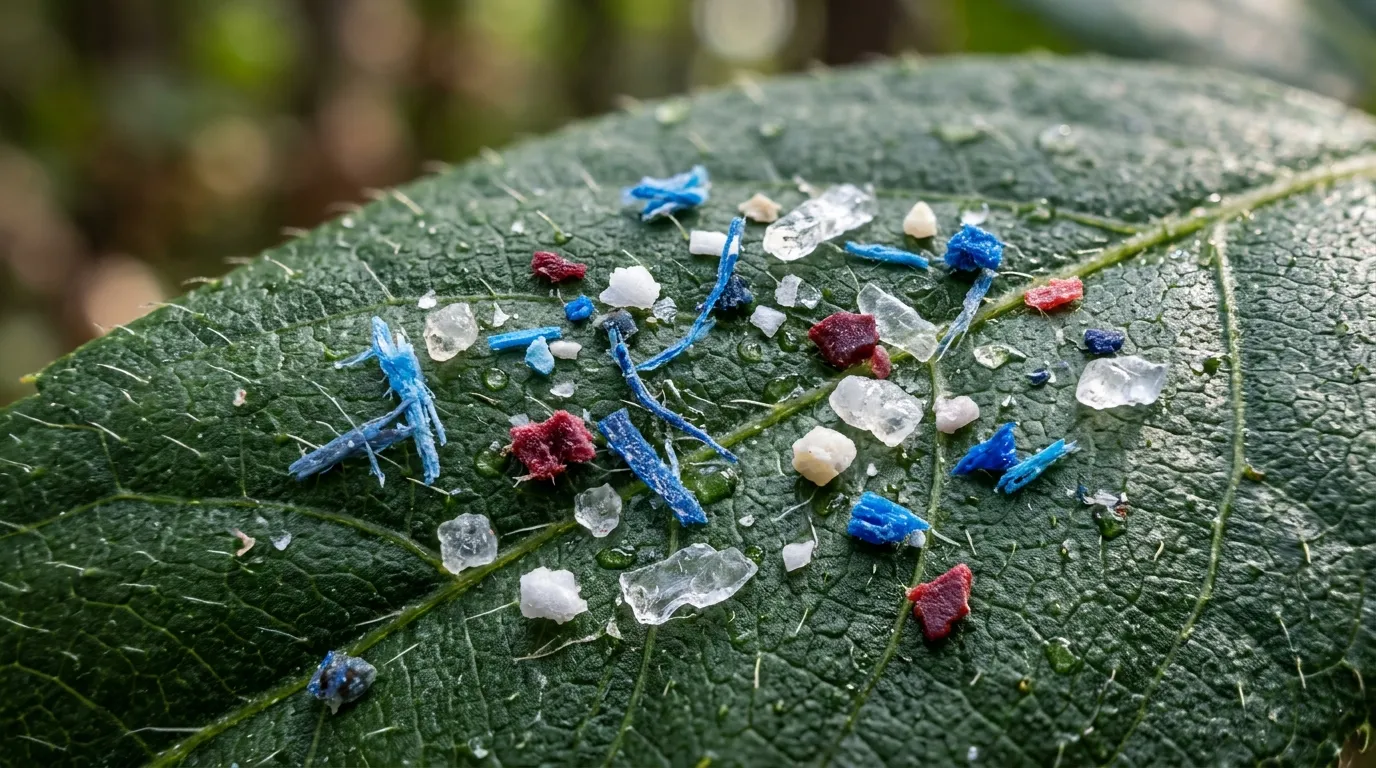
You could walk for hours through the forests east of Darmstadt, Germany, hearing nothing but birdsong and wind through the beech canopy, and never suspect what the trees have been collecting. Not water. Not carbon. Plastic. Tiny fragments of polypropylene and polyethylene, some smaller than a grain of sand, drifting through the atmosphere and landing on leaves that funnel them, silently and efficiently, into the soil below.
A study published this month in Communications Earth & Environment by geoscientists at TU Darmstadt has quantified this process for the first time, and the numbers are unsettling. Forest soils contain between 120 and more than 13,000 microplastic particles per kilogram, concentrations that match or exceed those found in urban soils and far surpass levels measured in farmland or wetlands. The forests that we think of as refuges from industrial pollution are, it turns out, some of the most effective collectors of it.
How Plastic Gets Into a Forest
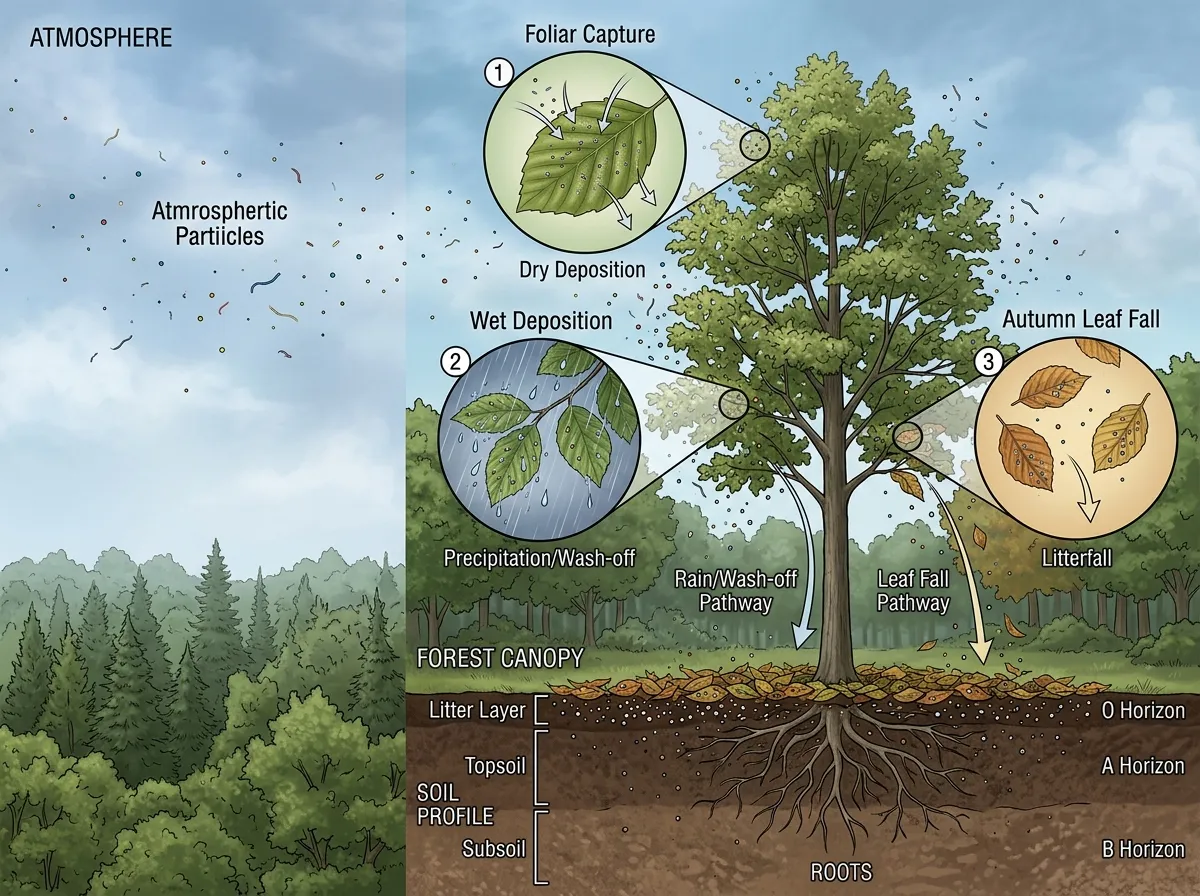
The microplastics arriving in forests don't come from hikers dropping water bottles or illegal dumping. They come from the air. Tire wear on roads, synthetic fibers released from clothing during washing, degraded packaging carried aloft by wind: these particles enter the atmosphere and travel considerable distances before settling on whatever surface they encounter. In open fields, they land and are quickly disturbed by plowing, grazing, or wind. In forests, they land on something far stickier: leaves.
Dr. Collin J. Weber, the study's lead author from TU Darmstadt's Institute of Applied Geosciences, describes the mechanism as the "comb-out effect." Tree canopies function like massive air filters, their millions of leaves presenting an enormous combined surface area to passing air currents. Microplastic particles collide with leaves and adhere to the waxy cuticle that coats their surfaces. Some are washed off by rain and carried to the forest floor. Others remain attached until autumn, when the leaves themselves fall and decompose.
"Microplastics in forest soils originate primarily from atmospheric deposition and from leaves falling to the ground," Weber explained. The process is passive, continuous, and has been happening for as long as plastic has existed in the atmosphere.
What the Numbers Actually Show
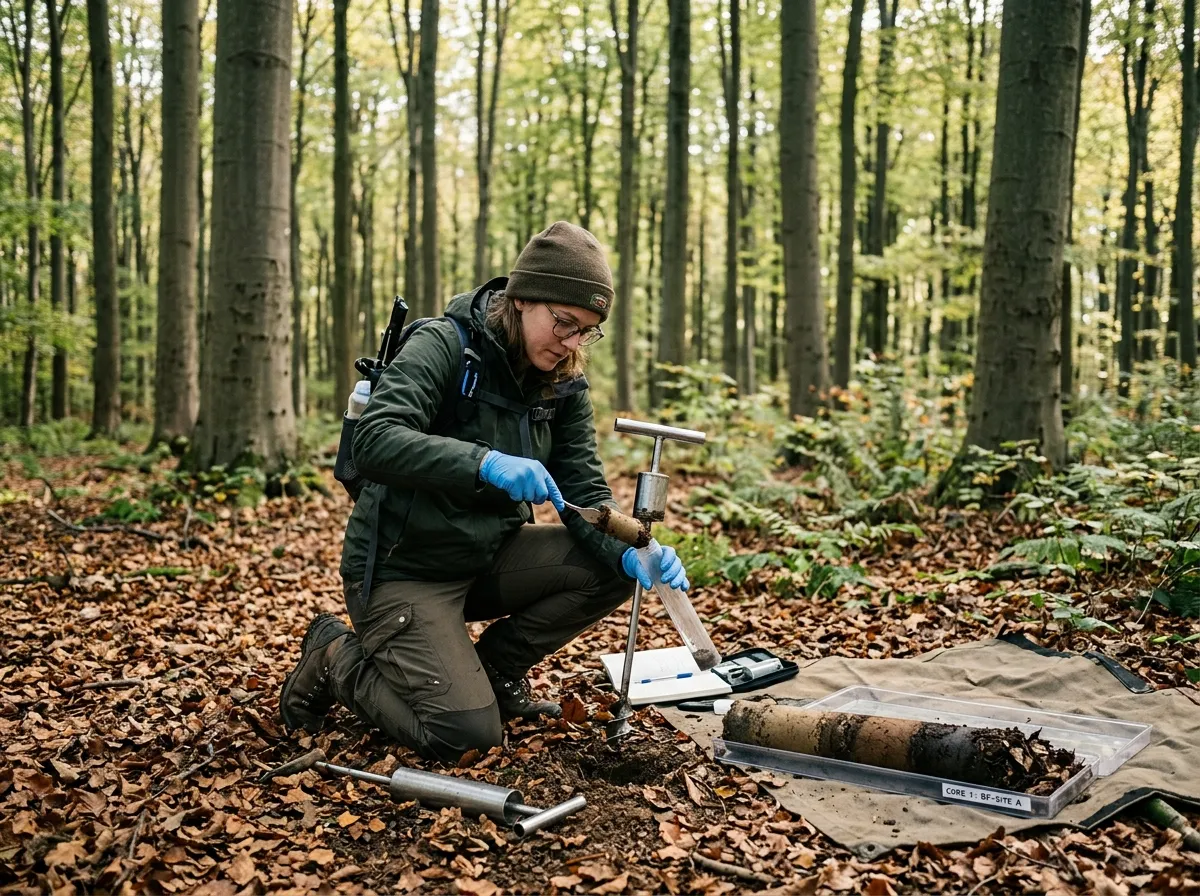
Weber and co-author Moritz Bigalke collected samples from four forest sites east of Darmstadt, analyzing soil, fallen leaves, and atmospheric deposition using newly developed extraction methods combined with spectroscopic techniques. The results painted a consistent picture across all sites.
The atmospheric deposition rate averaged 9.1 microplastic particles per square meter per day. Most particles were smaller than 250 micrometers, roughly the width of two or three human hairs, and the dominant polymers were polypropylene and polyethylene, the two most widely produced plastics on Earth. These are the materials in food packaging, bottle caps, synthetic textiles, and countless disposable products.
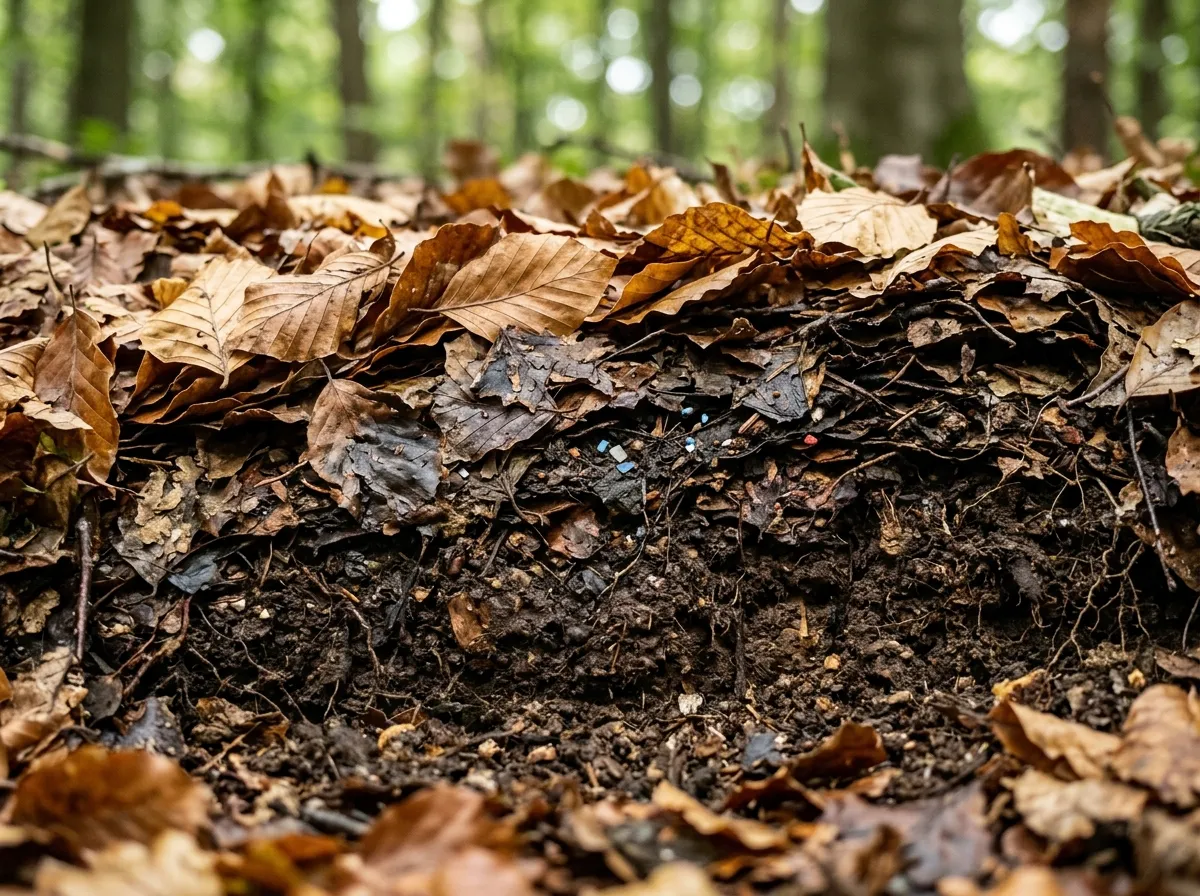
In the soil itself, the highest concentrations appeared in the uppermost layer of leaf litter, where decomposition had only recently begun. This makes intuitive sense: freshly fallen leaves carry their captured plastic to the ground, and as the organic material breaks down, the plastic remains. Deeper soil layers contained lower but still significant concentrations, transported downward by earthworms, root growth, and water percolation.
The comparison to other land types is what makes the data so striking. Farmland soils, which receive plastic contamination from sewage sludge, irrigation water, and mulch films, contained substantially less microplastic than these forest soils. Wetlands, too, showed lower concentrations. The forests, despite having no direct agricultural or industrial plastic input, had accumulated more, because their canopies are so extraordinarily efficient at pulling particles out of the air.
Seven Decades of Invisible Accumulation
One of the study's most innovative contributions is a historical model estimating how much microplastic has entered forests from the atmosphere since the 1950s, when commercial plastic production first became widespread. By combining their deposition measurements with historical data on global plastic production volumes, Weber and Bigalke calculated a cumulative atmospheric input that helps explain why current soil concentrations are so high.
The model reveals that accumulation was negligible through the 1960s, when global plastic production was still measured in single-digit millions of tons. It began accelerating in the 1970s and 1980s as production scaled into the hundreds of millions of tons, and it has compounded dramatically since 2000. Today, humanity produces more than 400 million metric tons of plastic annually. Even if only a tiny fraction of that mass breaks down into particles small enough to become airborne, the sheer volume of production means the atmospheric load is immense.
What makes forests particularly effective long-term sinks is their stability. A farm field is plowed every year, turning soil and potentially redistributing or burying microplastics. A parking lot is swept. But a forest floor accumulates leaf litter year after year, building an organic archive that traps and preserves whatever the canopy has filtered from the air. Some of the microplastic in the Darmstadt forest soils may have been deposited decades ago and simply never left.
This long memory makes forests useful as pollution records, a kind of environmental library that documents the history of atmospheric plastic contamination. But it also means that even if plastic production were drastically reduced tomorrow, forests would carry the legacy of the past seven decades in their soil for a very long time.
What This Could Mean for Forest Ecosystems
The ecological consequences of microplastics in forest soil are still poorly understood, but early research from other studies offers reasons for concern. Microplastics can alter soil structure, affecting water retention and aeration. They can leach chemical additives, including plasticizers, flame retardants, and UV stabilizers, into the surrounding soil. And they can interact with the microbial communities that drive decomposition and nutrient cycling.
For forests already stressed by climate change, drought, and pest outbreaks, an additional chemical burden in their soil is not trivial. The mycorrhizal fungal networks that connect tree roots and facilitate nutrient sharing operate in exactly the soil layers where microplastic concentrations are highest. Whether microplastics interfere with these networks is an open question, but one that forest ecologists are increasingly asking.
There is also the question of what organisms living in forest soil are ingesting. Earthworms, beetles, mites, and springtails are the engines of decomposition, processing leaf litter and cycling nutrients back into forms that tree roots can absorb. Laboratory studies have shown that earthworms exposed to microplastic-contaminated soil experience reduced growth and altered burrowing behavior. If similar effects occur in natural forest soils with the concentrations Weber's team measured, the implications for forest health could be significant.
The researchers note that their findings apply specifically to temperate deciduous forests, which lose and regrow their leaves annually, maximizing the comb-out and deposition cycle. Coniferous forests, with their year-round needle canopies, likely capture microplastics through different mechanisms and may accumulate them at different rates, a question that future research will need to address.
The Air We Share
Weber's work carries an implication that extends well beyond forests. If microplastic particles travel through the atmosphere in sufficient quantities to contaminate remote woodland soils at levels matching city centers, then the air between those forests and cities contains them too. Every breath draws in some fraction of the atmospheric plastic load.
"If these plastics are present in the air and settle even in remote locations," Weber noted, "they are likely present in the air people breathe." The health effects of inhaling microplastics are still being studied, but preliminary research has found plastic particles in human lung tissue, blood, and placentas. A 2024 study published in the New England Journal of Medicine found that patients with microplastics detected in their carotid artery plaque had a significantly higher risk of heart attack, stroke, or death over a 34-month follow-up period.
The Darmstadt study doesn't answer the health question directly, but it reframes it. Microplastic pollution is not primarily a problem of littered beaches and ocean gyres, the images that have dominated public awareness. It is an atmospheric phenomenon, as pervasive and invisible as the particulate matter from car exhaust or industrial emissions. The difference is that microplastics don't break down on human timescales. They accumulate.
Forests, with their extraordinary surface area and their patient, year-after-year collection of atmospheric debris, are simply making that accumulation visible for the first time. The trees, in their way, are showing us what we've been breathing all along. The question is what we do with that information, not just for the forests, but for the ecosystems, including our own bodies, that share the same air. Research teams in Scandinavia, Japan, and the Pacific Northwest have already begun replicating Weber's methodology in different forest types, and the broader pattern of unexpected animal and ecosystem behaviors being reshaped by environmental pressures suggests we are only beginning to understand how plastic pollution threads through the natural world.
Sources
- Forest soils accumulate microplastics through atmospheric deposition - Weber, C.J. & Bigalke, M., Communications Earth & Environment (2026)
- Microplastics are falling from the sky and polluting forests - ScienceDaily
- Microplastics are raining down and building up in forests worldwide - Earth.com
- Microplastics and Nanoplastics in Atheromas and Cardiovascular Events - New England Journal of Medicine (2024)