
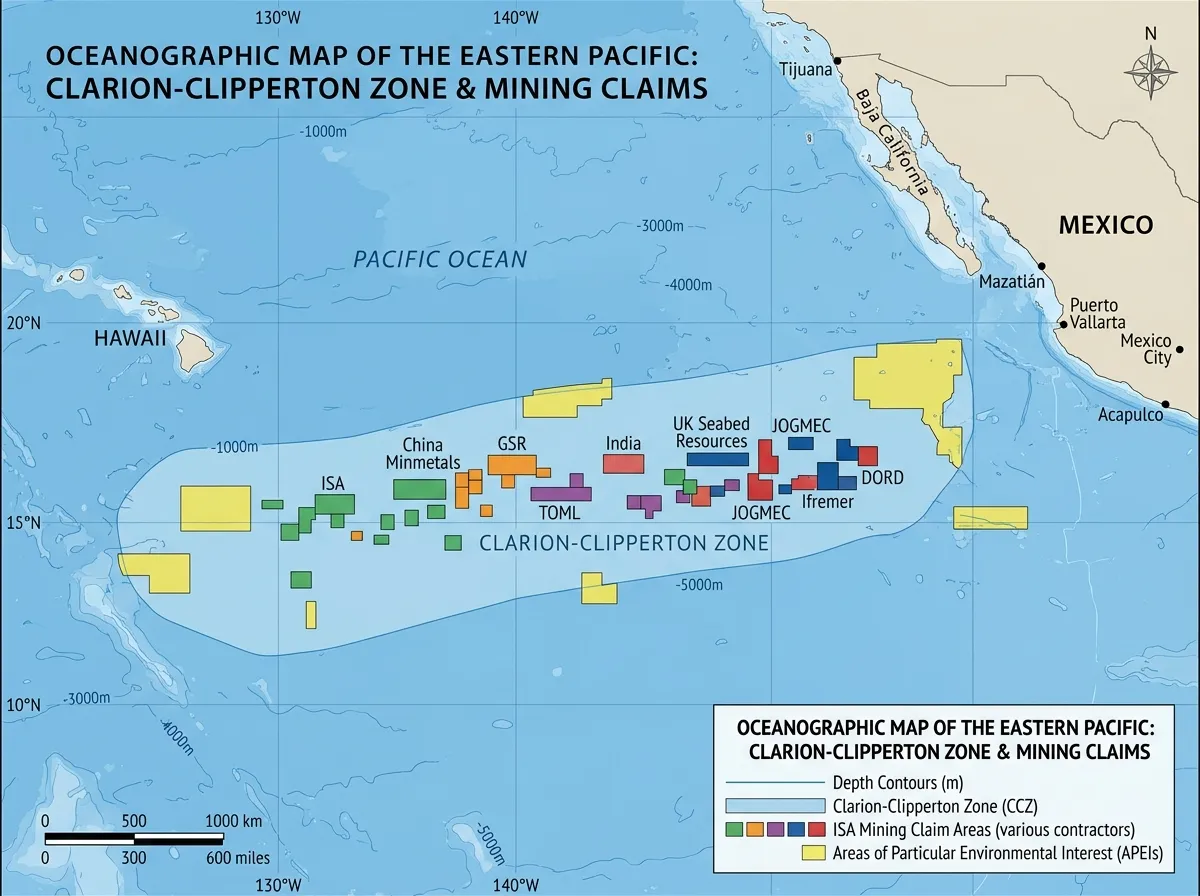
More than 90 percent of the species living on the floor of the Clarion-Clipperton Zone have never been named. We do not know what they are, how they relate to one another, or what roles they play in an ecosystem that stretches across six million square kilometers of the Pacific between Hawaii and Mexico. And yet, as of January 2026, companies can now apply for commercial permits to mine that same seabed for metals. Scientists are racing to catalog life in a place we barely understand before industrial machinery rolls across it, and what they are finding suggests the abyss holds far more biological complexity than anyone expected.
A team of 16 researchers from institutions spanning seven countries announced this week that they have identified 24 new species of amphipods from the CCZ, including two entirely new genera and, most remarkably, a new superfamily: a taxonomic rank so high that its discovery rewrites a branch of the tree of life. The findings, published in an open-access special issue of the journal ZooKeys, represent one of the largest single contributions to deep-sea amphipod taxonomy in recent memory.
What Lives Four Kilometers Down
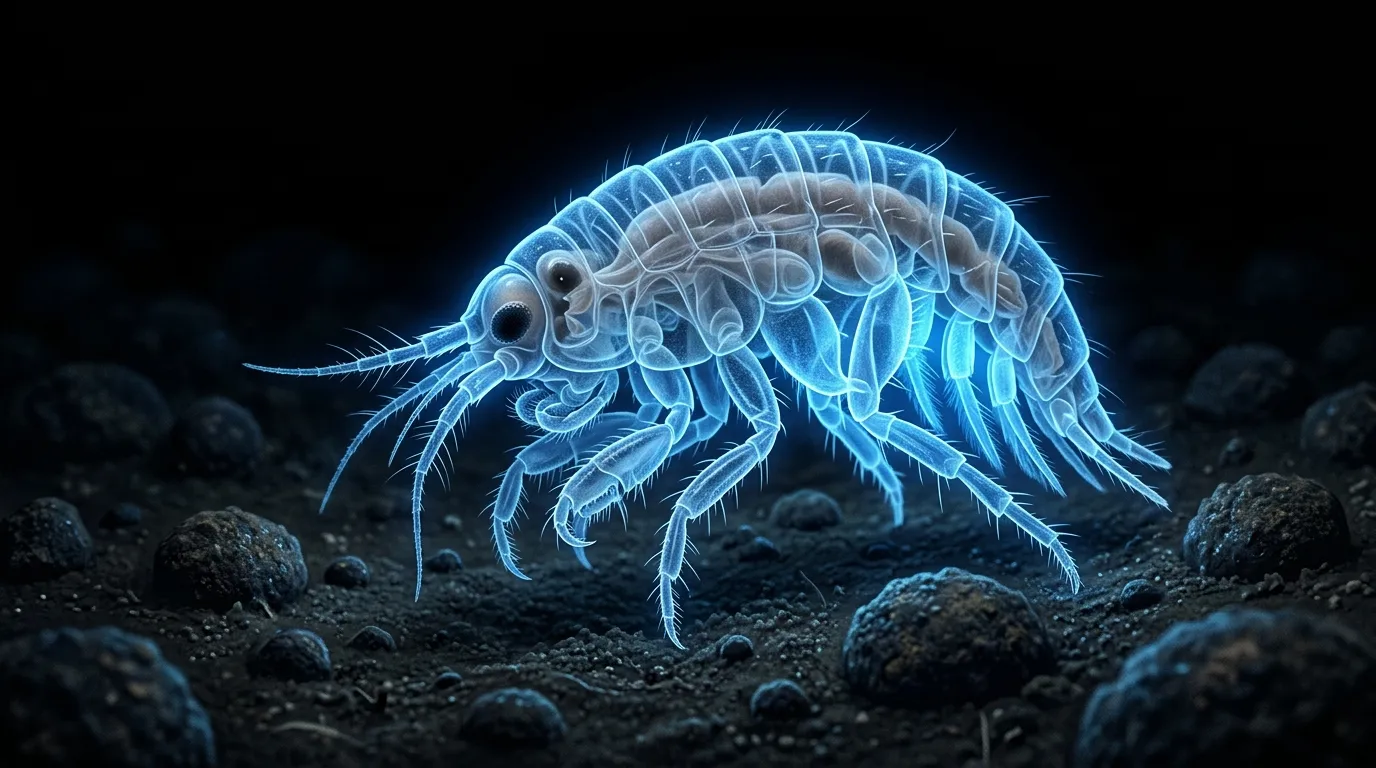
Amphipods are small crustaceans, typically about a centimeter long, with segmented bodies and a conical mouth structure that makes them look, under magnification, like a cross between a shrimp and a medieval helmet. They are among the most ecologically important animals on the abyssal plain. Some are scavengers that break down organic matter falling from the surface, a slow rain of dead plankton and fish carcasses known as marine snow. Others are active predators. Together, they form a critical link in a food web that operates in permanent darkness, under pressures that would crush most surface-dwelling organisms, at depths of roughly 4,000 meters.
The 24 new species described in this study span 10 amphipod families, covering both ends of that ecological spectrum. But the headline discovery is something rarer: the identification of an entirely new superfamily, Mirabestioidea, along with a new family, Mirabestiidae, and two new genera, Mirabestia and Pseudolepechinella. In taxonomy, a new superfamily is not a routine finding. It sits well above the species and genus levels that typically get announced, closer to the deep structural branches that define how entire groups of organisms are related.
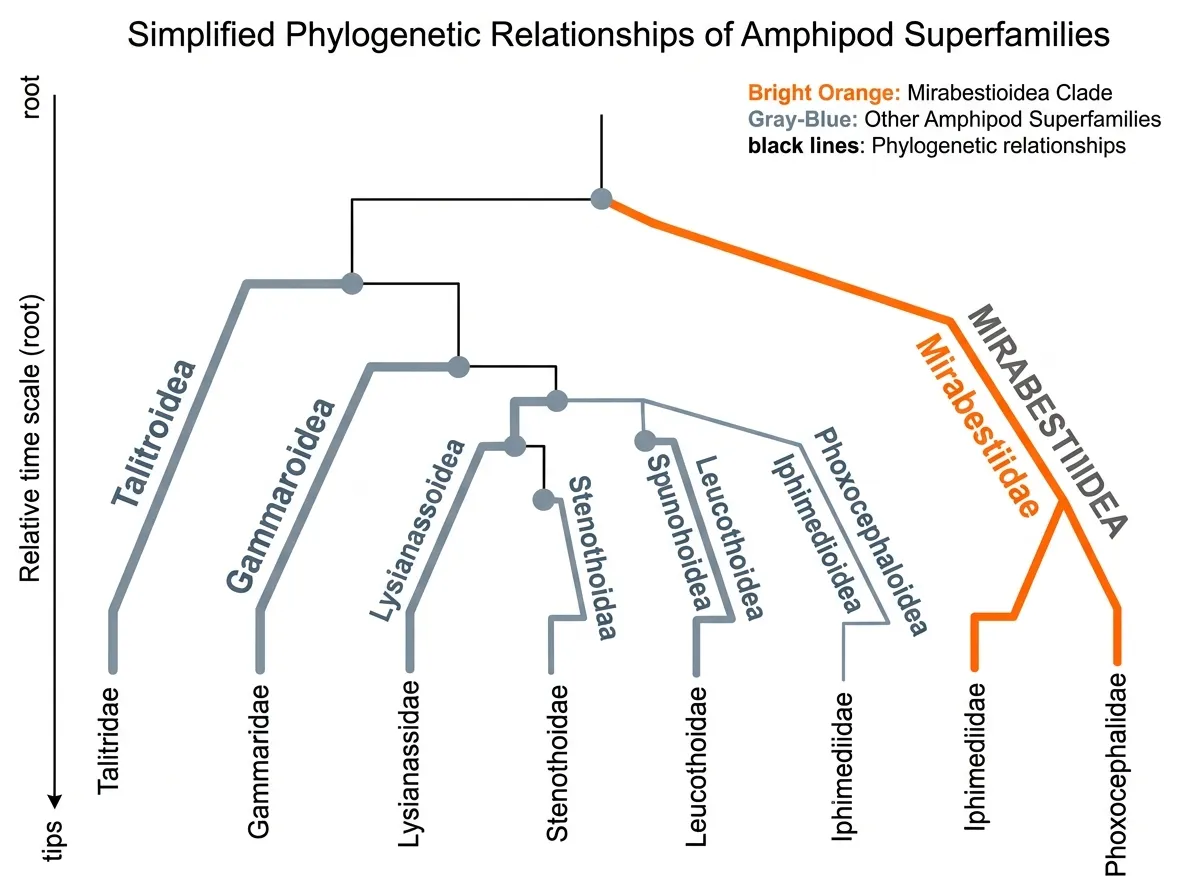
Dr. Tammy Horton of the National Oceanography Centre in Southampton, who co-led the research, put the significance in plain terms. "To find a new superfamily is incredibly exciting, and very rarely happens," she said. She compared the magnitude of the discovery to a hypothetical scenario: "It would be like finding dogs" in a world where only cats and bears were previously known. The new superfamily is an entire lineage of deep-sea organisms that had been living, reproducing, and evolving on the abyssal plain without ever being documented by science.
Sixteen Scientists, One Week, 24 Species
The study's methodology is almost as striking as its results. Amphipod taxonomy is painstaking work. Specimens collected from the deep sea are often fragile, partially damaged, and difficult to compare against known species. Describing even a single new species can take months of microscope work, morphological measurement, and cross-referencing with existing literature.
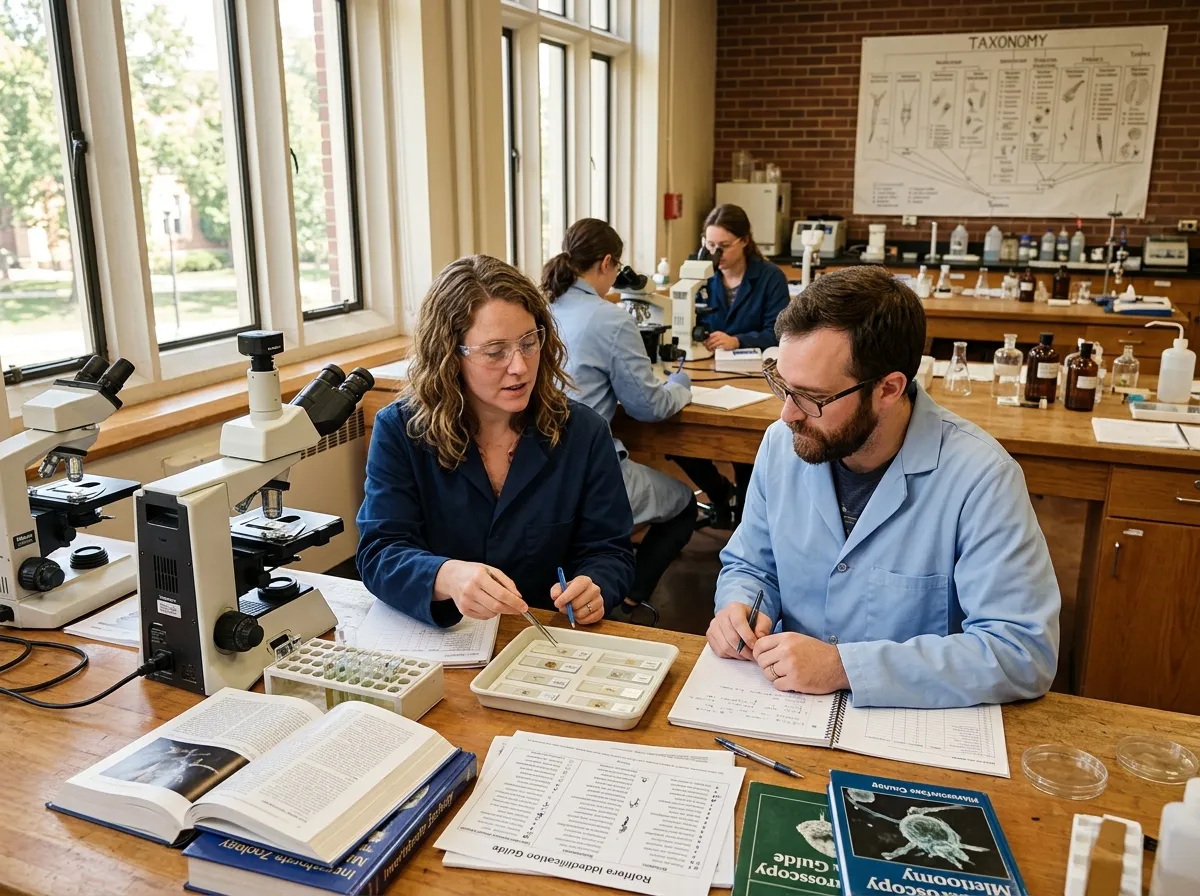
The breakthrough came from a deliberate, collaborative approach. Dr. Anna Jazdzewska of the University of Lodz in Poland, who co-led the project, organized a week-long taxonomy workshop in 2024 at her department's facilities. She assembled 16 experts and early-career scientists from institutions including the Natural History Museum London, the Canadian Museum of Nature, the University of Hamburg, Senckenberg, the University Museum of Bergen, and New Zealand's NIWA. Rather than working independently on isolated collections, the team merged their datasets and worked side by side, comparing specimens in real time.
The result was an efficiency that solo researchers rarely achieve. In a single concentrated effort, the group described all 24 species, established the new higher-level taxa, and produced the first molecular barcodes for several rare species. They also recorded the deepest known occurrences for multiple genera, pushing the known depth range of amphipod diversity even further into the abyss. The molecular barcodes are particularly valuable: they create a genetic reference library that future researchers can use to identify species from environmental DNA samples without needing to physically collect specimens, a tool that could prove essential for monitoring biodiversity in areas affected by mining operations.
The naming conventions themselves reflect the personal nature of the work. Mirabestia maisie honors Dr. Horton's daughter. Byblis hortonae and Byblisoides jazdzewskae pay tribute to the two lead researchers. Lepidepecreum myla references a video game, while Pseudolepechinella apricity takes its name from a word meaning the warmth of the winter sun. Each name is a small act of meaning-making in a field where the subjects are invisible to almost everyone.
The Race Against the Mining Machines
The timing of this discovery is not coincidental. The Clarion-Clipperton Zone contains trillions of manganese nodules, potato-sized rocks rich in nickel, cobalt, copper, and manganese, metals that battery manufacturers and electronics companies need in growing quantities. For decades, deep-sea mining was a theoretical concern. That changed in January 2026, when NOAA finalized regulatory changes allowing companies to apply simultaneously for exploration licenses and commercial recovery permits, dramatically accelerating the path from prospecting to extraction.
The Metals Company submitted an application in March 2026 targeting more than 25,000 square miles within the CCZ. If approved, it would represent one of the first large-scale commercial mining operations on the abyssal seabed. And the ecological data we have is not encouraging: testing in 2022 showed that mining machinery reduced species abundance by 37 percent and biodiversity by nearly one-third within just two months in test areas.
This is the tension at the heart of the discovery. Jazdzewska described naming species as giving them a "passport for living," a way to make invisible organisms visible to policymakers and regulators. You cannot protect what you cannot name, and you cannot assess the environmental impact of mining on a community of organisms if you do not know that community exists. The 24 new species are not just scientific curiosities. They are data points in a regulatory argument that is unfolding in real time.
What 90 Percent Unnamed Means
The scale of our ignorance about the CCZ is worth sitting with. Dr. Horton noted that "with more than 90 percent of species in the CCZ still unnamed, each species described is a vital step." The International Seabed Authority has launched its "One Thousand Reasons" project, an initiative tied to the Sustainable Seabed Knowledge Initiative, aiming to describe 1,000 new species from the zone by the end of the decade. Twenty-four species in one study is a meaningful contribution, but it also reveals the gap: at the current pace of discovery, reaching even 10 percent coverage would take decades longer than the mining timeline allows.
This is not an abstract problem. Consider what it means in practical terms: if a mining operation destroys a population of Mirabestia maisie before scientists have studied its reproductive cycle, diet, or ecological relationships, we will not even know what questions we failed to ask. The species will simply vanish from a place we never properly surveyed.
The history of resource extraction on land offers a clear pattern: when economic interests move faster than scientific understanding, ecosystems pay the price. The difference in the deep sea is that we may never fully understand what we have lost, because we never knew it was there in the first place. Terrestrial ecosystems at least had centuries of naturalist observation before industrialization. The abyssal plain has had virtually none. We are, in a meaningful sense, being asked to decide whether to mine a library before we have read any of the books.
The CCZ is not the only deep-sea region facing this pressure, but it is the test case. How the international community handles the balance between mineral extraction and biodiversity protection here will set precedents for ocean governance worldwide. The 24 new amphipods cannot advocate for themselves. But their existence, documented and named, makes the cost of ignorance harder to ignore.
The Bigger Picture
The discovery of Mirabestioidea is not just a win for taxonomy. It is a reminder that the deep ocean remains Earth's largest unexplored frontier, a place where entirely unknown branches of life can hide in plain sight simply because no one has looked carefully enough. The biodiversity crisis unfolding in better-studied ecosystems, from tropical forests to coral reefs, has taught us that species loss is often irreversible and always underestimated. The abyssal plain adds another dimension to that lesson: we are losing species we have not yet met.
What the Lodz workshop demonstrated is that the bottleneck is not technology or access to specimens. It is time and collaboration. Sixteen scientists, working together for one week, accomplished what years of isolated effort had not. The question now is whether the pace of discovery can keep up with the pace of industrial ambition, and whether the names written into ZooKeys this week will be enough to slow the machines that are already warming up.
Sources
- Scientists Discover a New Branch of Life in the Deep Sea - Inside Climate News
- Biodiversity Boost: 24 New Deep-Sea Species Discovered in Major Pacific Research - Pensoft Blog
- 24 New Deep-Sea Species Found Including a Rare New Branch of Life - ScienceDaily
- New Branch of Evolution Discovered in Pacific's Contested Deep-Sea - Oceanographic Magazine