
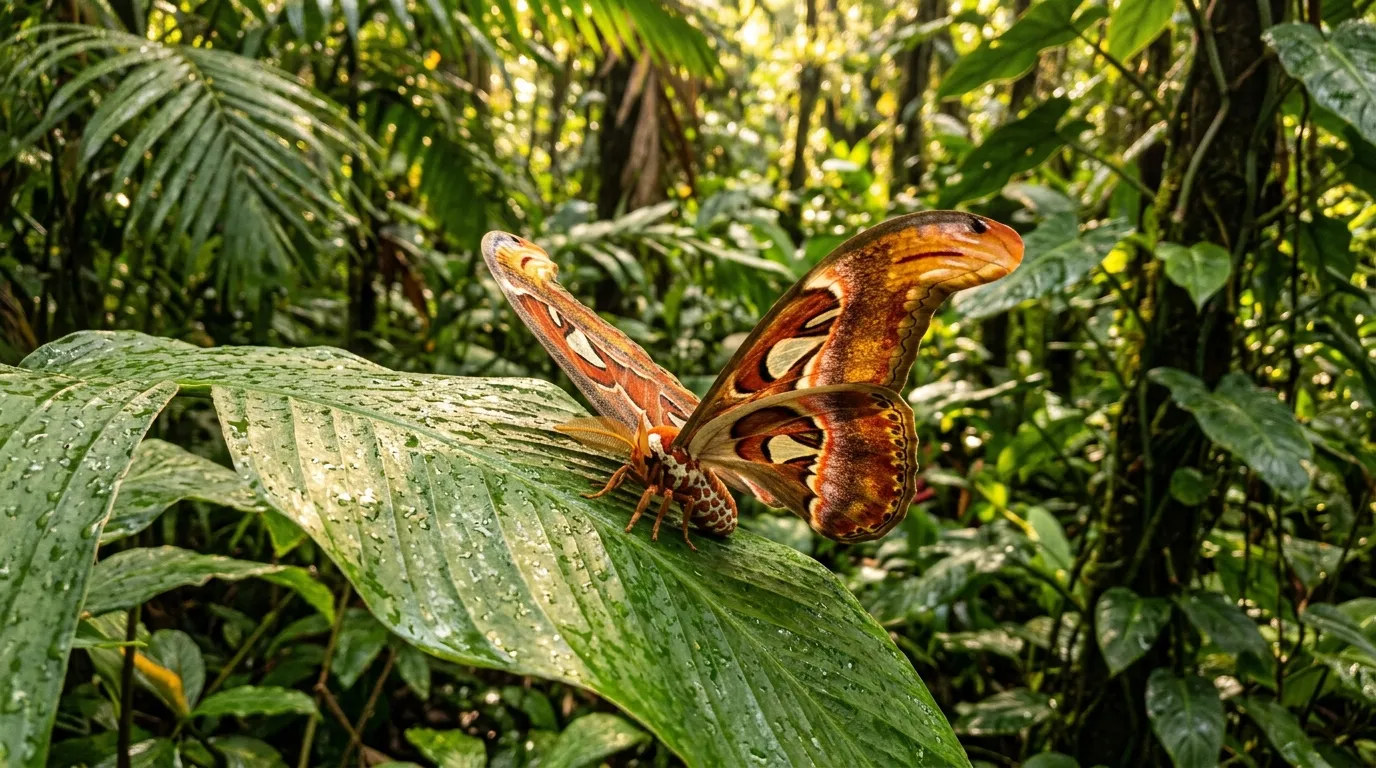
Somewhere in the lowland rainforests of the Amazon basin, a moth lands on a leaf in the afternoon heat. Its body temperature climbs with the air around it, because insects, unlike mammals, can't regulate their own internal temperature. If the air crosses a specific threshold, the proteins inside the moth's cells begin to lose their shape. Once that happens, they stop working. The moth dies.
That threshold is encoded in the insect's biology, in the physical architecture of its proteins. And according to a sweeping new study published in Nature in March 2026, that architecture can't change fast enough to keep pace with a warming climate. The research, which examined more than 2,000 insect species across two continents, found that up to half of the insect species in the Amazon may face critical heat stress under projected warming scenarios. The insects most at risk are the ones that live where biodiversity is highest: the hot, humid lowlands where the majority of tropical species have evolved.
The findings carry consequences that extend far beyond entomology. Insects pollinate roughly 75% of all flowering plants and 35% of global food crops. They decompose organic matter, cycle nutrients through soil, and serve as prey for birds, amphibians, and fish. If tropical insect populations collapse, the ecosystems they support will follow.
Two Thousand Species, One Uncomfortable Answer
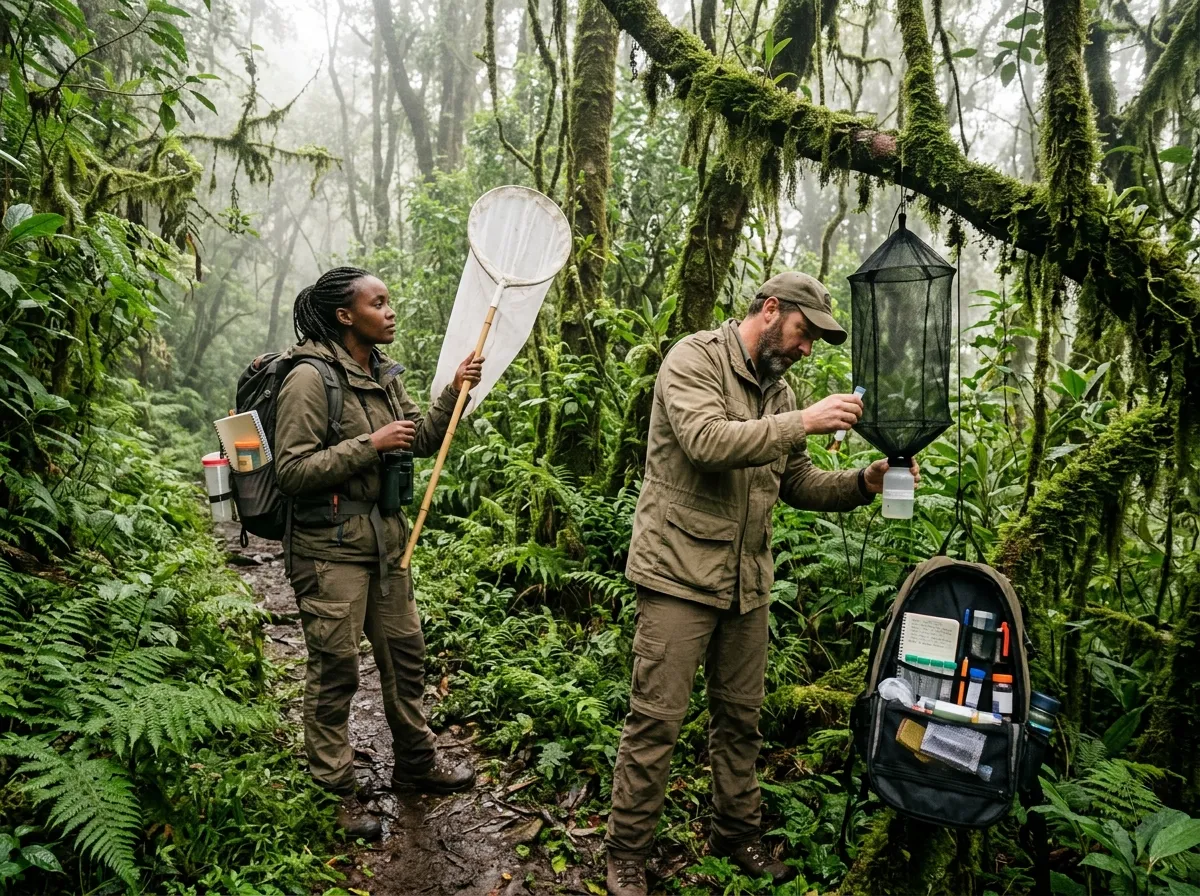
The study was led by Dr. Kim Holzmann at Julius Maximilian University of Würzburg (JMU) in Germany, with Dr. Marcell Peters at the University of Bremen, and supported by an international team of field researchers. Between 2022 and 2023, they collected temperature tolerance data from more than 2,000 insect species, including moths, flies, and beetles, at field sites spanning multiple altitudes in East Africa and South America.
The research design was deliberate. By sampling species from cool mountain forests all the way down to hot lowland savannas and rainforests, the team could compare how insects at different elevations cope with heat. The expectation, based on earlier and smaller studies, was that insects living in warmer environments would have evolved higher heat tolerances. That expectation held up, but only to a point.
"While species at higher altitudes can increase their heat tolerance, at least in the short term, many lowland species largely lack this ability," said Holzmann. The highland insects, exposed to wider temperature swings between day and night and between seasons, have retained some physiological flexibility. They can temporarily boost their thermal limits when conditions demand it. But the lowland species, which evolved in environments where temperatures rarely fluctuate more than a few degrees, have lost that flexibility. Their thermal ceiling is fixed, and it's closer than anyone had appreciated.
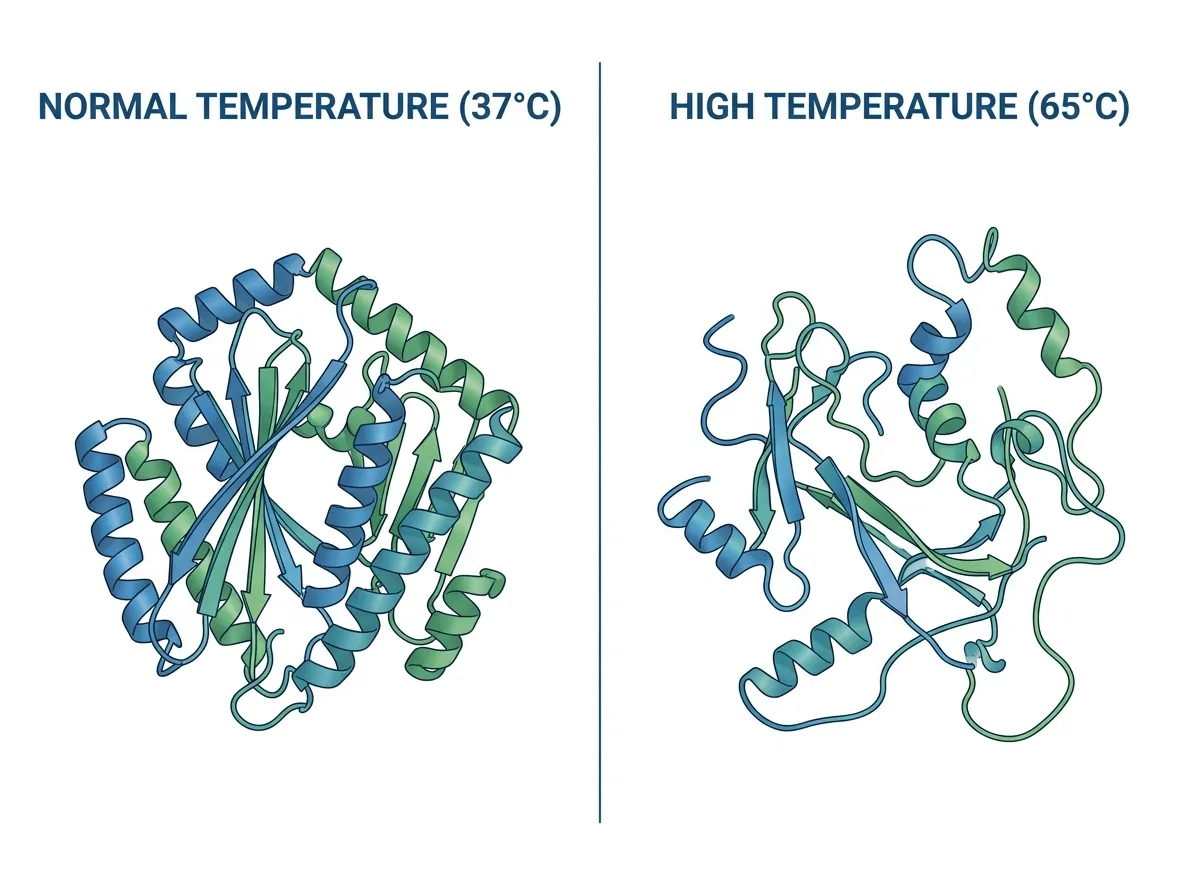
The genomic data told the same story from a different angle. The team analyzed the genomes of hundreds of species to investigate the molecular basis of thermal tolerance, specifically the stability of proteins under heat stress. What they found was that the proteins of lowland tropical insects are already operating near their structural limits in current temperatures. There isn't much room between where they are and where they break.
The Protein Ceiling
To understand why lowland insects are stuck, you need to understand how proteins die.
Every protein in a living organism is a long chain of amino acids folded into a precise three-dimensional shape. That shape determines what the protein does: catalyze a chemical reaction, transport oxygen, send a signal between cells. Heat disrupts these folds. When temperatures rise past a critical point, proteins begin to unfold, or "denature," losing their shape and their function. This is the same process that turns a clear, runny egg white opaque and solid when you cook it. The difference is that an egg in a pan isn't trying to stay alive.
In insects, the temperature at which this unfolding begins is set by the amino acid sequence of the protein, which is encoded in the insect's DNA. Changing that sequence in a way that raises the thermal limit without destroying the protein's normal function is extremely difficult from an evolutionary standpoint. It requires specific mutations at specific positions, and each of those mutations has to avoid disrupting the protein's activity at normal temperatures.
"These properties are relatively conserved in the evolutionary family tree of insects and can only be changed to a limited extent," Peters explained. In other words, the thermal limits of insect proteins aren't a trait that evolves quickly. They're baked into the molecular architecture of each species, refined over millions of years, and resistant to rapid change. The temperature ceiling isn't a wall that evolution can climb over in a few generations. It's a ceiling built into the physics of protein folding.
This finding connects to a broader pattern in climate biology. Just as researchers have discovered that lithium dendrites are far stronger than expected due to fundamental material properties, the thermal limits of insect proteins appear to be constrained by the basic physics of amino acid chemistry, not just by evolutionary history.
Mountains and Valleys Tell Different Stories
One of the study's most striking results is how sharply thermal tolerance diverges between highland and lowland populations, even among closely related species.
Insects living at higher elevations in the Andes and East African highlands routinely experience temperature swings of 15 to 20 degrees Celsius between night and day. That variability has selected for a kind of thermal flexibility: the ability to temporarily shift their heat tolerance upward when conditions warm. This plasticity, the capacity to adjust phenotype without genetic change, acts as a short-term buffer against unusual heat.
Lowland tropical insects don't have this buffer. The daily temperature range in an Amazon lowland forest might be 5 to 8 degrees Celsius. The environment is hot, but it's consistently hot. Millions of years of stable warmth have produced species whose physiology is precisely calibrated to a narrow thermal band, with no reason to maintain the metabolic machinery for flexibility. When temperatures push above that band, these species have nowhere to go.
This pattern creates what the researchers describe as a cruel geographic paradox. The places with the most insect biodiversity on Earth, the tropical lowlands, are also the places where insects are least equipped to survive warming. The Amazon basin alone harbors an estimated 2.5 million insect species, many of them undescribed by science. If the study's projections hold, warming of just 2 to 3 degrees Celsius could push half of those species past their thermal limits.
When Pollinators Disappear, Everything Follows
The consequences of large-scale insect decline in the tropics would cascade through entire ecosystems in ways that are difficult to fully model but easy to illustrate.
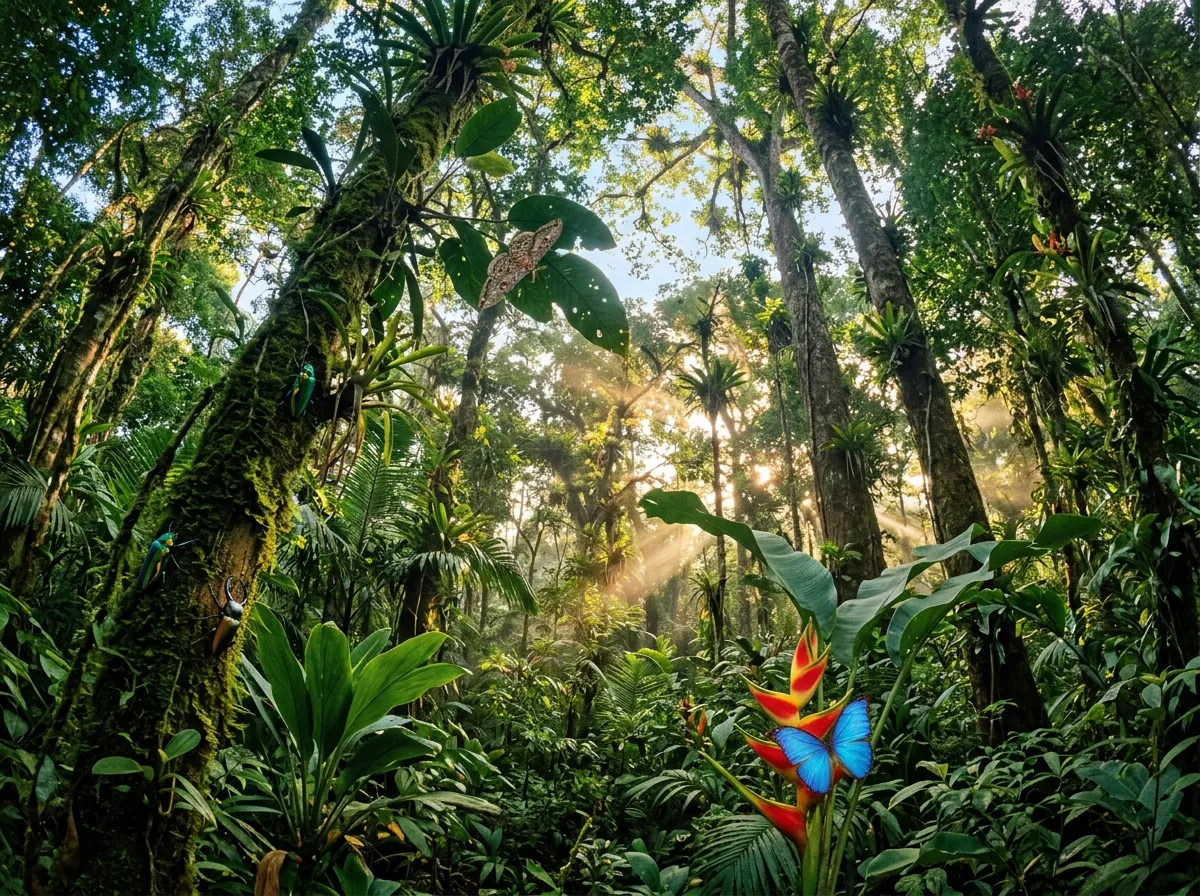
Consider pollination. Tropical forests depend on insects for the reproduction of the vast majority of their plant species. Unlike temperate forests, where wind pollination is common, tropical ecosystems run on insect labor. Bees, moths, beetles, and flies move pollen between flowers, enabling the production of fruits and seeds that feed birds, primates, bats, and thousands of other species. Remove the pollinators, and the reproductive cycle of the forest begins to break down.
Decomposition is equally dependent on insects. Termites, beetle larvae, and fly maggots process dead plant material, recycling carbon and nutrients back into the soil. Without them, dead leaves and wood accumulate, soil fertility declines, and the forest's capacity to regenerate weakens. A forest that can't decompose its own dead matter is a forest that's slowly choking.
And then there's the food web. Insects are the base of the diet for most tropical birds, frogs, lizards, and freshwater fish. A 2019 meta-analysis published in Biological Conservation by Francisco Sánchez-Bayo and Kris Wyckhuys estimated that global insect populations had declined by 41% over the previous decade, with tropical regions hit hardest. The new Würzburg-Bremen study suggests that the worst may still be ahead.
"Rising temperatures could have a massive impact on insect populations, especially in regions with the world's highest biodiversity," said Peters. That sentence is carefully worded, as scientific statements tend to be. But the data behind it points to something more alarming: not a gradual decline, but a threshold effect, where temperatures cross a line and entire communities of species fail simultaneously.
This connects to a broader pattern of environmental stress accumulating across ecosystems. Forests are already absorbing microplastics from the atmosphere, adding a layer of chemical contamination on top of rising temperatures. Sea levels are higher than scientists previously estimated, compressing coastal habitats. And now we know that the insects at the foundation of tropical food webs may be the most vulnerable link in the chain. These aren't isolated problems. They're converging ones.
Why It Matters
The Würzburg-Bremen study changes the conversation about climate and biodiversity in a specific and uncomfortable way. Previous models of insect vulnerability to warming had generally assumed that species in hot climates were adapted to heat, and therefore relatively safe. This study demonstrates that adaptation to a stable hot climate is not the same as resilience to a changing one. The very stability that allowed lowland tropical insects to thrive for millennia is now their greatest weakness.
The protein-level analysis is what makes this finding particularly hard to dismiss. This isn't a behavioral observation that might vary between populations or a correlational finding that could have alternative explanations. The thermal limits of insect proteins are measurable, heritable, and constrained by the chemistry of amino acid folding. Evolution can adjust these limits, but only slowly, over timescales that dwarf the pace of current warming. As bull shark research in Fiji recently demonstrated, even species we think of as resilient and adaptable can have hidden vulnerabilities that emerge only under close study.
There are caveats. The study focused on moths, flies, and beetles. Other insect orders, including ants, bees, and dragonflies, may respond differently. The projections for the Amazon depend on which warming scenario materializes, and significant differences exist between a 1.5-degree and a 3-degree world. And insects are not passive. Some species may shift their ranges to higher elevations or alter their behavior to avoid peak heat, buying time even if they can't evolve their way out.
But the central finding stands. The insects that underpin the most biodiverse ecosystems on Earth are running up against a physical limit encoded in their proteins, a limit that warming may cross within decades. The question is no longer whether tropical insects are vulnerable to climate change. The question is what happens to the forests, the food webs, and the human agriculture that depends on them when those insects reach their ceiling.
Sources
- Half of Amazon insects could face dangerous heat stress - ScienceDaily, March 4, 2026
- Climate change pushes tropical insects to their heat limit - Phys.org, March 2026
- Limited thermal tolerance in tropical insects and its genomic signature - Nature, 2026
- Climate change pushes tropical insects to their heat limit - EurekAlert!, March 2026