
Ideas
You're on Autopilot More Than You Think
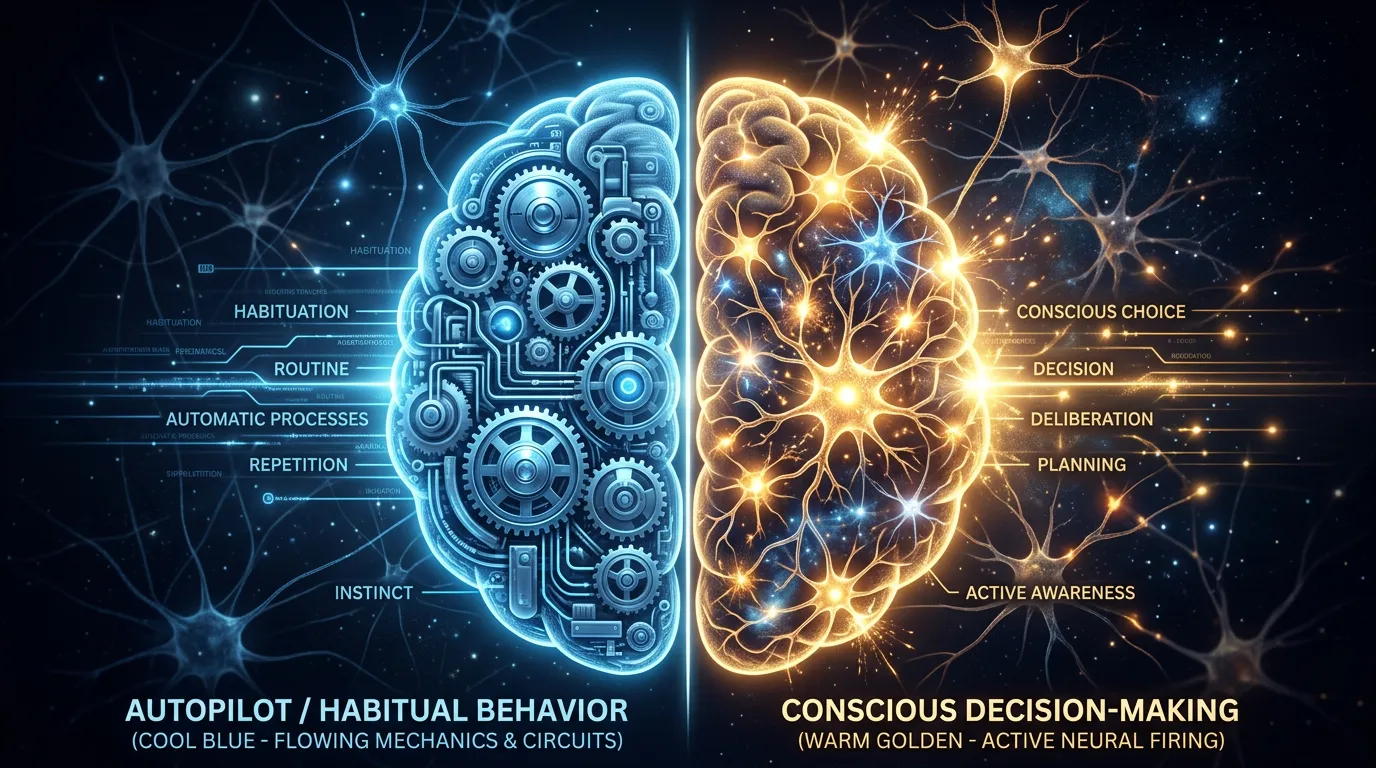
A new study found that 65% of daily behaviors are habitual and 88% are executed without conscious thought. The science of why your brain prefers shortcuts, and what that means for change.
Casey Cooper·
A new study found that 65% of daily behaviors are habitual and 88% are executed without conscious thought. The science of why your brain prefers shortcuts, and what that means for change.

We stay in bad movies, failing projects, and dead-end relationships because of money already spent. The psychology behind this irrational behavior reveals something deeper.

Hindsight bias convinces us we predicted events we never saw coming. Understanding this cognitive illusion reveals how memory rewrites itself to maintain our sense of competence.