
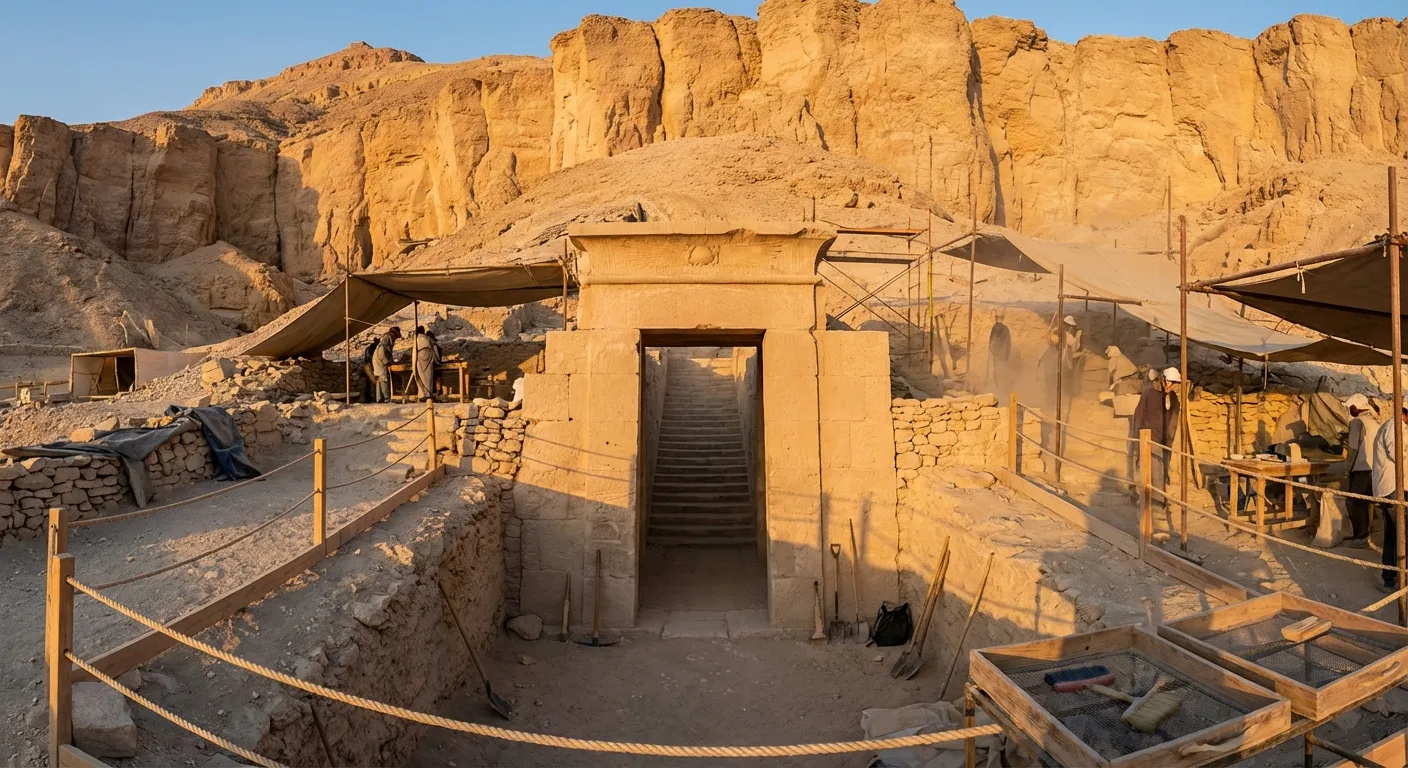
For over a century, the Valley of the Kings seemed to have surrendered all its secrets. In an era when archaeological discoveries continue to reshape our understanding of ancient civilizations, Egypt's most storied burial ground appeared to be an exception, a site fully explored and thoroughly documented. Generations of scholars assumed the valley had nothing left to give. Then, in 2025, archaeologists unearthed the tomb of a pharaoh who had waited 3,500 years to be found: Thutmose II, the great-great-great-great-great grandfather of Tutankhamun himself.
What makes this discovery so charged is the identity of the pharaoh inside. Thutmose II has spent centuries as a historical footnote, dismissed by scholars as a weak king who accomplished little. His wife Hatshepsut became one of Egypt's most powerful rulers. His son became its greatest conqueror. Between these towering reputations, Thutmose II all but disappeared from the historical record. His tomb suggests that disappearance was premature.
A Pharaoh in the Shadows
Thutmose II ruled Egypt for roughly 13 years during the 18th Dynasty, around 1493 to 1479 BCE. His reign fell during what Egyptologists call the New Kingdom, a golden age of Egyptian power when pharaohs commanded vast armies and built monuments that still stand today. Yet Thutmose II left behind relatively few monuments, and those he did construct were often later usurped by his successors.
The scarcity of surviving records has shaped how historians view him. His father, Thutmose I, was a warrior king who expanded Egypt's borders to the Euphrates River. His wife, Hatshepsut, eventually declared herself pharaoh and reigned for over two decades, launching ambitious building programs and a famous trading expedition to the land of Punt. His son, Thutmose III, conquered more territory than any pharaoh before or after, leading at least 17 military campaigns across three decades.
Against that backdrop, Thutmose II has been described by various historians as "sickly," "undistinguished," and "ephemeral." Some scholars have even questioned whether he truly ruled at all, suggesting Hatshepsut wielded real power from the beginning. But the paucity of evidence above ground does not necessarily reflect the reality of his reign, as his tomb now demonstrates.
The Discovery
The tomb was found by a team of Egyptian archaeologists led by Zahi Hawass, Egypt's most famous Egyptologist, whose career has been defined by major discoveries at Saqqara and throughout the Nile Valley. The location surprised many experts. While the Valley of the Kings has been extensively mapped using ground-penetrating radar and other technologies, this tomb had escaped detection, concealed beneath debris from ancient flooding and later construction.
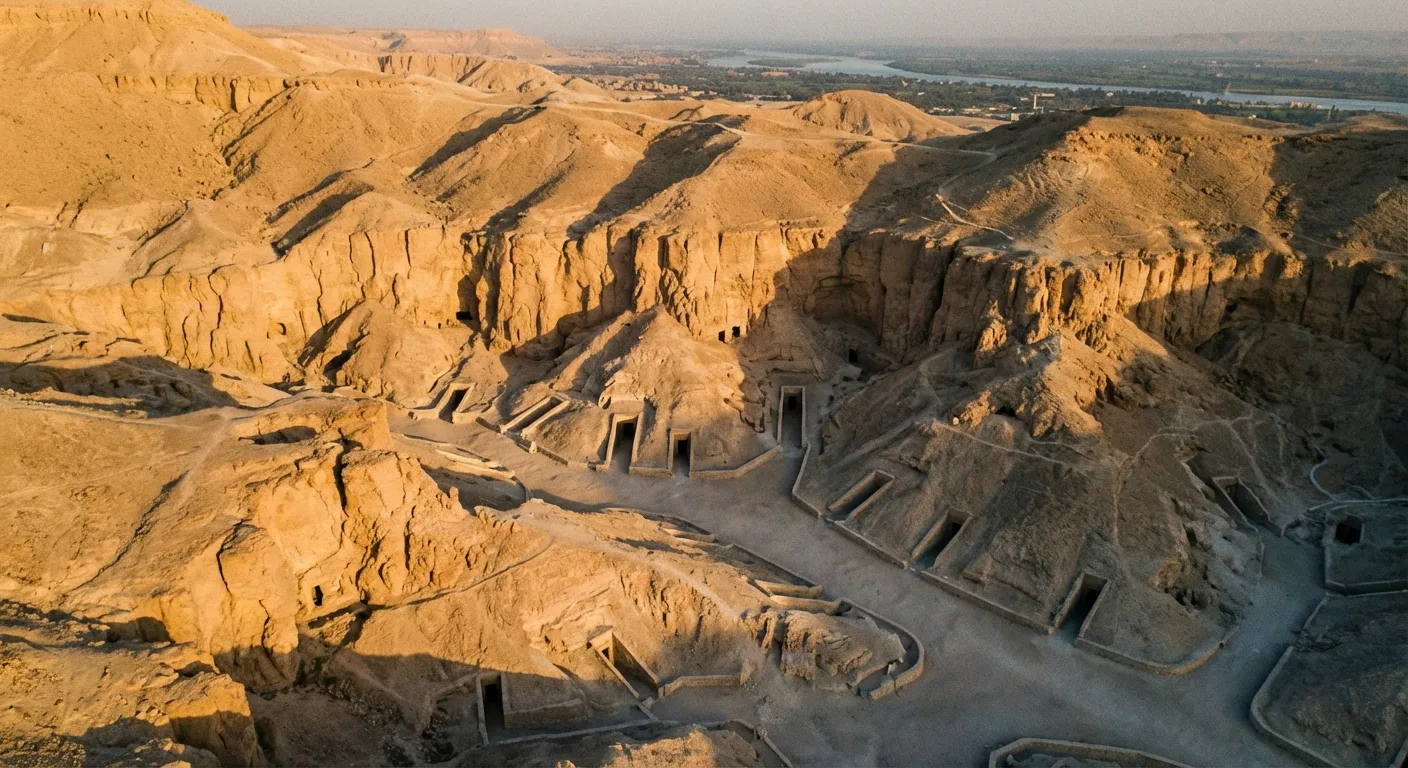
The concealment was a product of geology. Flash floods have periodically swept through the valley over the millennia, depositing layers of limestone chips and sediment that buried lower tomb entrances. Later pharaohs then cut their own tombs into the hillside above, and the construction debris added another layer of cover. Hawass's team located the site after analyzing flood deposit patterns and cross-referencing them with known gaps in the valley's tomb registry.
The tomb's location and design suggest it was carved during the early 18th Dynasty, consistent with Thutmose II's reign. Inscriptions found within explicitly name him, removing any doubt about the tomb's owner. However, the tomb had clearly been robbed in antiquity, likely during the periods of instability that followed the New Kingdom's collapse.
What the Tomb Reveals
Despite the ancient robbery, significant artifacts and information survive. The tomb's architecture provides insights into royal burial practices during the early New Kingdom, a period when the Valley of the Kings was just beginning to serve as the primary royal cemetery. Earlier pharaohs had been buried elsewhere, and the transition to the valley represented a major shift in Egyptian religious and political thinking.
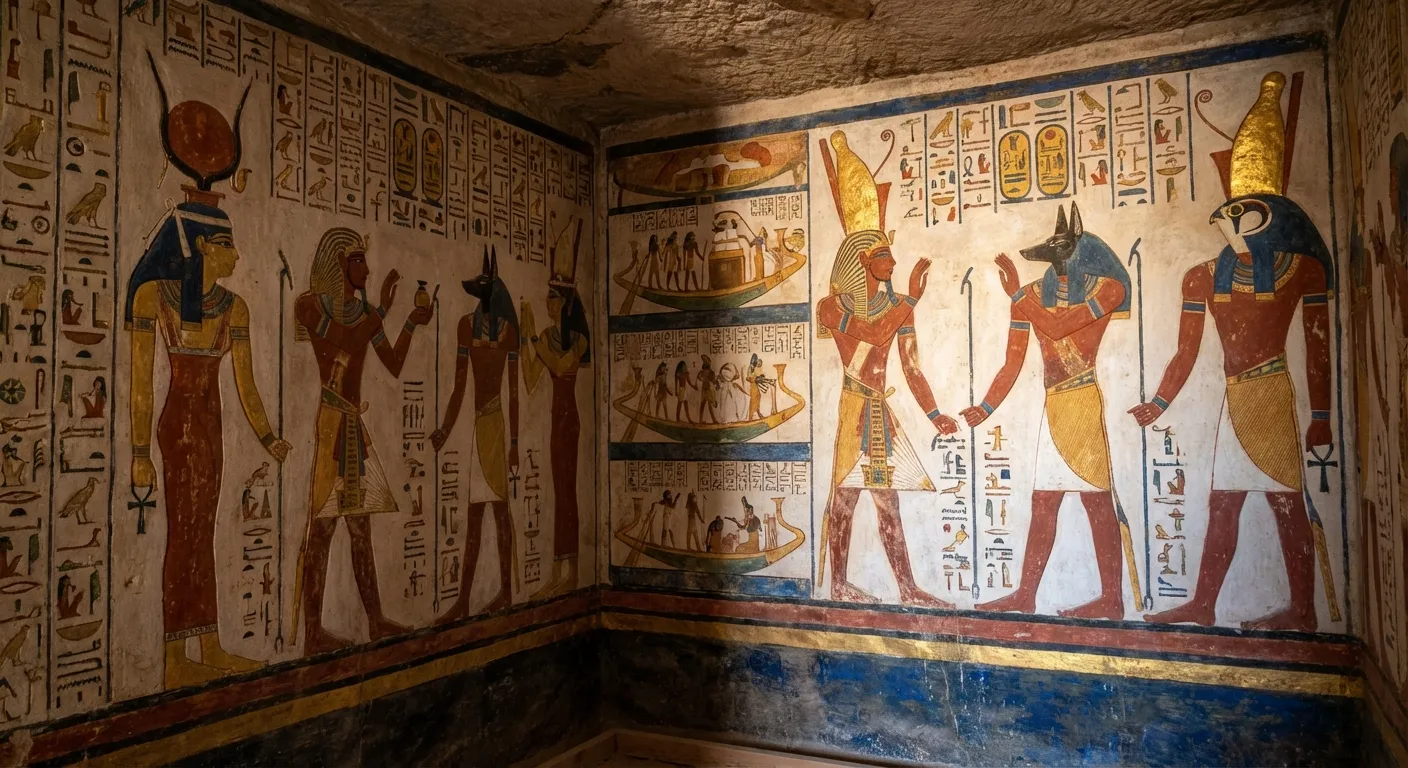
The wall decorations, though damaged, preserve religious texts and imagery that help scholars understand 18th Dynasty beliefs about the afterlife. These differ in subtle but important ways from the decorations in later tombs, showing how Egyptian funerary religion evolved over the centuries.
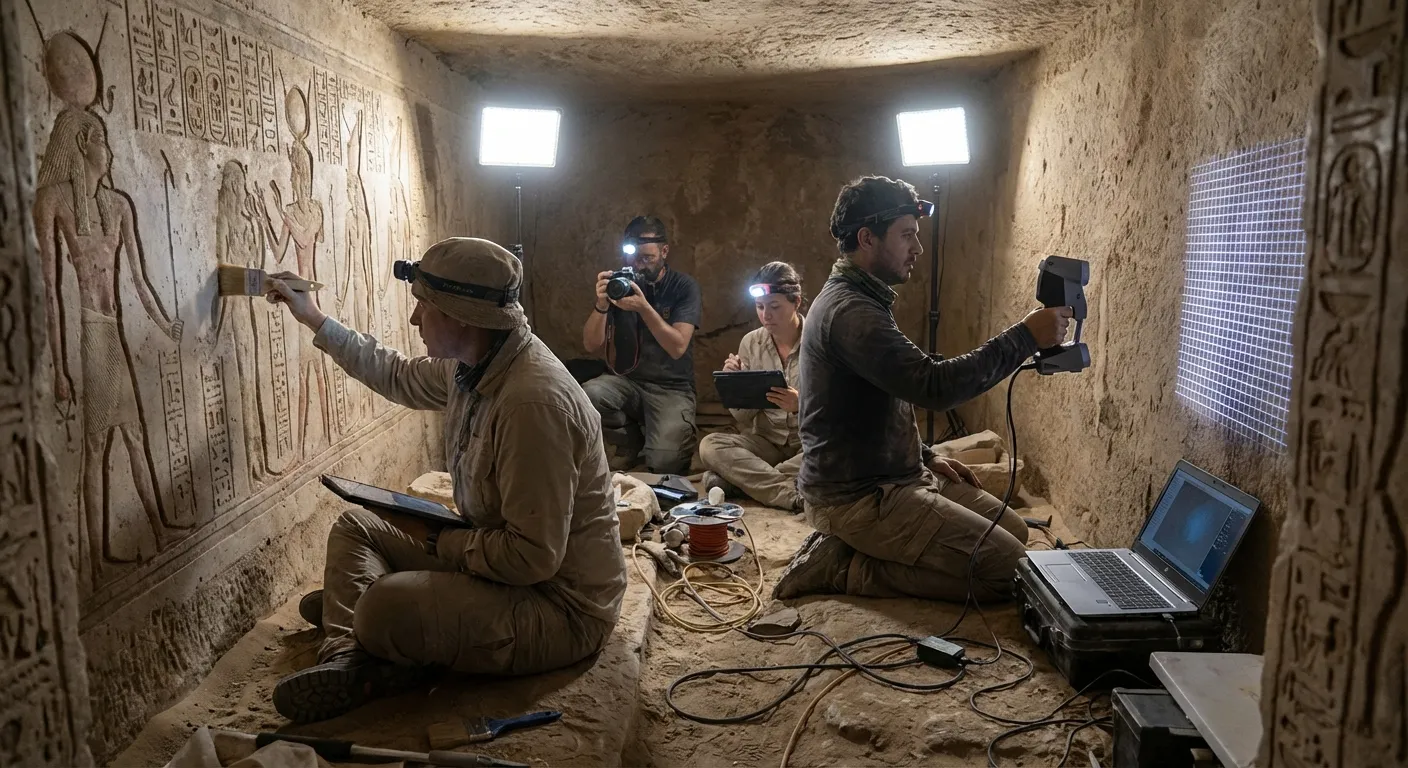
The inscriptions that survive shed new light on Thutmose II's actual accomplishments. While his above-ground monuments were often usurped by later rulers, tomb inscriptions were protected from such modification. Early readings of the texts reference military campaigns and building projects absent from other historical records, filling gaps in the early 18th Dynasty timeline that scholars have debated for decades.
The Hatshepsut Question
The discovery may also illuminate one of Egyptology's most debated questions: the relationship between Thutmose II and Hatshepsut. Traditional interpretations held that Hatshepsut usurped power after her husband's death, acting as regent for her stepson Thutmose III before declaring herself pharaoh. Some scholars have suggested the marriage was troubled or that Hatshepsut dominated her husband even during his lifetime.
But revisionist interpretations have challenged this narrative. Perhaps Hatshepsut's rise to power was not usurpation but a logical continuation of royal policy. Perhaps Thutmose II himself designated her as successor, recognizing her competence. The tomb's inscriptions, particularly references to Hatshepsut and the royal succession, have already begun reshaping these debates.
The physical remains, if any survive, might also yield information. Thutmose II's mummy was identified among a cache of royal mummies discovered in 1881, but that identification has been questioned. DNA analysis and other modern techniques, similar to those that have recovered ancient RNA from woolly mammoths, could confirm whether the mummy matches remains in the tomb, potentially resolving long-standing questions about the pharaoh's health and cause of death.
Why Royal Tombs Still Matter
The discovery arrives at a moment when Egyptology faces both unprecedented opportunities and significant challenges. New technologies, from DNA analysis to satellite imagery, are revealing secrets that earlier generations of archaeologists could never have accessed. At the same time, questions of ownership, repatriation, and the legacy of colonial-era archaeology have complicated the field's relationship with its past.
Egypt has increasingly insisted that Egyptian archaeologists lead major excavations and that discoveries remain in the country. The Thutmose II discovery exemplifies this shift, with Egyptian researchers directing the project and the artifacts destined for Egyptian museums. This represents a significant change from the era when foreign expeditions routinely removed treasures to European and American institutions.
The tomb also reminds us why these discoveries matter beyond academic circles. Ancient Egypt continues to fascinate the global public in ways that few other ancient civilizations can match. The discovery generated international headlines, and Egyptian authorities have announced plans to open a dedicated exhibition at the Grand Egyptian Museum in Giza, which itself opened in 2024 after decades of construction delays. The pairing of a new major find with a new world-class museum marks a turning point for how Egypt presents its own heritage to the world.
Beyond the Discovery
The discovery of Thutmose II's tomb forces three concrete revisions to Egyptological understanding. First, it confirms that the Valley of the Kings contains at least one more royal tomb than ground-penetrating radar surveys had predicted, undermining the widespread assumption that the valley was fully mapped. The flood-deposit analysis that led Hawass's team to the site can now be applied systematically to other areas of the valley, potentially locating burials of pharaohs like Ramesses VIII and Thutmose I whose tombs have never been conclusively identified.
Second, the tomb provides the first protected, unaltered account of Thutmose II's reign. The early textual analysis points to a ruler who managed active military campaigns and oversaw construction programs, filling in a 13-year gap in the 18th Dynasty timeline that scholars have debated since the 1840s. If the inscriptions' references to Nubian campaigns and temple construction at Karnak hold up under full translation, textbooks will need substantial revision.
Third, the excavation sets a precedent for Egyptian-led archaeology. This is the first major royal tomb discovery directed entirely by Egyptian researchers, with all artifacts remaining in Egypt. That institutional shift, away from the foreign-expedition model that defined the field since Napoleon's invasion, changes who controls the narrative of ancient Egypt and who benefits from its cultural heritage. The Thutmose II excavation is now the template for how major Egyptian sites will be investigated going forward.