
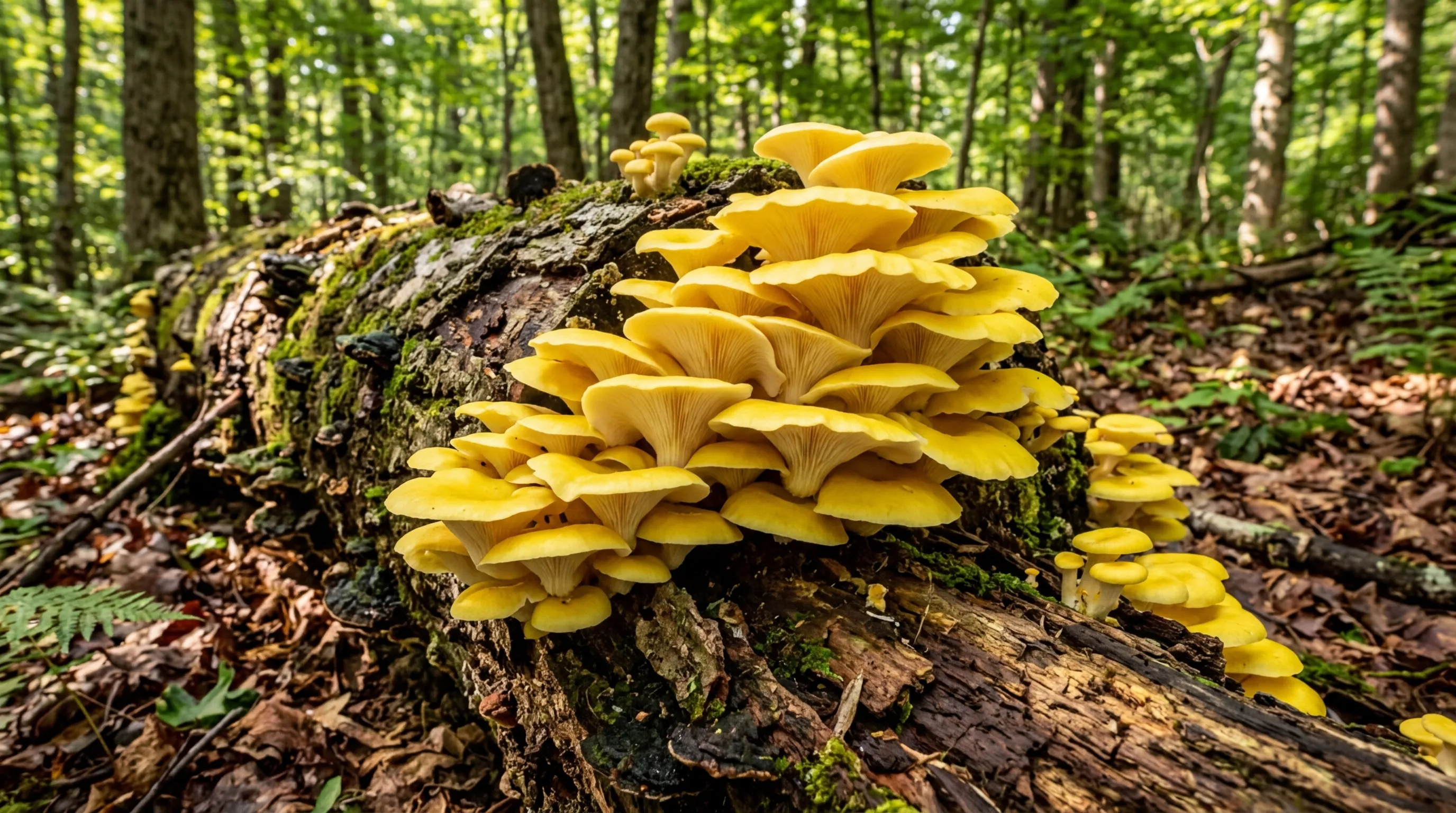
Tavis Lynch grows mushrooms for a living in Cumberland, Wisconsin. He has been at it for years, selling to restaurants and farmers markets across the upper Midwest. But there is one species he will no longer cultivate, despite its popularity and its profit margin. "You will never outrun a fungus ever," Lynch told researchers at the University of Wisconsin-Madison. "The fungus is going to win."
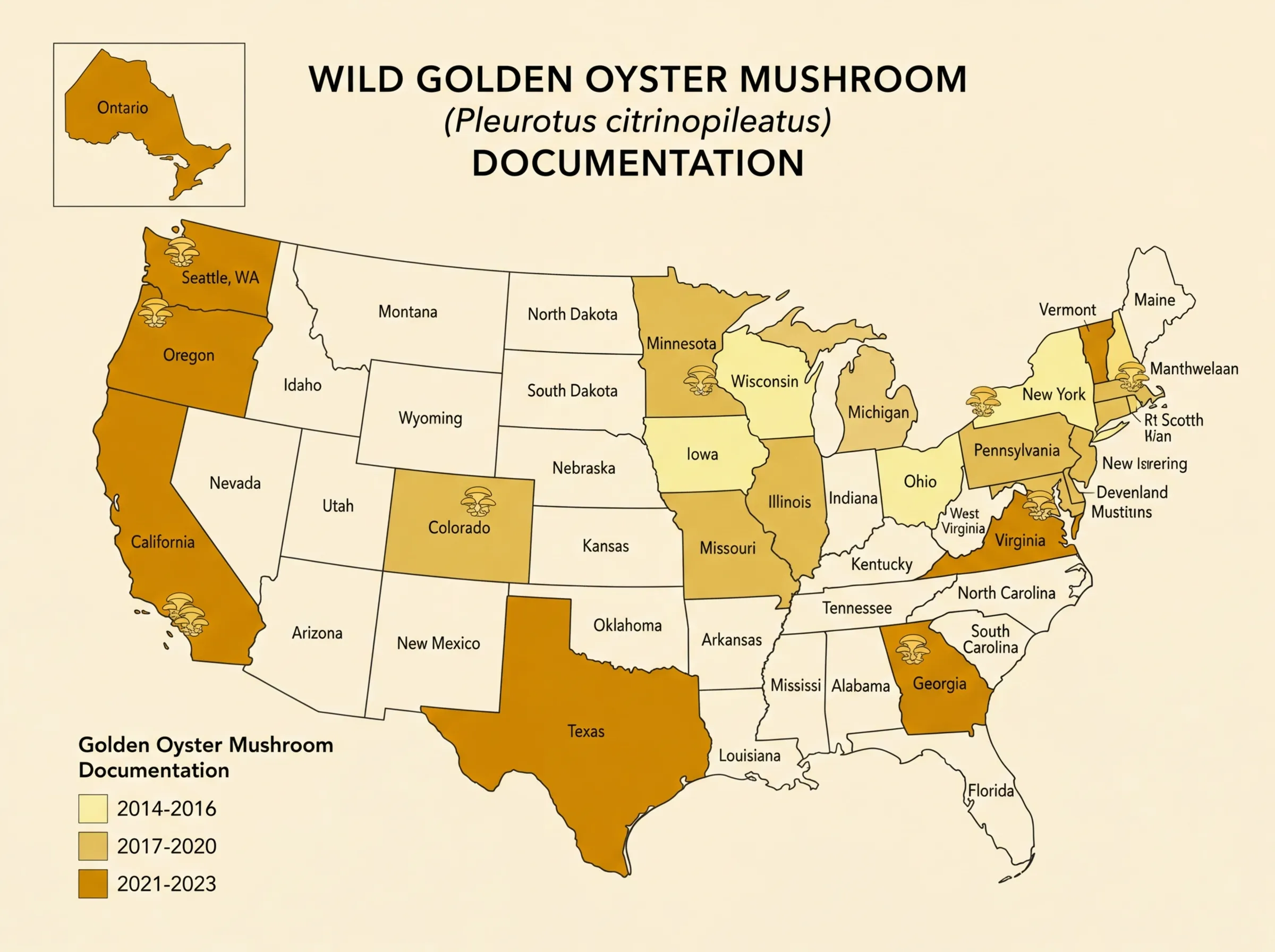
The fungus in question is Pleurotus citrinopileatus, the golden oyster mushroom. Native to the forests of eastern Russia, northern China, and Japan, where it is known as tamogitake, this bright yellow species became a darling of the home-growing movement in the 2010s. Grow kits flooded Amazon, garden centers, and farmers markets. The appeal was obvious: golden oysters are beautiful, fast-growing, delicious, and almost impossible to fail at cultivating. What nobody anticipated was how thoroughly they would escape. A study published in Current Biology confirms what mycologists like Lynch had been watching with growing alarm: the golden oyster mushroom has spread to at least 25 U.S. states and Ontario, Canada, and wherever it establishes itself, native fungal diversity drops by roughly half.
From Dinner Plate to Forest Floor
Golden oyster mushrooms arrived in North America in the early 2000s for commercial cultivation. The first confirmed wild sighting came in 2014, when a user on the community science platform Mushroom Observer spotted them growing on dead wood in the eastern United States. By 2016, wild populations had been recorded in five states, mostly in the Midwest and Northeast. By 2023, that number had reached 25, with observations now pushing south into Texas, Virginia, North Carolina, Alabama, and Louisiana. The iNaturalist database contains over 9,000 observations as of mid-2025.
The escape routes are not mysterious. Commercial mushroom farms vent air that carries microscopic spores. Home growers inoculate outdoor logs and then dispose of spent substrate in backyard compost piles. Grow kit packaging rarely mentions that the species is invasive. A 2018 genomic study found that two commercial strains showed high genetic similarity to all wild isolates collected in North America, pointing directly to the cultivated population as the source.
What the Research Actually Found
The Current Biology study, led by Aishwarya Veerabahu of the University of Wisconsin-Madison alongside researchers from the USDA Forest Service and the University of Florida, is the first to quantify the ecological damage. The team surveyed fungal communities in dead elm trees across south-central Wisconsin, comparing trees colonized by golden oysters to those without them. Rather than relying solely on visible fruiting bodies, they used DNA metabarcoding, a molecular technique that detects fungal species from wood shavings even when they are not actively producing mushrooms.
The results were stark. Trees without golden oyster mushrooms hosted approximately 40 native fungal species. Trees with golden oysters hosted just 22. The composition of the fungal communities was also fundamentally different: it was not simply that a few species were missing, but that the entire community structure had shifted. Among the displaced natives are the mossy maze polypore (Cerrena unicolor), the elm oyster (Hypsizygus ulmarius), and Nemania serpens, a genus that produces chemically diverse compounds with pharmaceutical potential, including precursors to antibiotics and cholesterol medications.
"The golden oyster mushroom may look harmless on a log, but it appears to be a strong competitor in the forest," said Michelle Jusino, a co-author now at the University of Florida. "It is slowly marching south, which is really terrifying."
How a Kitchen Mushroom Wins a Forest Turf War
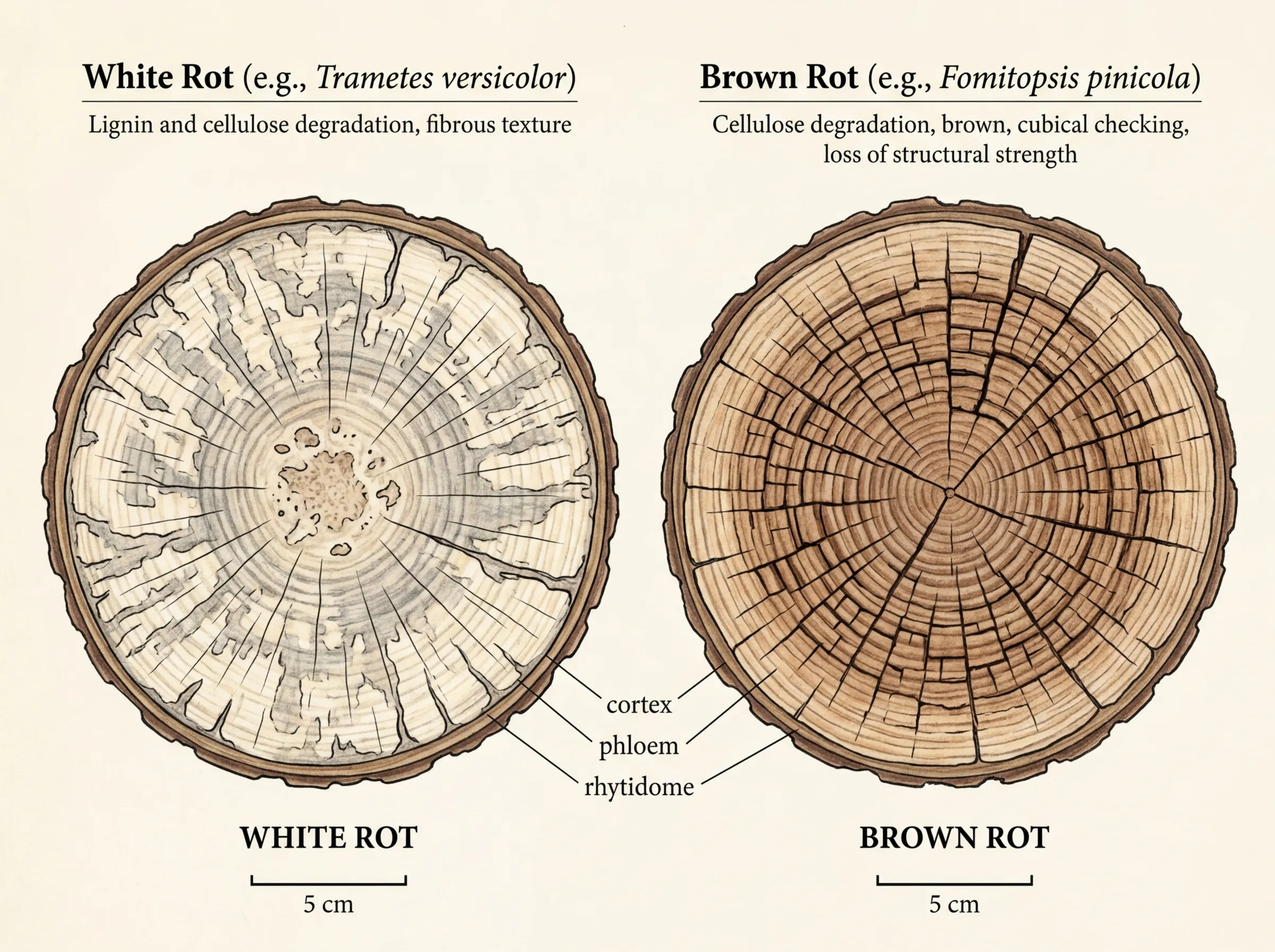
The golden oyster's competitive advantage starts with basic biochemistry. It is a white-rot fungus, meaning it breaks down all three structural components of wood: cellulose, hemicellulose, and lignin. Many native decomposers are brown-rot fungi that leave lignin intact. This gives the golden oyster access to more of the wood's energy and allows it to colonize substrates that other species cannot fully exploit.
But the real advantage may be artificial. Decades of commercial breeding selected golden oysters for fast growth, vigor, and high yields, traits that make an excellent crop but also, inadvertently, an excellent invasive competitor. Multiple genotypes are now established in wild North American populations, suggesting enough genetic diversity for the species to adapt to local conditions. And once established, removal is physically impossible. The mushrooms that fruit on a log or stump are only the reproductive structures. Below the surface, an extensive network of mycelium penetrates deep into the wood and surrounding soil.
"Removing it is unfortunately not possible because most fungi have an extensive network of mycelium within wood and the soil, and the mushrooms we see are just the reproductive parts that create and spread their spores," Veerabahu explained. She added a practical note for foragers who encounter golden oysters in the wild: "It is completely okay to feel excited when you find them, and to continue to forage and cook them up."
The Hidden Costs of Losing Forest Fungi
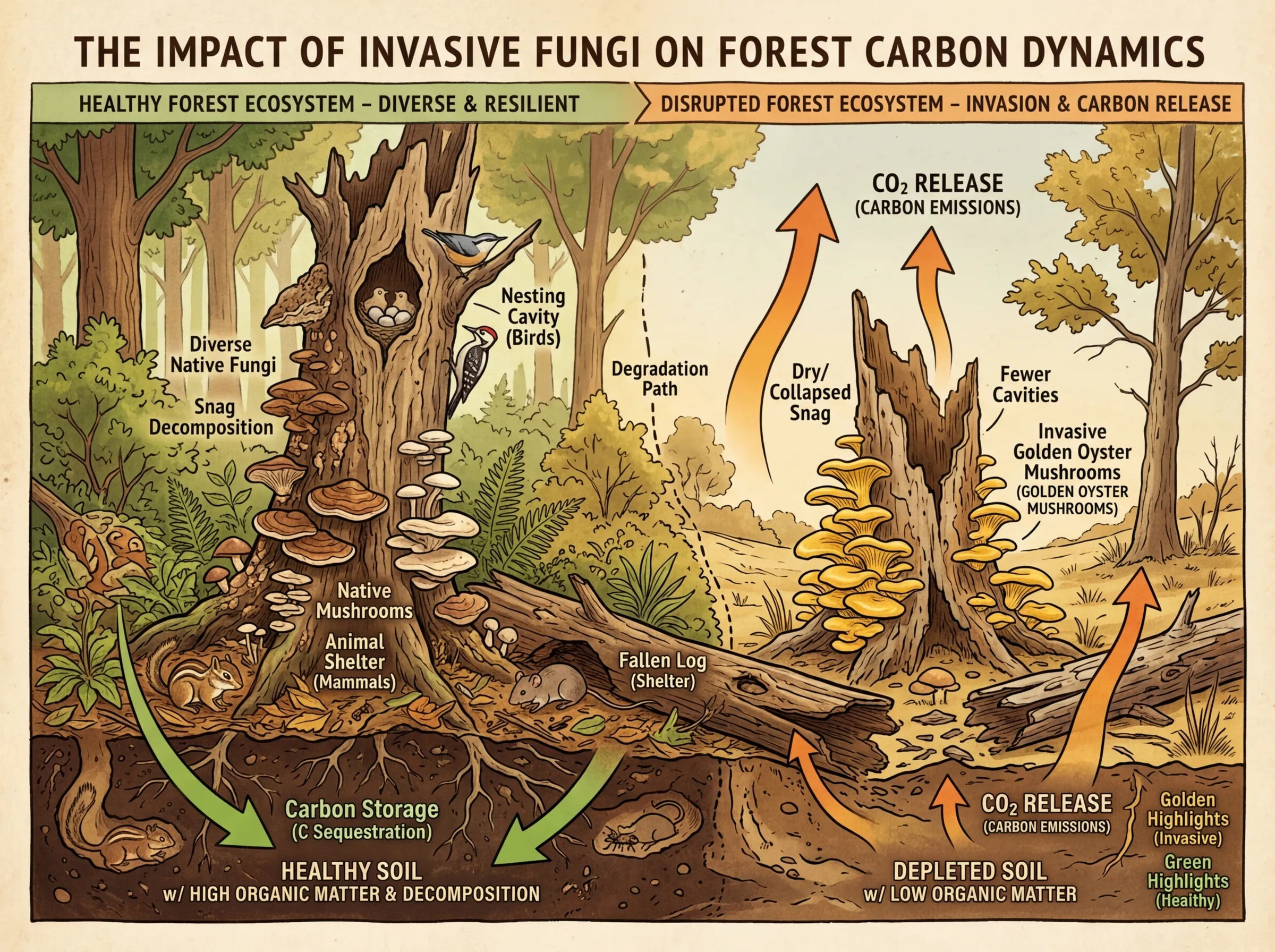
The loss of native fungal diversity is not an abstract concern. Fungi are the primary decomposers in forest ecosystems, and different species break down wood at different rates and in different ways. That variation matters. Brown-rot fungi, for instance, leave behind lignin-rich residues that become long-term carbon stores in forest soil. When a white-rot species like the golden oyster replaces them, decomposition accelerates, wood disappears faster, and more carbon is released as CO2 rather than being sequestered.
The cascading effects extend to wildlife. Dead standing trees, called snags, are critical habitat for cavity-nesting birds, bats, and invertebrates. When fungal decomposition speeds up, snags fall sooner, shortening the window during which they serve as shelter. Fallen logs that would normally persist for decades as nursery sites for seedlings and refuges for small animals also break down more quickly. The loss of species like Nemania serpens is also a loss of pharmaceutical potential. Fungi in that genus produce compounds used in the development of antibiotics, statins, and transplant rejection drugs. Species we have not yet studied could hold compounds we do not yet know we need.
Climate change is expected to make things worse. Predictive models from the Current Biology study suggest the golden oyster's habitable range will expand as temperatures and precipitation increase, potentially extending through the Great Plains and toward Alaska. The species thrives in warmth, and warming opens ecosystems that were previously too cold for it to establish. It is a pattern playing out across ecological systems: rising temperatures pushing species past their limits in some places while opening new territory for invaders in others.
Can Anything Be Done?
Eradication is off the table. Once a fungal mycelium network establishes itself in a piece of wood or a patch of soil, there is no practical way to remove it without destroying the substrate entirely. Prevention is the only viable strategy, and the most impactful action is also the simplest: stop buying golden oyster mushroom grow kits for outdoor use.
Field & Forest Products, a spawn producer with over 30 years in the industry, has suspended sales of golden oyster blocks pending further invasiveness data. The Royal Horticultural Society in the UK has classified the species as "highly invasive" and capable of causing "severe damage" to native fungal communities, banning it from RHS shows starting in 2026. Researchers recommend that anyone who does cultivate golden oysters do so strictly indoors, in enclosed greenhouses, and that spent substrate be sealed in trash or thoroughly sterilized rather than composted outdoors.
The scientific community is also exploring longer-term solutions. Both industry and academic researchers are working on developing sporeless strains that could satisfy market demand without the invasion risk. Community science platforms like iNaturalist and Mushroom Observer continue to play a critical role in tracking the spread, and researchers have encouraged the public to deposit specimens in herbaria and submit samples for genetic analysis. Harvesting wild golden oysters for consumption is encouraged as a form of partial damage control, though it will not reverse colonization.
Where This Leads
Anne Pringle, a mycologist at the University of Wisconsin-Madison who oversaw the study, identified the core problem with unusual clarity. "People have a very strong sense that there is such a thing as an invasive plant," she said. "But as humans, we don't have an equivalent sense that fungi can also have a biogeography, and because we don't have that sense of the biodiversity of fungi, we have that perception that moving them around is not harmful."
That perception gap is the real story. The golden oyster mushroom is not the first fungus to escape cultivation, and it will not be the last. The death cap (Amanita phalloides), native to Europe, is now established on every continent except Antarctica after hitching rides on imported tree rootstocks. In 2025, Poland's national forest management body raised an alarm after a North American bolete species was found in the UNESCO-protected Bialowieza Forest. The traffic goes both directions.
Fungi underpin the functioning of every terrestrial ecosystem on the planet. They decompose dead matter, cycle nutrients, form the mycorrhizal networks that connect trees underground, and produce compounds that have given us some of our most important medicines. Protecting that diversity requires the same attention we give to invasive plants and animals. It requires recognizing that a bright yellow mushroom on an Amazon grow kit is not just a weekend hobby. It is a living organism with its own evolutionary imperatives, and once it escapes, it plays by its own rules.
Sources
- Veerabahu, A. et al. "Invasive golden oyster mushrooms are disrupting native fungal communities as they spread throughout North America." *Current Biology*, Vol. 35, Issue 16 (2025)00809-7) - Primary research paper
- Smithsonian Magazine: "Invasive Golden Oyster Mushrooms Are Crowding Out Native Fungi" - Summary of study findings and context
- The Conversation: "The golden oyster mushroom craze unleashed an invasive species" by Aishwarya Veerabahu - First-person account from lead researcher
- Phys.org: "Delicious but invasive: Golden oyster mushrooms are crowding out native fungi" - University of Wisconsin-Madison research summary
- Field & Forest Products: "What We Know About the Invasive Nature of Golden Oyster" - Industry response and genetic analysis