
For more than 150 years, a collection of shattered bones sat in a Belgian museum, catalogued as the remains of Neanderthals who had died in a cave sometime during the late Pleistocene. The fragments were broken, scattered, and scarred with marks that researchers attributed to the usual suspects: animal gnawing, geological pressure, the slow violence of 41,000 years underground. Then a team from the University of Bordeaux decided to look again with modern tools, and what they found was both methodical and unsettling. These Neanderthals had been butchered, consumed, and their bones repurposed as tools for sharpening stone blades. The victims were all outsiders, women and children from a different group, and the pattern of who was killed suggests something far more complex than hunger.
The study, published in Scientific Reports, offers what its authors call "the most compelling evidence to date for inter-group competition among Late Pleistocene Neandertal populations." It is a finding that complicates nearly everything we thought we understood about how Neanderthals related to one another in the final centuries before their extinction.
What the Bones Revealed
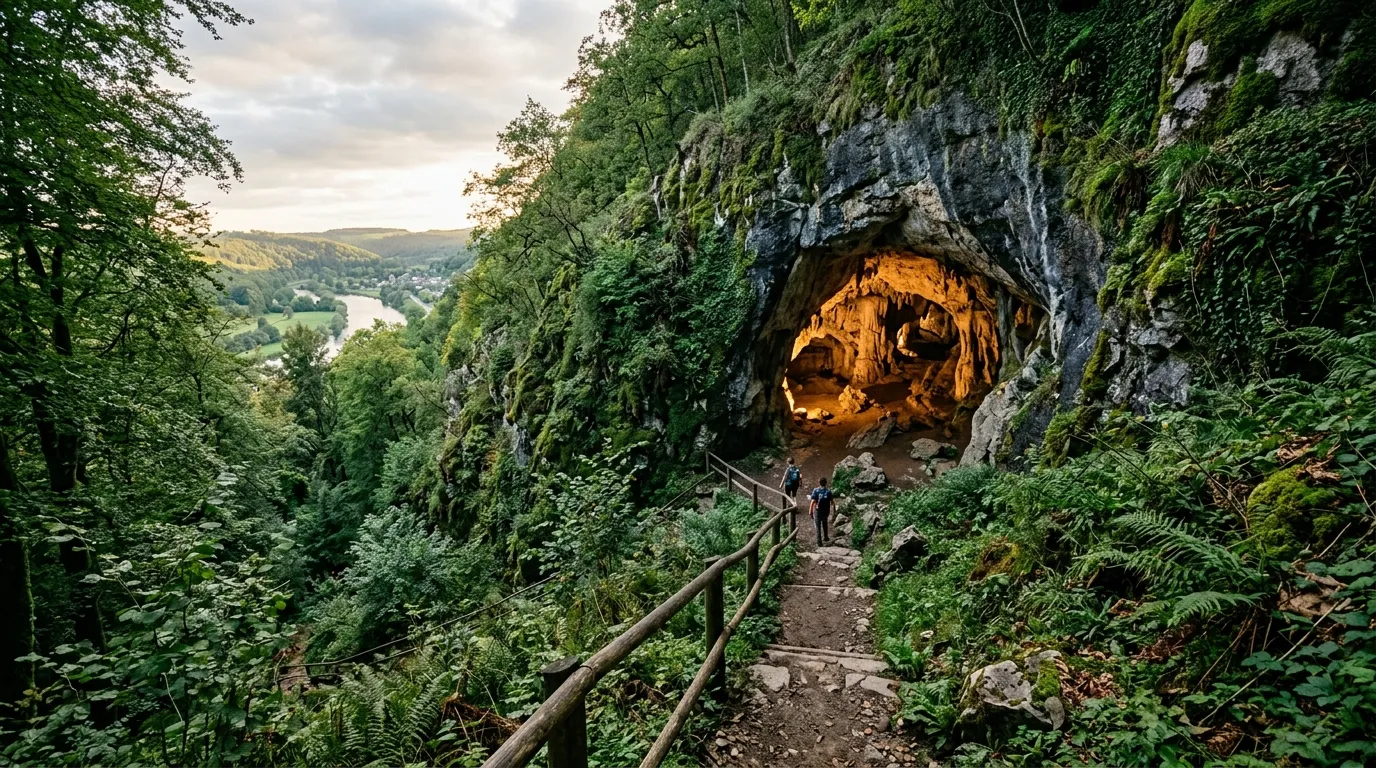
The research team, led by biological anthropologist Quentin Cosnefroy at the University of Bordeaux, reexamined more than 100 bone fragments from the Troisieme caverne of Goyet, a limestone cave system in the Meuse Valley of central Belgium. Under microscopic analysis, nearly one-third of the human bones bore unmistakable evidence of processing: cut marks consistent with systematic defleshing, impact fractures from deliberate marrow extraction, and percussion marks showing that the bones had been cracked open with stone tools.
Six individuals were identified among the remains. Four were female, ranging from adolescents to adults. Two were male children, one a young boy and one an infant. All six were notably small, averaging approximately 150 centimeters (about 4 feet 11 inches) tall, and lightly built compared to typical Neanderthals of the period. The size difference is significant because it suggests the victims came from a population with different nutritional circumstances or genetic background than the individuals who processed them.
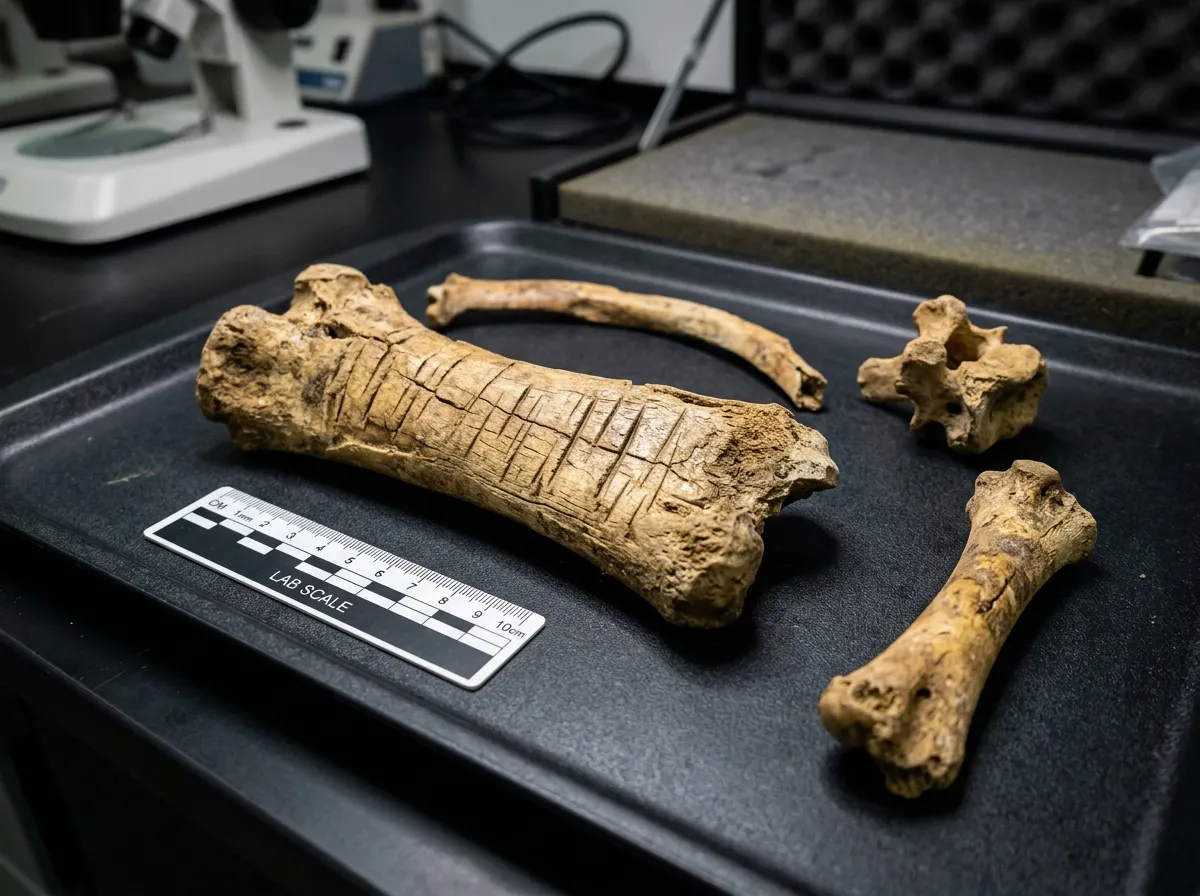
After the flesh had been removed and the marrow extracted, several of the bones were repurposed as retouchoirs, tools used to sharpen stone implements by pressing the bone edge against a flint blade. The retouchoir marks are distinct from the butchery evidence, appearing as small, repeated impact points along the bone's edge. This secondary use indicates that the processing was not frantic or desperate. It was organized, unhurried, and thorough.
A 19th-Century Collection, Reexamined
The Goyet cave system was originally excavated in the 1860s by Belgian geologist Edouard Dupont, one of the pioneers of European cave archaeology. Like much of 19th-century fieldwork, Dupont's excavation prioritized collection over context. Bones were pulled from the cave, sorted by general appearance, and shipped to the Royal Belgian Institute of Natural Sciences in Brussels, where they sat in storage for more than a century with minimal detailed analysis.
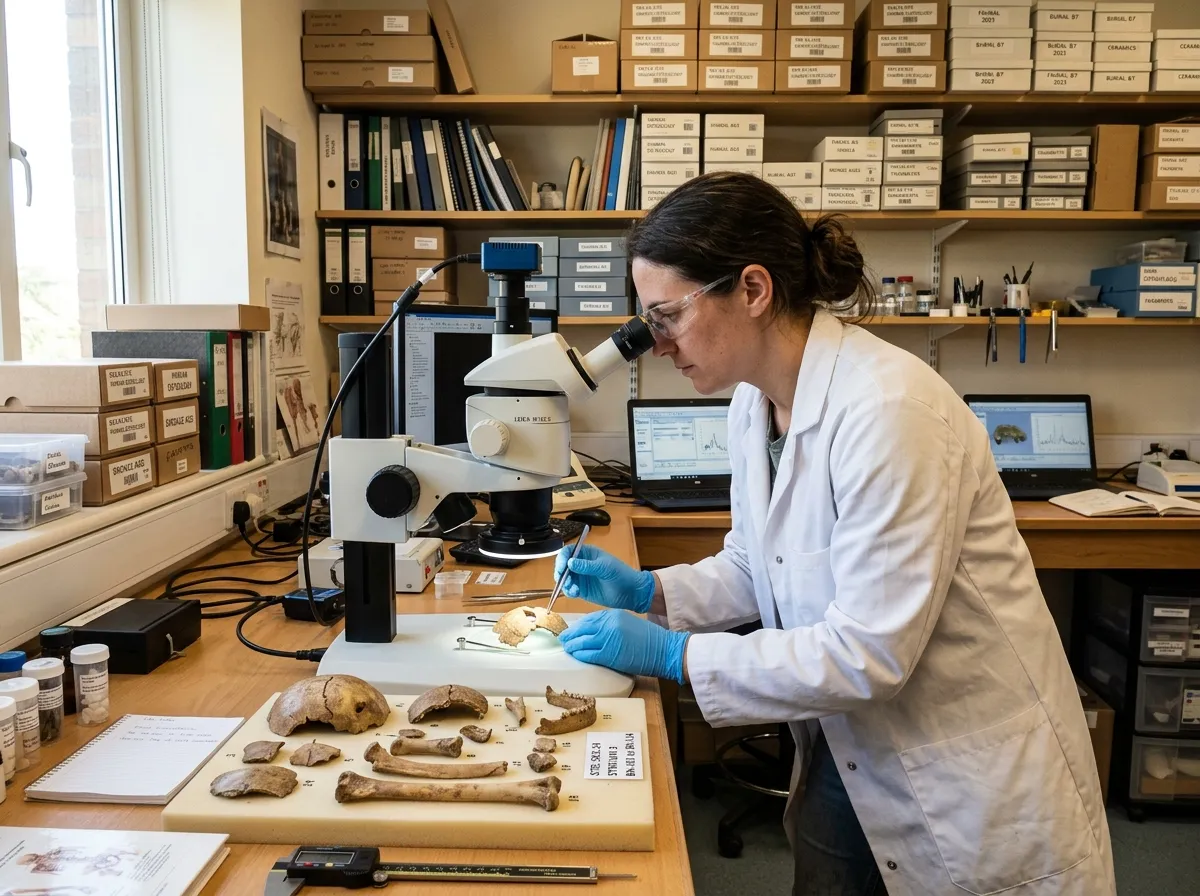
What changed was the technology. Where Dupont's generation could only sort bones by shape and size, Cosnefroy's team brought an arsenal of 21st-century methods to the same fragments: high-resolution microscopic surface analysis to identify cut marks invisible to the naked eye, accelerator mass spectrometry radiocarbon dating to pin down the age of each fragment, isotopic measurements of tooth enamel to reconstruct the victims' childhood geography and diet, and ancient DNA extraction to determine sex and genetic relationships.
The approach mirrors a broader shift in science and archaeology, where revisiting old evidence with modern analytical tools has overturned assumptions that went unchallenged for decades. The Goyet bones had been telling a story since the 1860s. It took 160 years for anyone to develop the instruments to hear it clearly.
The radiocarbon dates placed the remains between 41,000 and 45,000 years old, firmly within the period when Neanderthals and newly arrived Homo sapiens populations overlapped in western Europe. This timing is not incidental. It places the Goyet evidence at one of the most consequential junctures in human prehistory.
Outsiders, Not Family
The most striking finding came from isotopic analysis of the victims' teeth. Tooth enamel records the chemical signature of water and food consumed during childhood, functioning as a kind of geographic fingerprint that preserves where an individual grew up long after death. All six victims shared isotopic signatures pointing to the same region, but that region was not the area surrounding Goyet cave. These people had grown up somewhere else entirely.
This is the detail that separates the Goyet evidence from every other known case of Neandertal cannibalism. Previous sites across Europe have shown Neanderthals consuming their own dead, behavior that researchers interpreted as either funerary ritual, where processing the body carried cultural meaning, or survival cannibalism during periods of severe resource scarcity. The Goyet pattern fits neither explanation. The victims were not local group members receiving funerary treatment. They were strangers.
The study's authors describe the behavior as exocannibalism, the deliberate consumption of outsiders, a practice typically associated in anthropology with warfare, territorial defense, or displays of dominance between rival groups. The study concludes: "At a minimum, it suggests that weaker members of one or multiple groups from a single neighboring region were deliberately targeted." The selection was not random. The victims were disproportionately female and young, physically smaller than the regional average, and all originated from the same outside population. That demographic pattern implies a level of targeting that goes well beyond opportunistic violence.
DNA analysis confirmed that the four females were unrelated to one another, ruling out the possibility that a single family was killed together. Instead, the evidence points toward raids on a neighboring population, with vulnerable individuals selected from multiple family units within that group.
The Last Neanderthals' Closing World
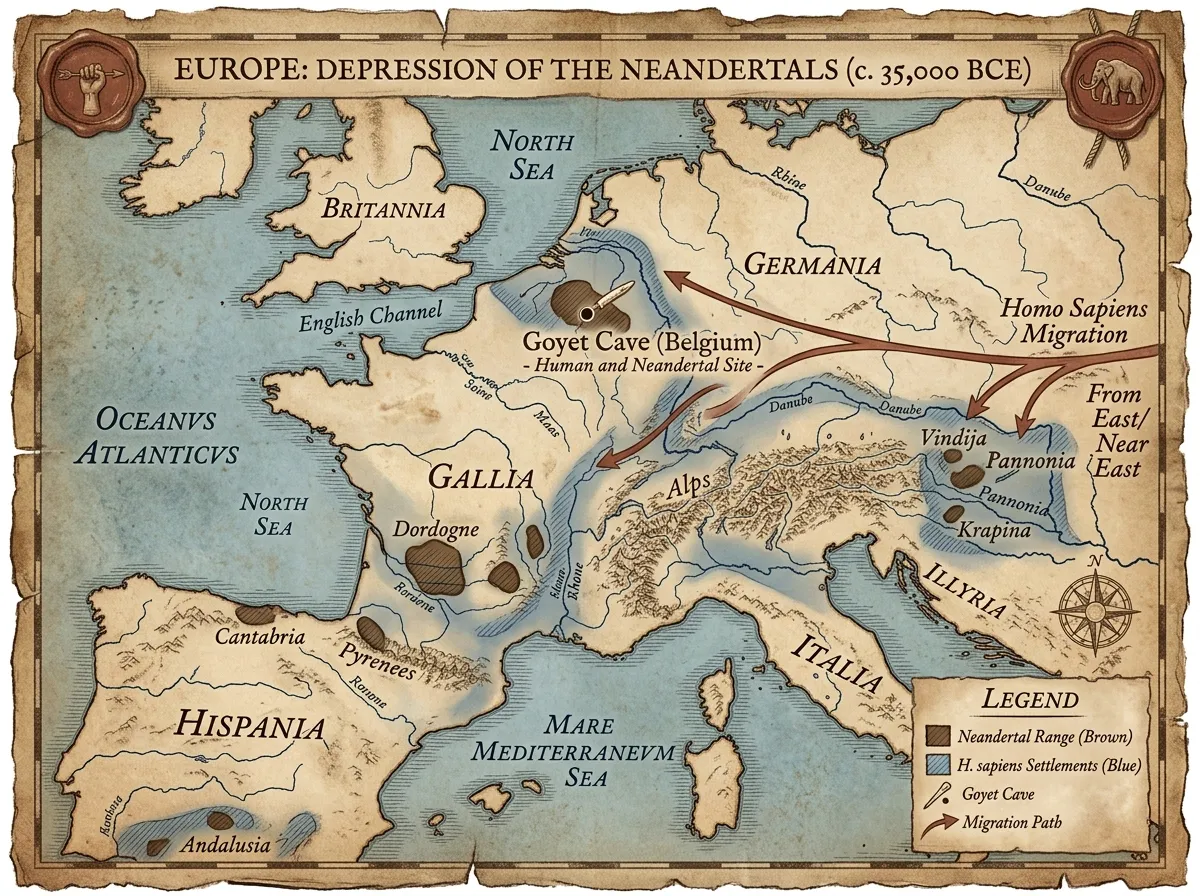
The dating of the Goyet remains places them squarely within one of the most turbulent periods in the history of our genus. Between 45,000 and 40,000 years ago, Homo sapiens pushed into Europe from the east, entering territories that Neanderthals had occupied for hundreds of thousands of years. The two species overlapped on the continent for roughly 5,000 to 10,000 years. Then the Neanderthals disappeared.
The conventional narrative frames that disappearance as gradual absorption or passive decline, a slow fade driven by climate change, smaller population sizes, and competition with the more numerous newcomers. The Goyet evidence complicates that story considerably. It suggests that the final millennia of Neandertal existence were not passive at all, but marked by active, organized violence between shrinking Neandertal groups fighting over diminishing resources and territory.
The researchers propose that Homo sapiens' arrival compressed Neandertal populations into smaller and more fragmented ranges, intensifying competition not only between species but between Neandertal communities themselves. Archaeological sites across Europe show that late Neandertal groups occupied increasingly isolated pockets, separated by expanding Homo sapiens settlements. In that context, neighboring Neandertal bands may have shifted from occasional trading partners to direct competitors, and eventually to enemies.
This pattern of external pressure driving internal conflict is not unique to Neanderthals. Archaeological discoveries from the ancient world consistently show that populations respond to territorial compression by consolidating resources and turning on weaker neighbors. The Goyet evidence suggests Neanderthals followed the same grim logic. Isolated, outnumbered, and losing ground to a species with larger social networks and more diverse tool technologies, some Neandertal groups may have turned to raiding vulnerable neighbors as a survival strategy in a world that was closing around them.
What This Means
The Goyet findings force a recalibration of how we think about Neandertal social complexity. For decades, the cannibalism narrative centered on two explanations: spiritual funerary practice or desperate starvation. Neither accounts for what happened in this Belgian cave. The evidence shows systematic, selective targeting of outsiders based on vulnerability, geographic origin, and group membership. That requires social categories: a clear distinction between us and them, between who belongs and who can be taken.
This does not make Neanderthals uniquely violent. Exocannibalism has been documented among Homo sapiens populations across multiple continents and time periods, from prehistoric Pueblo communities in the American Southwest to documented cases in Melanesia and South America. What the Goyet evidence demonstrates is that Neanderthals were capable of the same complex social dynamics, both cooperative and destructive, that define our own species. They formed groups with in-group and out-group boundaries. They competed for territory. They may have waged something recognizable as war.
The questions that remain are as uncomfortable as the answers the bones have provided. Were the six victims part of a single raid, or do the remains represent repeated attacks over months or years? Did similar violence play out at other Neandertal sites across Europe, undetected because earlier researchers were not looking for it? And how much did competition with Homo sapiens contribute to pushing Neandertal communities toward violence against their own kind? The bones in the Belgian museum had been talking for 160 years. Cosnefroy's team finally built the tools to understand what they were saying.
Sources
- Cosnefroy, Q., et al., "Highly Selective Cannibalism in the Late Pleistocene of Northern Europe Reveals Neandertals Were Targeted Prey," Scientific Reports, 2025
- "Neanderthals Cannibalized 'Outsider' Women and Children 45,000 Years Ago at Cave in Belgium," Live Science, April 2026
- "Grim Discovery in Belgian Cave Reveals Neanderthals Ate Their Own Kind, Possibly as an Act of War," ZME Science, April 2026
- "Neanderthals May Have Hunted and Eaten Outsiders, Chilling Cannibalism Study Finds," ScienceDaily, April 11, 2026