
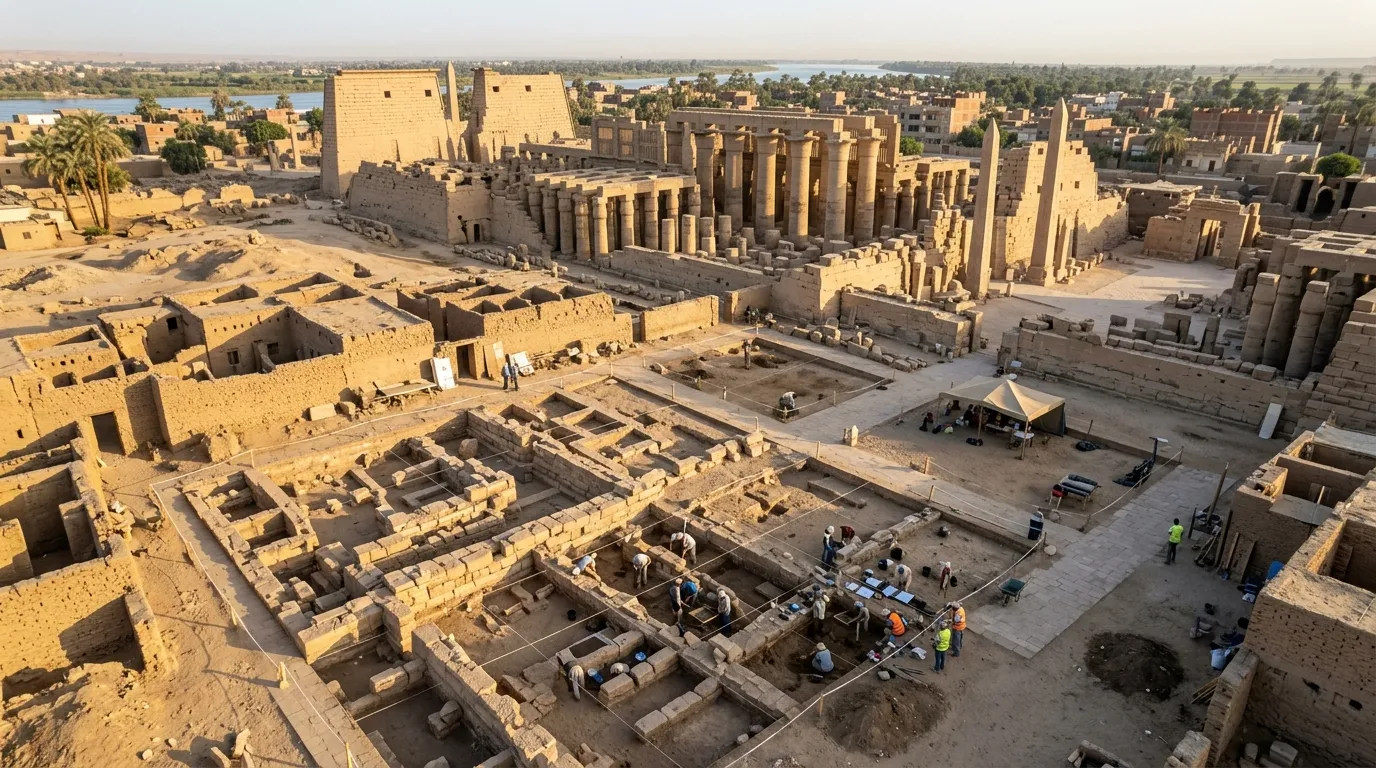
Archaeologists have been excavating the Karnak Temple Complex for more than two centuries. Napoleon's scholars sketched its columns in 1798. Auguste Mariette began systematic work there in the 1850s. Generations of Egyptologists have mapped, measured, and catalogued its pylons, obelisks, and hypostyle halls. The idea that anything major could still be hiding beneath the sand seems almost absurd. And yet, after eight years of painstaking excavation, a joint Egyptian-Chinese archaeological mission has uncovered something that was never recorded in any previous survey: a second sacred lake within the Montu Temple precinct, forming a twin-lake layout that has no parallel anywhere in Egyptian archaeology.
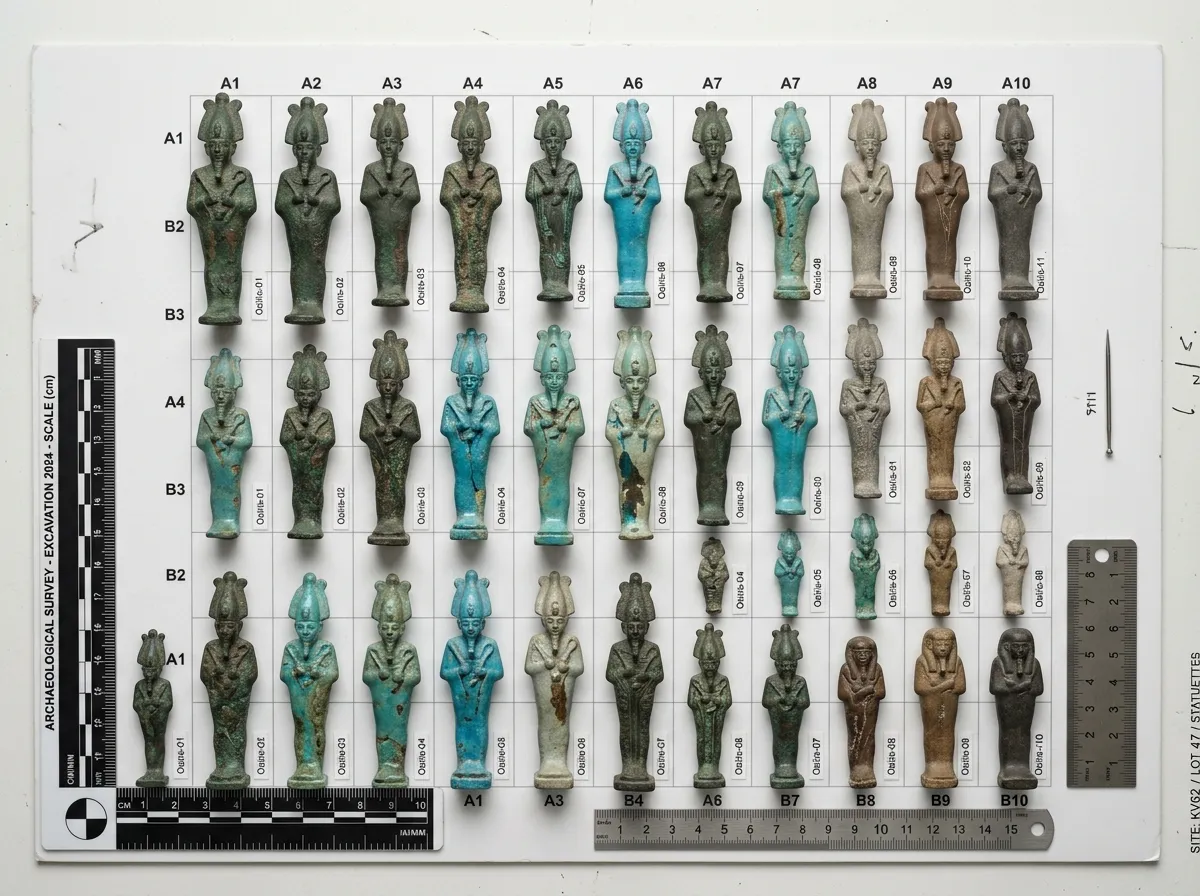
The discovery, announced at a press conference in Luxor in January 2026, represents the first time two sacred lakes have been found aligned north-south within the same temple enclosure at Karnak. The southern lake is a man-made reservoir covering more than 50 square meters, with well-preserved stone walls and a defined structure that has survived largely intact since the Late Period of Egyptian history, roughly 747 to 332 BC. Alongside it, the team unearthed three chapels dedicated to Osiris, dozens of statuettes of the god in various sizes and materials, and a puzzling cache of cow jaw remains that may connect the site to one of ancient Egypt's most powerful groups of women.
What Sacred Lakes Meant to Ancient Egyptians
Every major Egyptian temple was supposed to have a sacred lake, but these were not ornamental features. They served specific ritual functions rooted in Egyptian cosmology. The ancient Egyptians believed that before creation, the universe existed as an infinite expanse of dark, motionless water called Nun. The first act of creation was the emergence of a mound of earth from these primordial waters. Sacred lakes recreated this cosmological moment within the temple precinct, providing a physical connection to the waters of creation.
Priests used the lakes for ritual purification before entering the inner sanctuaries of the temple. They bathed in the sacred water at specific times of day, following protocols that varied by temple and deity. The lakes also served as settings for aquatic rituals, including the sailing of divine barques (model boats carrying statues of gods) during religious festivals. At Karnak's main temple of Amun-Ra, the great sacred lake, which still holds water today, was the site of nighttime ceremonies in which priests reenacted the sun god's journey through the underworld.
The existence of a sacred lake was so fundamental to temple function that finding a major temple without one would be more surprising than finding one with two. But two lakes within the same precinct, arranged on a north-south axis, has never been documented before. "This is the first discovery of its kind in the history of Egyptian archaeology," said Dr. Mohamed Ismail Khaled, secretary-general of the Supreme Council of Antiquities, at the announcement, "filling a key academic void in Egypt's archaeological history."
The Twin Layout: Why Two Lakes Change What We Know
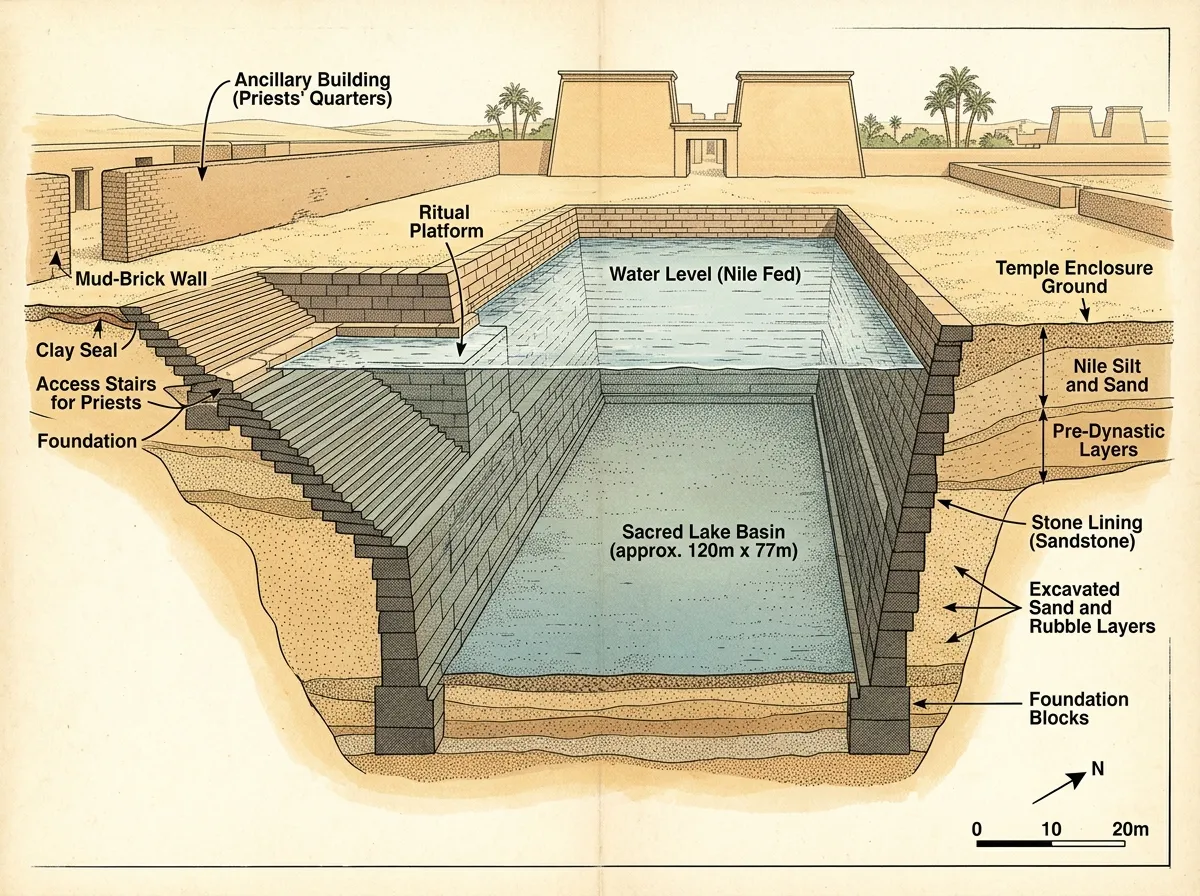
The previously known sacred lake at the Montu Temple precinct sits to the north. The newly discovered lake sits to the south. Together, they form a symmetrical pair aligned along the temple's central axis, a configuration that suggests deliberate architectural planning rather than a later addition.
This matters because it challenges the standard model of Egyptian temple design. Egyptologists have long categorized sacred lakes as singular features, one per temple precinct. The standard reference works, including Dieter Arnold's The Encyclopedia of Ancient Egyptian Architecture and Barry Kemp's Ancient Egypt: Anatomy of a Civilization, describe sacred lakes in the singular. The discovery of a paired configuration at Karnak's Montu precinct opens the question of whether other temple complexes might also contain unexcavated second lakes that previous surveys missed.
The Montu Temple is dedicated to Montu, the falcon-headed war god who was the patron deity of Thebes before Amun-Ra rose to prominence during the Middle Kingdom (around 2000 BC). Montu's precinct occupies the northeastern corner of the Karnak complex, a less-visited area that has received far less archaeological attention than the central Amun-Ra temple. The relatively limited excavation of this precinct is what allowed a major architectural feature to remain hidden for so long.
Dr. Jia Xiaobing, co-director of the Chinese side of the excavation team from the Chinese Academy of Social Sciences, explained to Xinhua News Agency that the discovery was possible because the team undertook the first fully systematic scientific excavation of a sacred lake in Egypt. Previous excavations at other temples had uncovered lakes but had not applied modern stratigraphic techniques to analyze their construction sequence, fill layers, and associated deposits. The eight-year timeline reflects this methodological rigor: the team excavated slowly, documenting every layer, which is how they found the cow jaw remains and Osiris statuettes that a faster excavation might have missed or decontextualized.
The God's Wives of Amun: Tracing Ancient Egypt's Most Powerful Women
Among the most intriguing finds at the southern sacred lake were dozens of cow jaw remains and reused stone blocks bearing inscriptions associated with the Divine Adoratrice, a title held by some of the most powerful women in ancient Egyptian history. The connection between these artifacts and the sacred lake suggests that the site may have served as a ritual space specifically associated with female religious authority during the Late Period.
The Divine Adoratrice, also known as the God's Wife of Amun, was a position that evolved over centuries from a largely ceremonial title to one of genuine political power. During the Third Intermediate Period and the Late Period (roughly 1070-332 BC), the God's Wife of Amun was effectively the ruler of Thebes, controlling vast temple estates, commanding priests, and wielding economic power that rivaled the pharaoh's. The position was typically held by a royal princess who remained celibate and adopted her successor, ensuring that the lineage of power passed through selection rather than inheritance.
The cow jaw remains may be connected to the goddess Hathor, who was depicted as a cow or as a woman with cow horns and who was closely associated with female power, fertility, and divine authority. Hathor was also linked to the concept of Maat, the cosmic principle of truth, justice, and order. The Italian archaeology site *Finestre sull'Arte* reported that the newly discovered lake may have been specifically dedicated to Maat, which would make it one of very few known ritual spaces devoted to this abstract but foundational concept.
The discovery adds archaeological evidence for reconstructing Thebes under the 25th and 26th Dynasties, a period when the God's Wives of Amun, particularly Amenirdis I, Shepenupet II, and Nitocris I, held extraordinary authority. These women commissioned monuments, oversaw temple construction, and maintained diplomatic relationships with foreign powers. The discovery of female-centered power structures across different ancient civilizations continues to reshape how archaeologists understand gender and authority in the ancient world.
Eight Years in the Sand
The joint Egyptian-Chinese excavation began in 2018, building on a collaboration between Egypt's Supreme Council of Antiquities and the Institute of Archaeology at the Chinese Academy of Social Sciences (CASS). China's involvement in Egyptian archaeology has expanded significantly over the past decade, with Chinese institutions funding and staffing excavations at multiple sites along the Nile.
The Montu Temple project started with a survey of the precinct's northeastern sector, an area that had been partially excavated in the early twentieth century by French archaeologists but never fully documented. The team spent the first two years mapping surface features and conducting ground-penetrating radar surveys before breaking ground. The radar detected anomalies consistent with a large subsurface structure, but the team could not confirm the presence of a second sacred lake until they reached the stone walls during the third season.
The excavation revealed that the southern lake had been partially filled with debris during or after the Ptolemaic period (332-30 BC), which explains why earlier surveys had not identified it. The fill included construction rubble from later building phases, wind-blown sand, and the intentionally deposited ritual objects, including the Osiris statuettes and cow jaws, that make the site so significant. The fact that ritual objects were deposited in the fill rather than on the lake's original floor suggests that the lake may have been deliberately decommissioned as part of a religious transition, possibly when the Ptolemaic rulers reorganized temple practices to align with their own syncretic blend of Egyptian and Greek religion.
The three Osiris chapels uncovered adjacent to the lake add another layer of complexity. Osiris, the god of the dead and regeneration, was worshipped throughout Egypt, but his presence within the Montu precinct is noteworthy because the two deities represent very different aspects of Egyptian religion. Montu is a war god associated with martial power; Osiris is associated with death, resurrection, and the afterlife. The coexistence of their cult spaces within the same precinct suggests a more fluid relationship between different religious traditions than the neat categorical divisions that textbooks sometimes imply.
The Bigger Picture
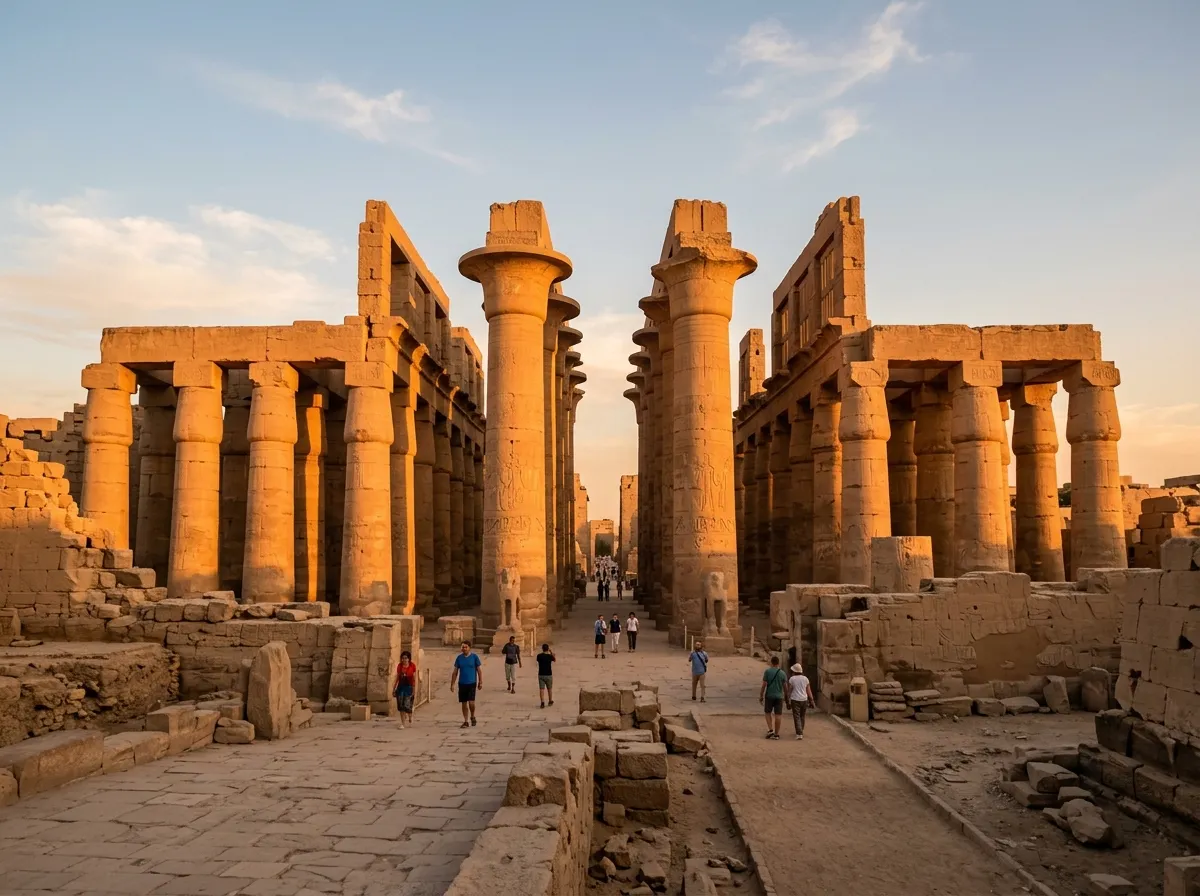
The Karnak discovery is a reminder that even the most studied archaeological sites can harbor surprises when new methods and fresh eyes are applied. The Montu precinct had been partially excavated over a century ago, but the French teams working there lacked ground-penetrating radar, modern stratigraphic techniques, and the funding for a sustained eight-year campaign. The technology mattered, but so did the patience. The Chinese-Egyptian team's willingness to excavate slowly, layer by layer, is what allowed them to recover the contextual information, the cow jaws in specific fill layers, the statuettes in deliberate deposits, that transforms a structural discovery into a historical narrative.
The twin-lake configuration raises questions that will take years to answer. Was the paired layout unique to the Montu precinct, or does it reflect a broader architectural tradition that other temple complexes also followed? Were the two lakes used simultaneously, or did the southern lake replace the northern one at some point? What specific rituals were performed at a lake possibly dedicated to Maat, and how did those rituals differ from the purification ceremonies at standard sacred lakes?
The Divine Adoratrice connection is perhaps the most significant thread to follow. If the southern sacred lake was indeed associated with the God's Wives of Amun, it would represent a rare example of female-controlled ritual space within one of Egypt's most important religious complexes. The cow jaw remains, the Maat dedication, and the Late Period dating all point in this direction, but confirming it will require further excavation and epigraphy work on the inscribed stone blocks.
What we can say with confidence is that the Montu precinct at Karnak is no longer a secondary attraction within the complex. It now contains one of the most significant archaeological discoveries in Egypt in recent years, one that challenges assumptions about temple design, illuminates the role of powerful women in Late Period Thebes, and demonstrates that even in a place as thoroughly explored as Karnak, the ground still has secrets to give up.
Sources
- Discovery of monumental sacred lake at Karnak - Heritage Daily, January 2026
- Joint Egyptian-Chinese excavation uncovers ancient sacred lake in Karnak - Africanews, January 2026
- Egyptian-Chinese archaeologists uncover ancient "sacred lake" in S. Egypt - Xinhua, January 2026
- Egypt, a lake sacred to Maat and three chapels dedicated to Osiris emerge at Karnak - Finestre sull'Arte, 2026
- Excitement Over Sacred Lake Uncovered at Karnak, Egypt - Ancient Origins, 2026