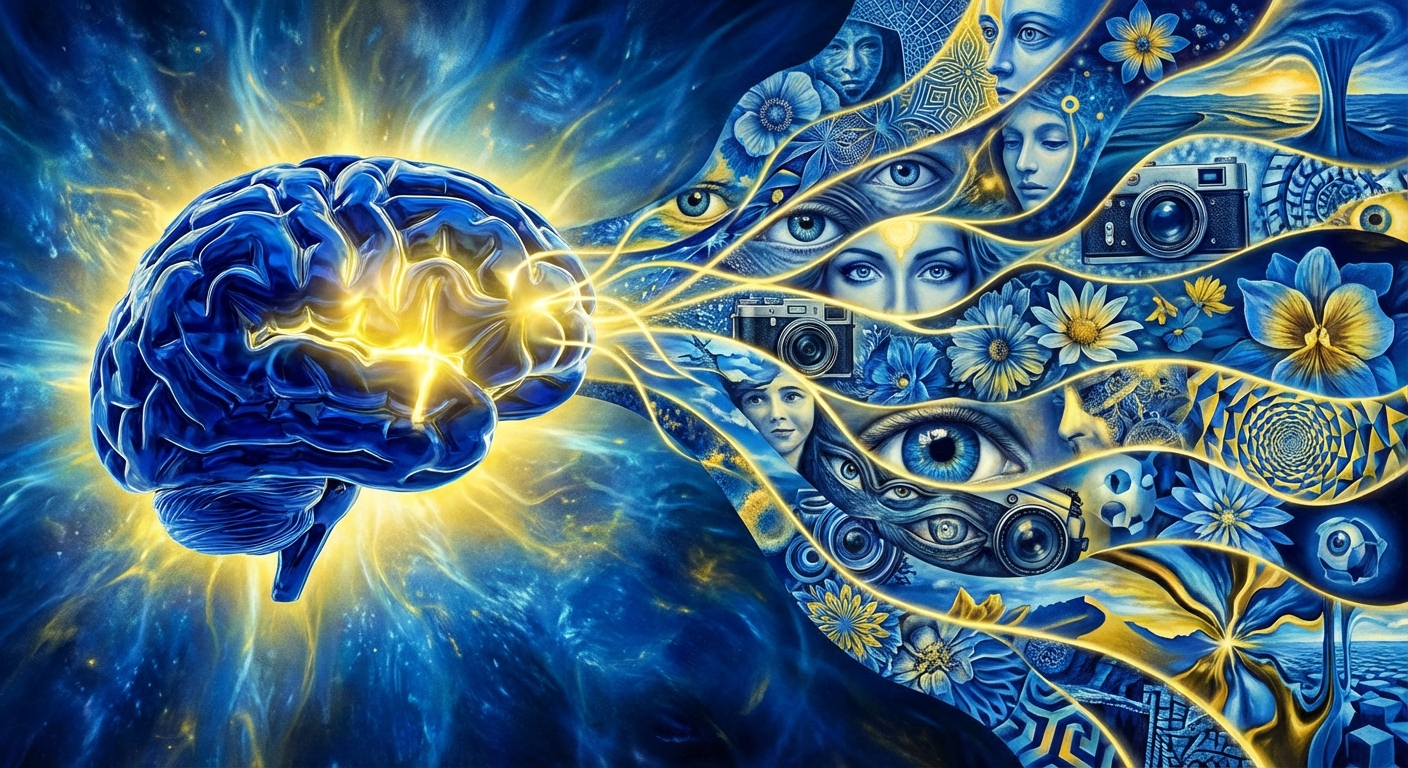
You are not seeing the world as it is. The colors you perceive, the sounds you hear, the sensations you feel, none of these exist in the external world the way you experience them. What you call reality is a controlled hallucination, a best guess generated by your brain based on limited sensory data and a lifetime of expectations. This is not mysticism or philosophical speculation. It is the emerging consensus of neuroscience, and its implications stretch from treating mental illness to understanding consciousness itself.
The idea that perception is constructed rather than recorded is not new. Philosophers have debated it for centuries. But in the past two decades, neuroscientists have developed a detailed account of how this construction works. The framework goes by various names: predictive processing, predictive coding, the Bayesian brain. Whatever the label, the core insight is the same: your brain is a prediction machine, and what you experience as reality is the brain’s best prediction about what is causing the sensory signals it receives.
The Prediction Machine
The traditional view of perception is passive. Light hits your eyes, sound hits your ears, and signals travel up to your brain where they are processed into experience. The brain, in this view, is like a camera or microphone, recording what is out there and presenting it to consciousness.
The predictive processing model inverts this picture. Instead of waiting passively for sensory input, your brain is constantly generating predictions about what that input will be. These predictions flow down from higher brain regions to lower sensory regions. When sensory input arrives, your brain does not transmit the raw data upward. Instead, it transmits only the prediction errors, the differences between what was expected and what actually occurred.
This explains why perception is so fast and efficient. Your brain does not need to process every detail of every scene from scratch. It predicts most of it based on context and past experience, only updating when predictions fail. When you walk into your kitchen, you do not carefully examine every cabinet and appliance. Your brain predicts what will be there, and you perceive the prediction unless something unexpected catches your attention.

Why This Matters
The implications of predictive processing extend far beyond academic neuroscience. If perception is prediction, then many experiences we take for granted are actually the brain’s interpretations rather than faithful recordings. This has profound consequences for understanding everything from visual illusions to mental illness.
Optical illusions, for instance, become less puzzling under this framework. Illusions are not failures of perception but successful predictions that happen to be wrong in unusual contexts. When you see the famous Muller-Lyer illusion, where two lines of equal length appear different because of the arrows at their ends, your brain is making reasonable predictions about perspective and depth that happen to mislead you in this artificial context.
More importantly, predictive processing offers new ways to understand conditions like schizophrenia, autism, and depression. In schizophrenia, some researchers suggest the brain may overweight sensory signals relative to predictions, leading to hallucinations and paranoia as the brain perceives meaningful patterns in random noise. In autism, the brain may have difficulty forming flexible predictions, leading to sensory overwhelm and a need for rigid routines. In depression, negative predictions may dominate, coloring all experience with pessimism regardless of actual events.
The Construction of Emotion
The same principles that apply to perception appear to apply to emotion. Traditionally, emotions were understood as reactions to events: something happens, and we feel happy or sad or afraid in response. But research by psychologists like Lisa Feldman Barrett suggests emotions are also constructed predictions.
In this view, your brain is constantly predicting the internal state of your body and interpreting those predictions through the lens of past experience and cultural learning. When your heart races and your palms sweat, your brain predicts what these sensations mean based on context. In a dark alley, you feel fear. At a party, you feel excitement. The physical sensations may be similar; the predicted meaning differs.
This helps explain why emotions can seem so mysterious. They are not direct responses to events but interpretations, predictions about what is happening inside and around you. This is why therapy can change emotional responses: by updating the predictions your brain makes, you can experience the same events differently.

Consciousness as Controlled Hallucination
Perhaps the most provocative implication of predictive processing concerns consciousness itself. If everything you perceive is a prediction generated by your brain, then in what sense are you ever in contact with external reality? The philosopher Anil Seth has suggested we should think of consciousness as a “controlled hallucination,” a kind of dreaming that is constrained by sensory input.
When you dream, your brain generates experiences without any input from the world. The dreams feel real because your brain is doing the same thing it does when you are awake: making predictions and experiencing those predictions as reality. The only difference is that waking perception is constrained by incoming sensory data, which corrects the wilder predictions and keeps your experience roughly aligned with the external world.
This perspective dissolves some traditional puzzles about consciousness. The question of how the brain generates conscious experience becomes less mysterious if we realize that generating experiences is what the brain does all the time, during dreams, during waking life, during hallucinations. The mystery is not how the brain creates consciousness but how it keeps consciousness aligned with reality.
Free Will and the Constructed Self
The constructive nature of perception extends to the self. You experience yourself as a unified agent making decisions and acting in the world. But this experience is also a prediction, a model the brain constructs to explain and predict its own behavior.
Research on decision-making suggests that many choices are made unconsciously before we become aware of them. The sense of making a decision is a post-hoc construction, a prediction the brain generates to explain actions that have already been set in motion. This does not mean free will is an illusion, but it does mean that our intuitive sense of how decisions work may be misleading.
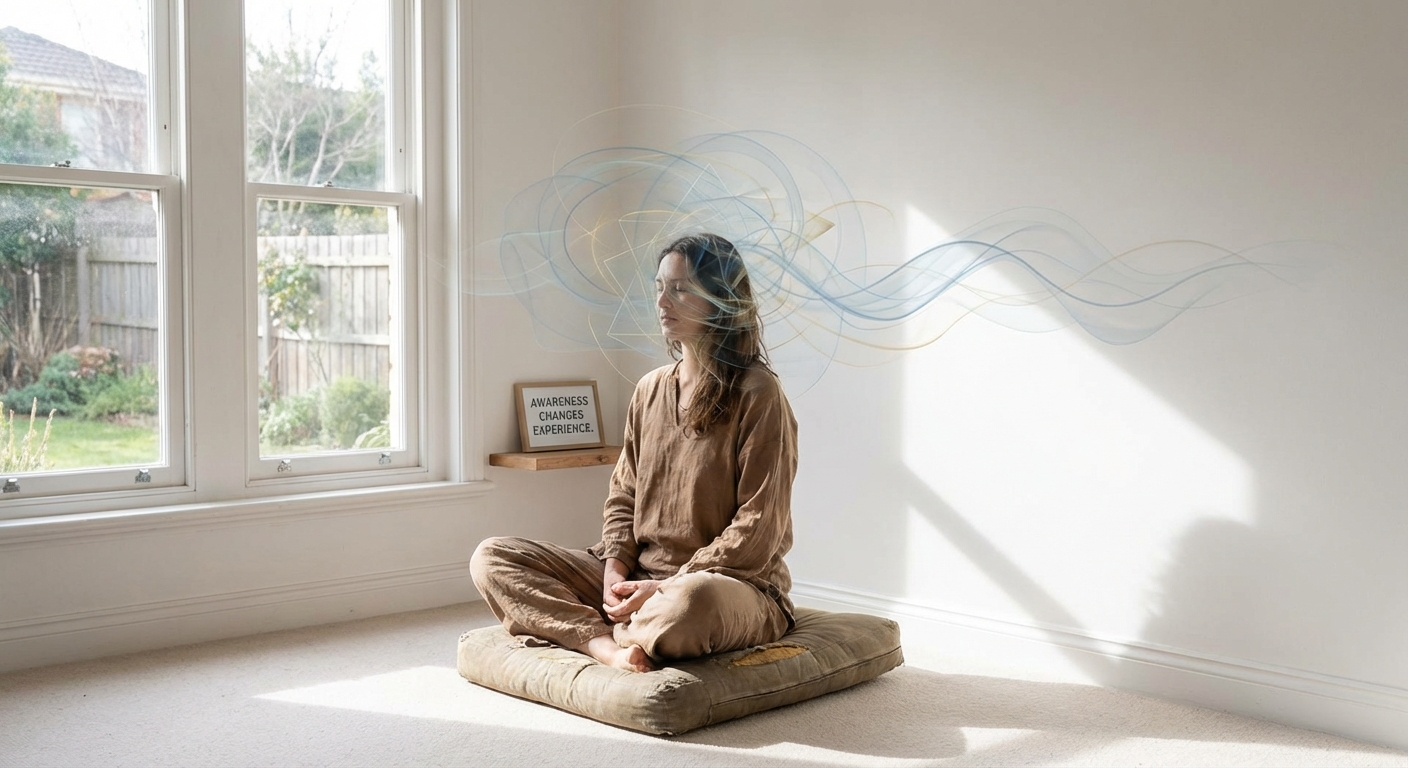
The implications for psychology and ethics are significant. If the self is a construction, then changing the self becomes possible in ways that fixed views of identity might not allow. Therapy, meditation, and other practices can work by updating the models the brain uses to construct the self. You are not stuck with the self you have; the self is a prediction that can be revised.
The Bigger Picture
Understanding that your brain invents your reality is not an invitation to skepticism or nihilism. The reality your brain constructs is not arbitrary. It is shaped by the actual world through sensory feedback, refined by evolution over millions of years, and adequate enough to keep you alive. Predictions that consistently fail get updated. The hallucination is controlled.
But this understanding should inspire humility. When you are certain you see something clearly, when you are sure you understand what is happening, when you feel you know exactly what you are experiencing, remember that all of this is constructed. Your certainty itself is a prediction, and predictions can be wrong.
This has practical implications. It suggests that changing perception is possible, that we are not trapped by our first impressions. It explains why two people can experience the same event so differently, since their predictions are shaped by different histories. And it opens new approaches to mental health, where changing the brain’s predictive models may be more effective than trying to change reality itself.
The world as you experience it is not out there. It is in here, generated by several pounds of tissue that has never seen light or heard sound directly. Everything you have ever known has been a sophisticated guess, a controlled hallucination, a model mistaken for reality. Once you understand this, you can never quite see things the same way again, if “seeing” is even the right word for what you are doing.