
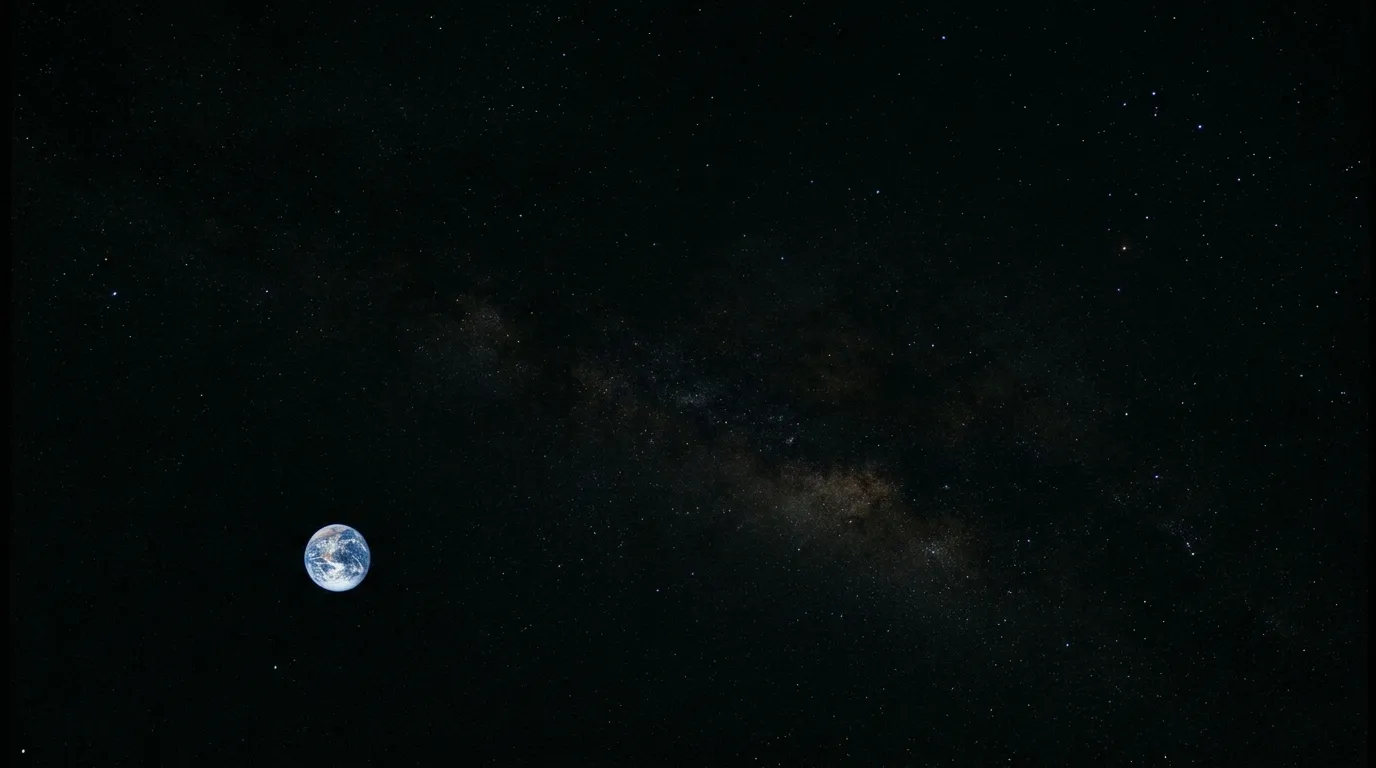
Right now, four astronauts aboard NASA's Orion capsule are circling Earth, preparing for the engine burn that will send them toward the moon for the first time in 54 years. When the Artemis II crew completes their translunar injection and the Earth begins to shrink in their windows, something will happen to them that no training can prepare for and no debriefing can fully capture. They will experience what researchers call the overview effect: a sudden, overwhelming cognitive shift that changes how a person sees the planet, the species, and themselves. Nearly every astronaut who has left Earth orbit has reported it. Many describe it as the most important experience of their lives. And science is only beginning to understand why it happens.
The Moment Everything Changes
Edgar Mitchell was a Navy captain, an MIT-trained aeronautical engineer, and the lunar module pilot on Apollo 14. He was not, by any account, a particularly emotional man. But on the return flight from the moon in February 1971, Mitchell looked out the window and something broke open inside him. He later described the experience in terms that sounded more like mysticism than mission reporting: "You develop an instant global consciousness, a people orientation, an intense dissatisfaction with the state of the world, and a compulsion to do something about it."
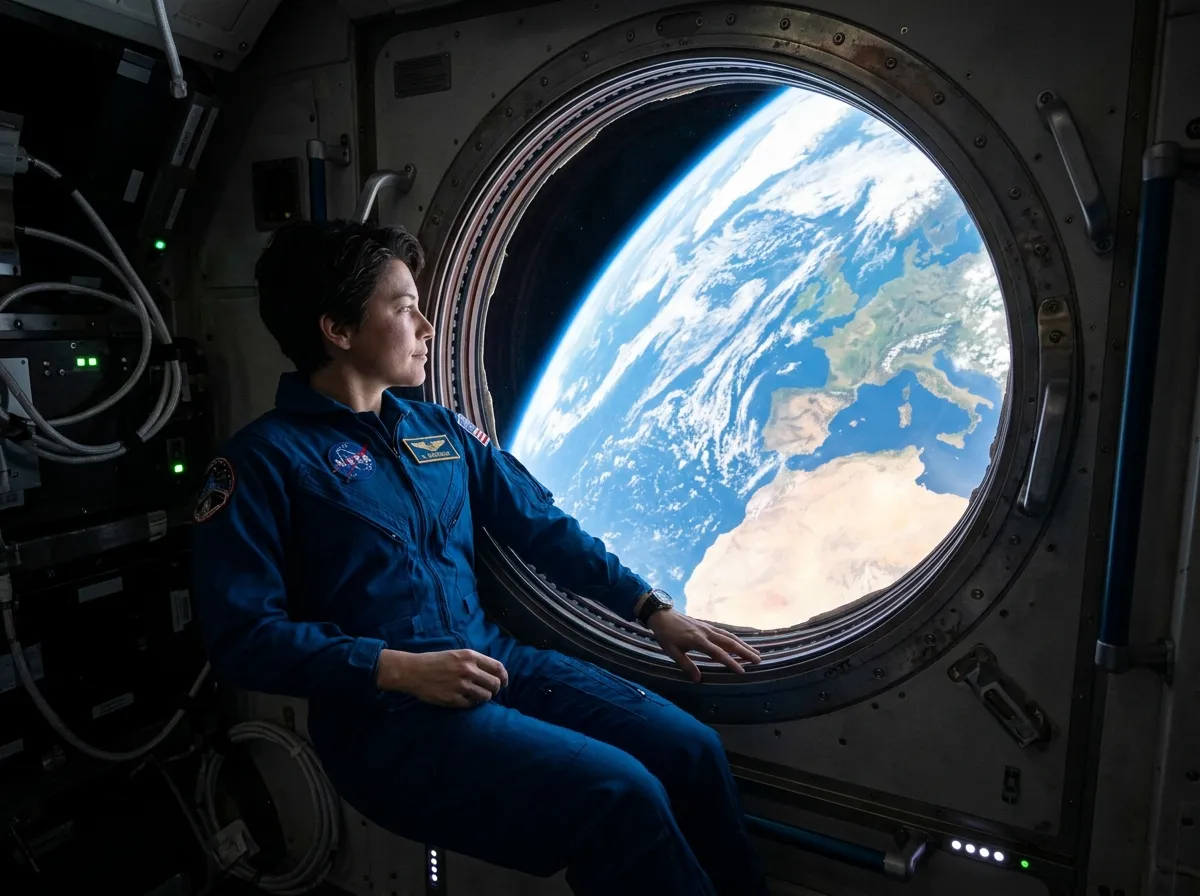
Mitchell wasn't alone. Ron Garan, a NASA astronaut who spent 178 days aboard the International Space Station, described looking at Earth's atmosphere and realizing how thin it was: "That little paper-thin layer is all that protects every living thing on Earth from death, basically from the harshness of space." The effect hit him not as an intellectual observation but as an emotional flood. He knew, abstractly, that the atmosphere was thin. But seeing it with his own eyes produced a reaction that abstract knowledge never had.
Shuttle astronaut Kathryn Sullivan, the first American woman to walk in space, put it differently: "No amount of prior study or training can fully prepare anybody for the awe and wonder this inspires." And Scott Kelly, who spent 340 consecutive days on the ISS, said the experience gave him "an appreciation for Earth and life itself that was impossible to fully grasp when you're living on the surface." The language varies, but the pattern is remarkably consistent: astronauts leave Earth as pilots, scientists, and engineers, and they come back as something slightly different. Not religious converts or broken people, but individuals whose sense of scale has been permanently recalibrated.
What Frank White Saw Without Leaving the Ground
The term "overview effect" was coined by Frank White, a space philosopher (yes, that's a real discipline) and Harvard-educated writer who published The Overview Effect: Space Exploration and Human Evolution in 1987. White had never been to space himself. He developed the concept while flying across the United States and looking down at the landscape below, noticing how the aerial perspective dissolved the boundaries that felt so absolute on the ground. He wondered what would happen if you took that shift in perspective to its logical extreme: not flying at 35,000 feet, but orbiting at 250 miles, or looking back from the surface of the moon.
White spent years interviewing astronauts and cosmonauts, and he found a pattern that cut across nationalities, missions, and decades. Regardless of whether they were American or Russian, military test pilots or civilian scientists, the experience of seeing Earth as a whole, borderless object in space produced a cluster of related psychological changes: a sense of interconnection with all life, an intensified awareness of the planet's fragility, a feeling that national and ethnic boundaries were arbitrary constructs, and a heightened desire to protect the environment.
What made White's framework useful was that it gave researchers a name for something that had been reported anecdotally since the Gemini and Apollo programs but never studied systematically. Before White, astronauts' descriptions of the experience were treated as poetic observations or personal anecdotes. After White, they became data points in a psychological phenomenon that could be studied, measured, and potentially reproduced.
The Science of Awe
In 2016, researchers at the University of Pennsylvania's Positive Psychology Center, led by David Yaden and Johannes Eichstaedt, published one of the first rigorous psychological analyses of the overview effect. Their team analyzed written and spoken accounts from dozens of astronauts spanning multiple space agencies and decades, coding the language for emotional and cognitive themes. What they found was that the experience consistently matched the psychological profile of what researchers call "self-transcendent experiences," a category that includes intense episodes of awe, flow states, and certain meditative or mystical experiences.
The defining characteristic of awe, as psychologists Dacher Keltner and Jonathan Haidt described it in a 2003 paper, is the perception of vastness combined with a need for cognitive accommodation. Your existing mental framework can't contain what you're experiencing, so your brain is forced to update its model of reality in real time. That's exactly what astronauts report: the Earth they intellectually knew was a sphere in space becomes, in the moment of seeing it, something their minds have to reorganize around. The brain processes visual stimuli faster than conscious thought can keep up, and when the stimulus is the entirety of human civilization hanging in a void, the cognitive recalibration is enormous.
Yaden's team also found neurological parallels. Self-transcendent experiences are associated with reduced activity in the default mode network, the brain regions involved in self-referential thinking. When the default mode network quiets down, people report feeling less separate from their environment and more connected to something larger. This is the same pattern observed in experienced meditators and in people under the influence of psilocybin in controlled clinical settings. The overview effect, in other words, appears to be a naturally occurring version of a psychological state that humans have been trying to access through spiritual and pharmacological means for thousands of years.
Why Borders Disappear
One of the most politically loaded aspects of the overview effect is what it does to national identity. Astronaut after astronaut has reported that the experience of seeing Earth without borders, without the lines that maps draw between countries, produces an immediate and visceral sense that those divisions are human inventions that the planet itself doesn't recognize.
Sultan bin Salman Al Saud, a Saudi prince who flew on the Space Shuttle Discovery in 1985, described the progression this way: "The first day or so we all pointed to our countries. The third or fourth day we were pointing to our continents. By the fifth day, we were aware of only one Earth." This wasn't an abstract philosophical position. It was a perceptual shift: the boundaries that organized his understanding of the world literally stopped being visible, and his thinking adjusted accordingly.
Research supports the idea that this isn't just poetic license. A 2024 study published in the Journal of Environmental Psychology found that participants who watched immersive virtual reality simulations of Earth from orbit showed measurable increases in "global identity," the sense of belonging to humanity as a whole rather than to a specific nation or group, and those increases correlated with greater willingness to engage in pro-environmental behavior. The effect was modest compared to what real astronauts report, but it was statistically significant and reproducible, suggesting that the overview effect exists on a spectrum rather than as a binary switch.
Can You Get There Without a Rocket?
If the overview effect is genuinely transformative, an obvious question follows: does a person actually need to go to space to experience it? Several research groups have tried to find out.
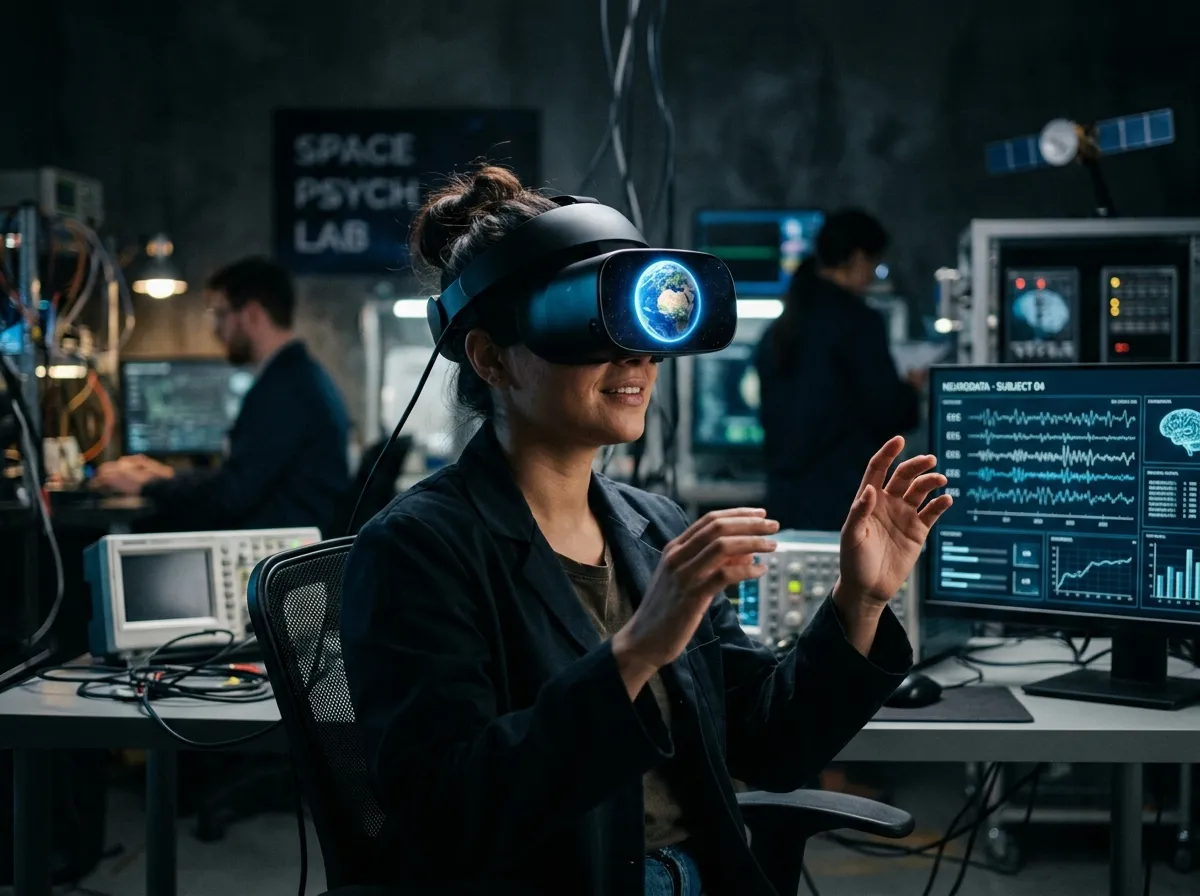
The most promising avenue is virtual reality. Researchers at Simon Fraser University's iSpace Lab developed "Virtual Earthgazing," an immersive VR experience that simulates floating above Earth in the cupola of the International Space Station. Participants wear a headset and spend several minutes watching a photorealistic rendering of Earth rotating below them, complete with accurate cloud patterns, city lights on the night side, and the thin blue line of the atmosphere at the horizon. The experience doesn't perfectly replicate the real thing (there's no weightlessness, no genuine danger, no months of training building anticipation), but studies have found it does produce measurable increases in awe and what researchers call "connectedness to nature."
A 2024 study in Virtual Reality went further, measuring neurophysiological responses during a VR space journey. The researchers found changes in heart rate variability and skin conductance that were consistent with genuine awe responses, not just visual interest or entertainment. Participants reported feeling "smaller" in a way they described as positive, a sense that their individual concerns mattered less against the backdrop of the whole planet. This is the same "small self" phenomenon that Keltner and Haidt identified as a core component of awe.
The limitation is scale. Real astronauts experience the overview effect in the context of enormous personal risk, years of preparation, and the absolute reality of being 250 miles above the only home their species has ever known. VR can approximate the visual stimulus, but it can't replicate the existential weight. Still, the fact that even a simulation produces measurable cognitive and emotional shifts suggests that the overview effect taps into something fundamental about human psychology, not something that requires a $2 billion rocket to unlock.
The Bigger Picture
The Artemis II crew will spend approximately 10 days in space. For most of that time, they'll be focused on mission tasks: systems checks, trajectory monitoring, data collection, and the dozen other responsibilities that keep a spacecraft functioning and its crew alive. But sometime around day six, when Orion rounds the far side of the moon and the crew looks back at an Earth that fills less of their window than a dinner plate held at arm's length, the overview effect will likely arrive for all four of them. It has arrived for virtually every human who has reached that vantage point.
What makes the overview effect philosophically interesting is what it reveals about the limits of knowledge versus experience. Every astronaut who has reported the effect knew, before they left Earth, that the planet was a sphere in space, that borders were political constructs, and that the atmosphere was thin. They had seen photographs. They had studied orbital mechanics. The information was not new. What was new was the direct experience of that information, the moment when intellectual understanding became visceral understanding, and their brains had to rebuild their model of reality to accommodate what their eyes were showing them.
That gap between knowing and experiencing is one of the oldest problems in philosophy of mind, and the overview effect is one of its most dramatic modern examples. It suggests that there are categories of understanding that can only be accessed through direct perception, that some truths about the world require being in a specific physical relationship to the world in order to be felt rather than merely thought. Tonight, four more humans will begin the journey toward that specific physical relationship. When they come back, if the pattern holds, they will know something about the Earth that the rest of us can only read about. And that difference, the gap between what our brains process and what we consciously grasp, may be the most important thing the overview effect has to teach us.
Sources
- Penn Psychologists Study Intense Awe Astronauts Feel Viewing Earth From Space - Penn Today, University of Pennsylvania
- The Overview Effect: Astronaut Perspectives from 25 Years in Low Earth Orbit - NASA Johnson Space Center
- A virtually-induced overview effect? Seeing the world from above through a simulated space tour - Journal of Environmental Psychology (2024)
- Neurophysiological evidence for the overview effect: a virtual reality journey into space - Virtual Reality, Springer (2024)
- The Overview Effect - NASA Houston We Have a Podcast