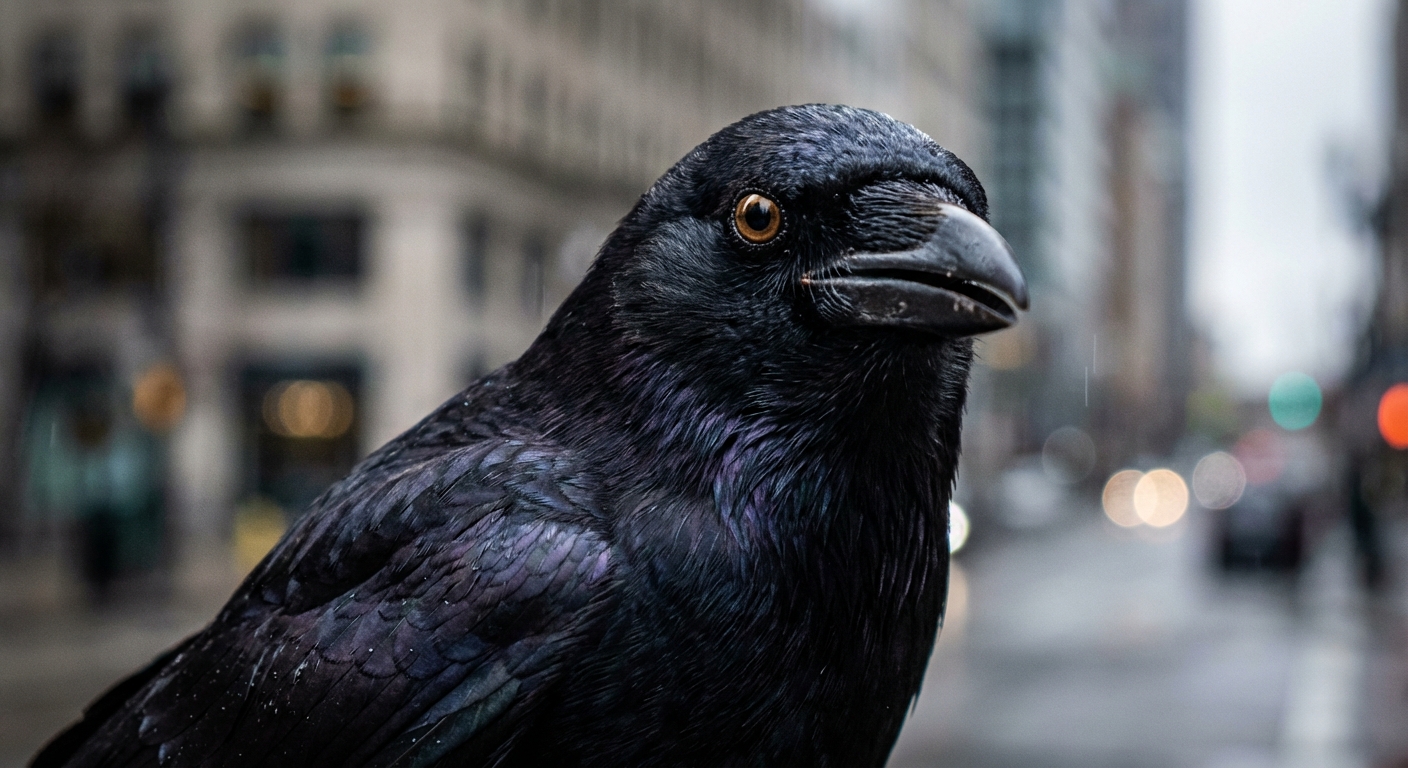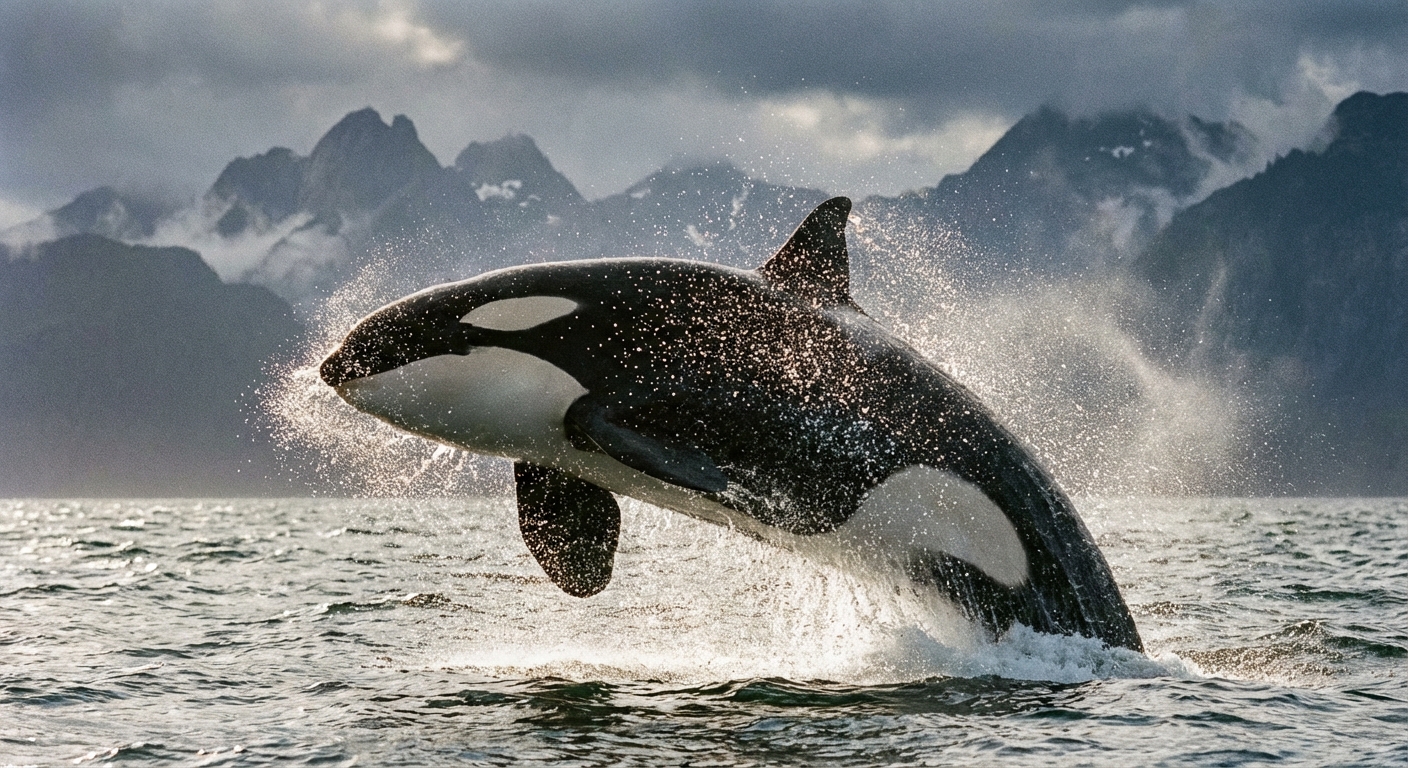
Tool use was once considered the defining characteristic of humanity. When Jane Goodall first observed chimpanzees using sticks to extract termites in the 1960s, it shattered the assumption that tools were our exclusive domain. Since then, the club of tool-using animals has expanded to include crows, elephants, dolphins, and even certain fish. In 2025, scientists added another member: the orca, an animal already recognized as one of Earth’s most intelligent creatures, has been observed using tools in ways that suggest deliberate problem-solving.
The observations come from researchers studying orca populations in various ocean environments. The behaviors documented range from using objects to manipulate prey to employing found items in apparent play. While each individual observation might be dismissed as incidental, the pattern that emerges suggests something more: killer whales are not just intelligent but inventive, capable of recognizing how objects in their environment can be used to achieve goals.
What Counts as Tool Use
Defining tool use is trickier than it might seem. The classic definition involves using an external object to modify another object or the environment. A chimpanzee using a stick to fish for termites meets this definition clearly. A sea otter using a rock to crack open shellfish qualifies. But the boundaries get blurry with animals that use parts of their own bodies in unusual ways, or that modify their environment without using a separate object.
Researchers generally agree that true tool use requires several elements: the object must be external to the animal, it must be manipulated or held in some way, and its use must be directed toward a specific goal. Additionally, many scientists look for evidence that the behavior is learned rather than purely instinctive, and ideally, evidence that it is innovative, arising in response to new challenges.
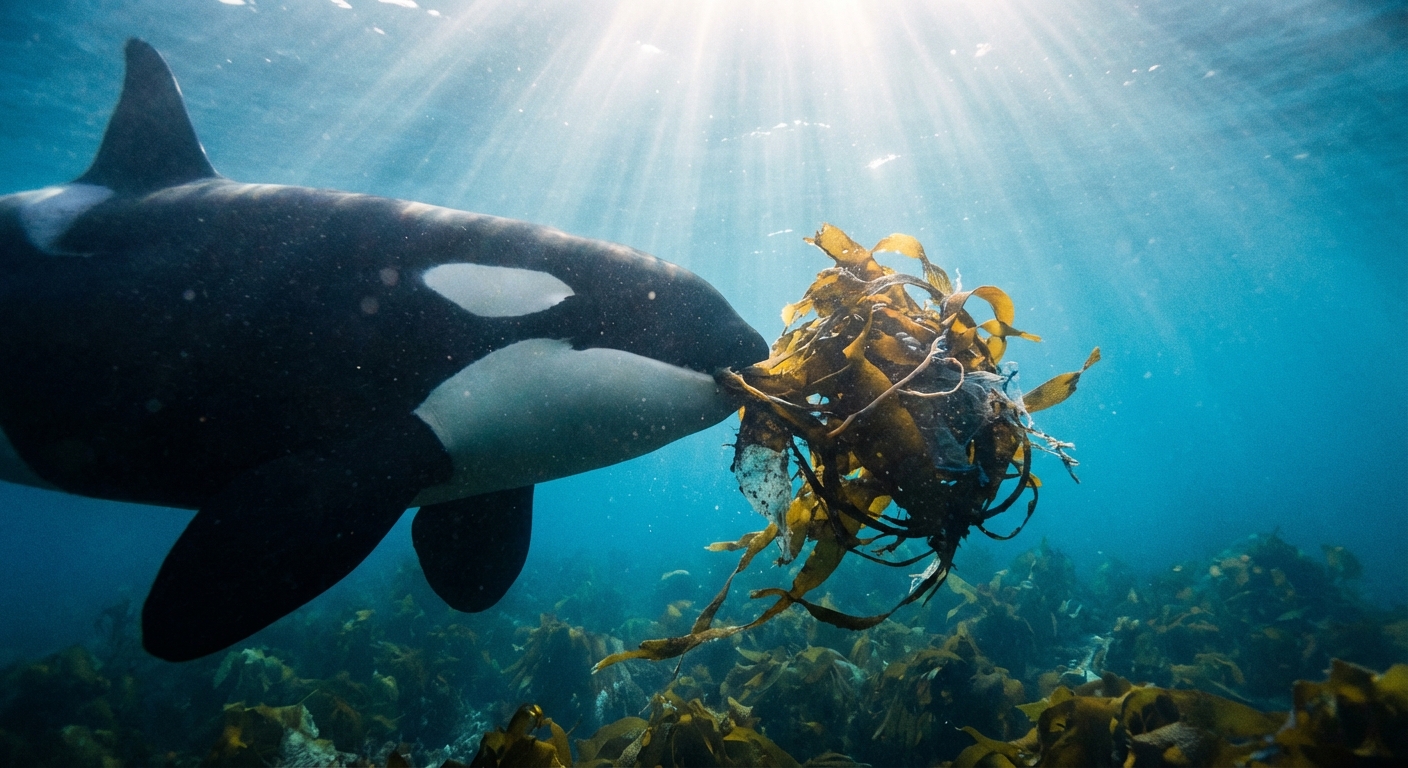
The orca observations documented in 2025 appear to meet these criteria. Researchers observed killer whales manipulating objects in ways that were clearly goal-directed and appeared to reflect learning and problem-solving rather than instinct. The specifics vary by population and individual, but the overall pattern suggests a species capable of the flexible, context-dependent behavior that characterizes tool use in other intelligent animals.
The Intelligence of Orcas
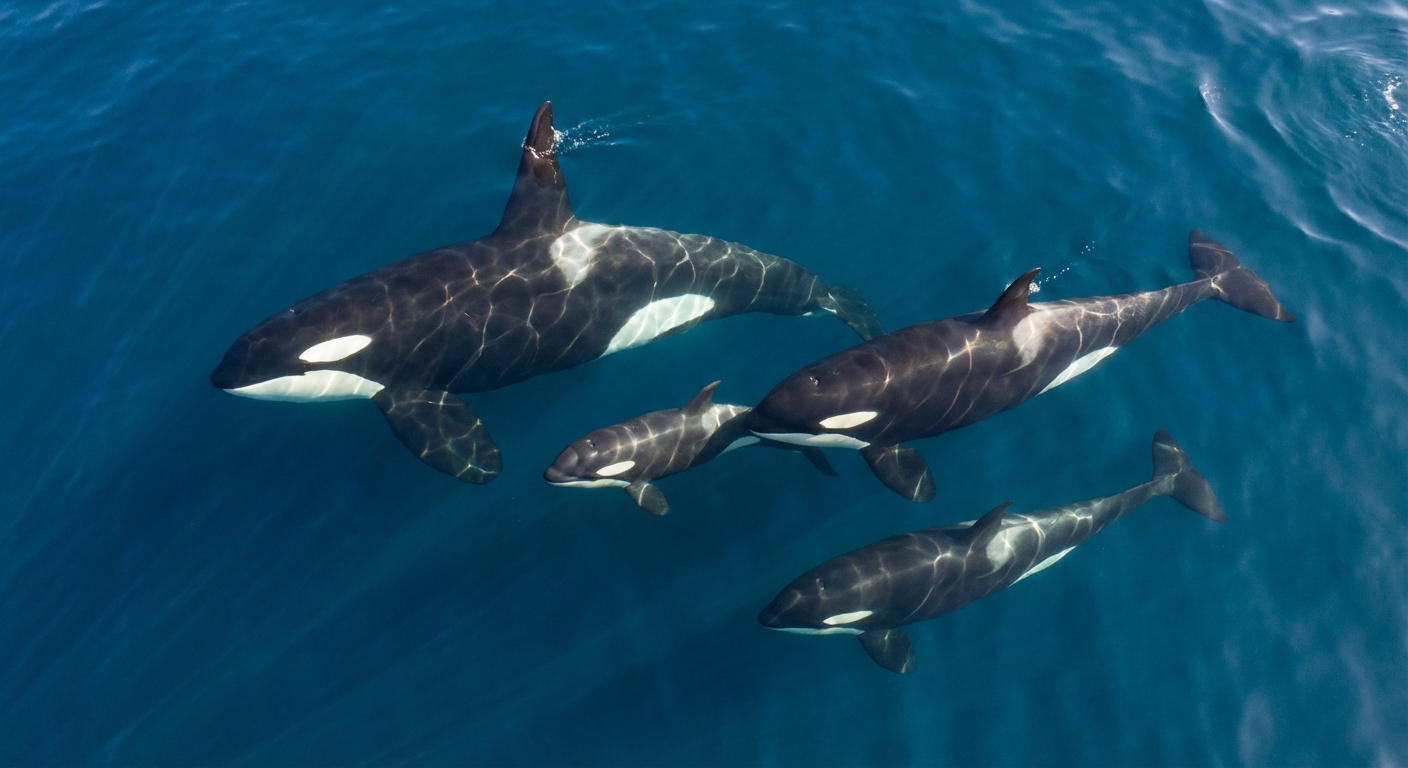
Orcas were already understood to be exceptionally intelligent before these observations. Their brains are among the largest of any animal, second only to sperm whales among cetaceans. More importantly, their brains show complex development in regions associated with social cognition, emotional processing, and self-awareness.
The evidence for orca intelligence is extensive. They live in complex societies organized around matrilineal groups, with grandmothers playing crucial roles in guiding the family. Different populations have distinct cultures, with unique dialects, hunting techniques, and social customs passed down through generations. Orcas in captivity have demonstrated problem-solving abilities, self-recognition in mirrors, and the capacity to understand abstract concepts.
Their hunting techniques alone suggest remarkable cognitive abilities. Different orca populations specialize in different prey and have developed sophisticated methods to catch them. Some populations in Patagonia intentionally beach themselves to grab seals, a behavior that requires precise understanding of tidal conditions and individual courage that must be taught to young whales. Others near Antarctica create waves to wash seals off ice floes, coordinating their actions in ways that suggest planning and communication.
Adding tool use to this repertoire is significant not because it reveals intelligence we did not know about, but because it shows orcas extending their problem-solving abilities into a new domain. Animals that use tools are not just intelligent; they are innovative, capable of seeing possibilities in their environment that are not immediately obvious.
Why Marine Tool Use Is Rare
Tool use is surprisingly rare in marine environments. While many aquatic animals are intelligent, the constraints of underwater life make tool manipulation difficult. Objects behave differently in water than in air. Fins and flippers are not designed for grasping. The lack of stable surfaces makes it hard to use objects as platforms or anvils.
Dolphins, orcas’ smaller relatives, have shown some tool use, most famously the bottlenose dolphins of Shark Bay, Australia, who wear sponges on their snouts to protect against stings while foraging. But even this behavior is rare, found only in specific populations and passed down through limited family lines. Most dolphins, despite their intelligence, do not use tools.
The orca observations suggest that tool use in cetaceans may be more common than previously recognized, or that orcas have crossed a cognitive threshold that allows them to overcome the constraints that limit tool use in other marine animals. Either possibility is scientifically important. If tool use is more common, we have been underestimating cetacean cognitive abilities. If orcas are special, we need to understand what makes them different.
Cultural Transmission
One of the most important aspects of tool use in animals is whether it is transmitted culturally. A behavior that arises spontaneously in one individual is interesting. A behavior that is taught and learned across generations is transformative. It suggests the capacity for cumulative culture, where innovations build on each other over time.
Orcas are already known to transmit cultural knowledge. Their hunting techniques, their dialects, their social customs all show patterns of cultural learning. Young orcas spend years with their mothers and grandmothers, absorbing knowledge that took generations to develop. When a new technique proves successful, it can spread through a population and persist for decades.
If tool use in orcas proves to be culturally transmitted, it would suggest a capacity for innovation that goes beyond individual intelligence. It would mean orcas can not only invent solutions to problems but can share those inventions with others, potentially building up libraries of techniques over many generations. This kind of cumulative culture was once thought unique to humans.
What This Means for Conservation
The discovery of tool use in orcas adds urgency to conservation concerns. Several orca populations are endangered, threatened by pollution, declining prey populations, and habitat degradation. The Southern Resident orcas of the Pacific Northwest, one of the most-studied populations, number fewer than 75 individuals. Other populations face similar pressures.
When we lose an orca population, we lose more than individuals. We lose culture. The unique dialects, hunting techniques, and social structures of each population represent thousands of years of accumulated knowledge. If tool-using behaviors are part of this cultural heritage, their loss would be even more significant. We would be losing not just animals but innovations, ideas encoded in behavior rather than text.
This perspective reframes conservation. Protecting orcas is not just about preserving biodiversity in an abstract sense. It is about recognizing that these animals have built something worth preserving: cultures with histories, traditions, and now, perhaps, technologies of their own.
The Bigger Picture
The discovery that orcas use tools fits into a broader pattern of discoveries about animal intelligence that have steadily eroded human exceptionalism. We once believed only humans had language; then we learned about bee dances and whale songs and crow calls. We once believed only humans used tools; then came Goodall’s chimpanzees and New Caledonian crows and sponge-wearing dolphins. We once believed only humans had culture; now we see culture everywhere we look carefully.
This pattern should prompt humility. Each time we have defined intelligence by human standards, animals have shown us those standards were too narrow. The lesson is not that other animals are just like us but that intelligence takes many forms, shaped by different bodies, environments, and evolutionary pressures. Orcas are not intelligent in the way humans are. They are intelligent in the way orcas are, and that way is now shown to include tool use.
What other capabilities might we be missing? How many behaviors go unrecorded because we are not looking, or because we lack the imagination to recognize them? The ocean remains largely unexplored. Orcas in remote populations may exhibit behaviors never documented by scientists. Every observation that expands our understanding of animal intelligence should remind us how much we have yet to learn.
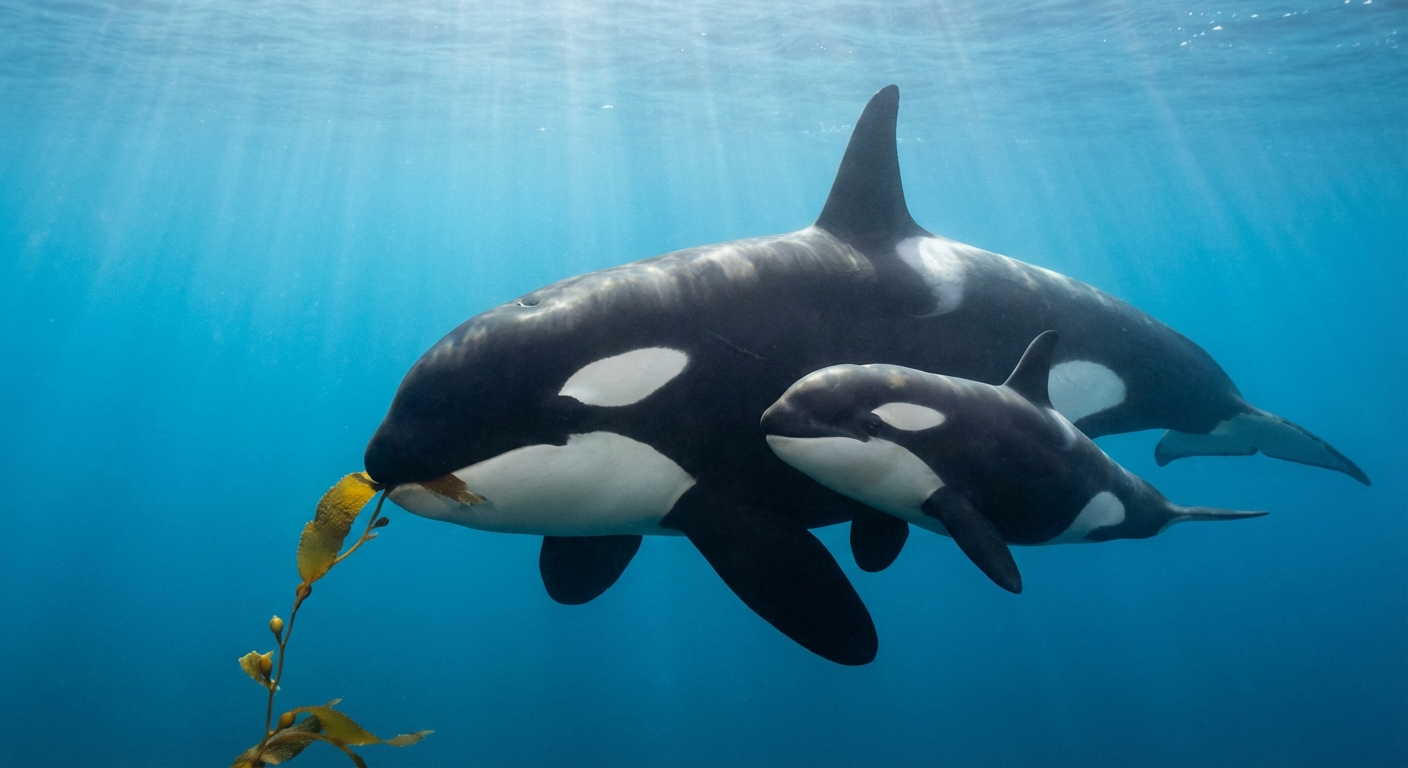
The orca with its tool is an image to hold in mind. It speaks of an intelligence that evolved in parallel to our own, that found different solutions to the challenge of surviving and thriving, that even now may be innovating in ways we cannot yet perceive. In the vastness of the ocean, minds are at work, and they are more remarkable than we knew.