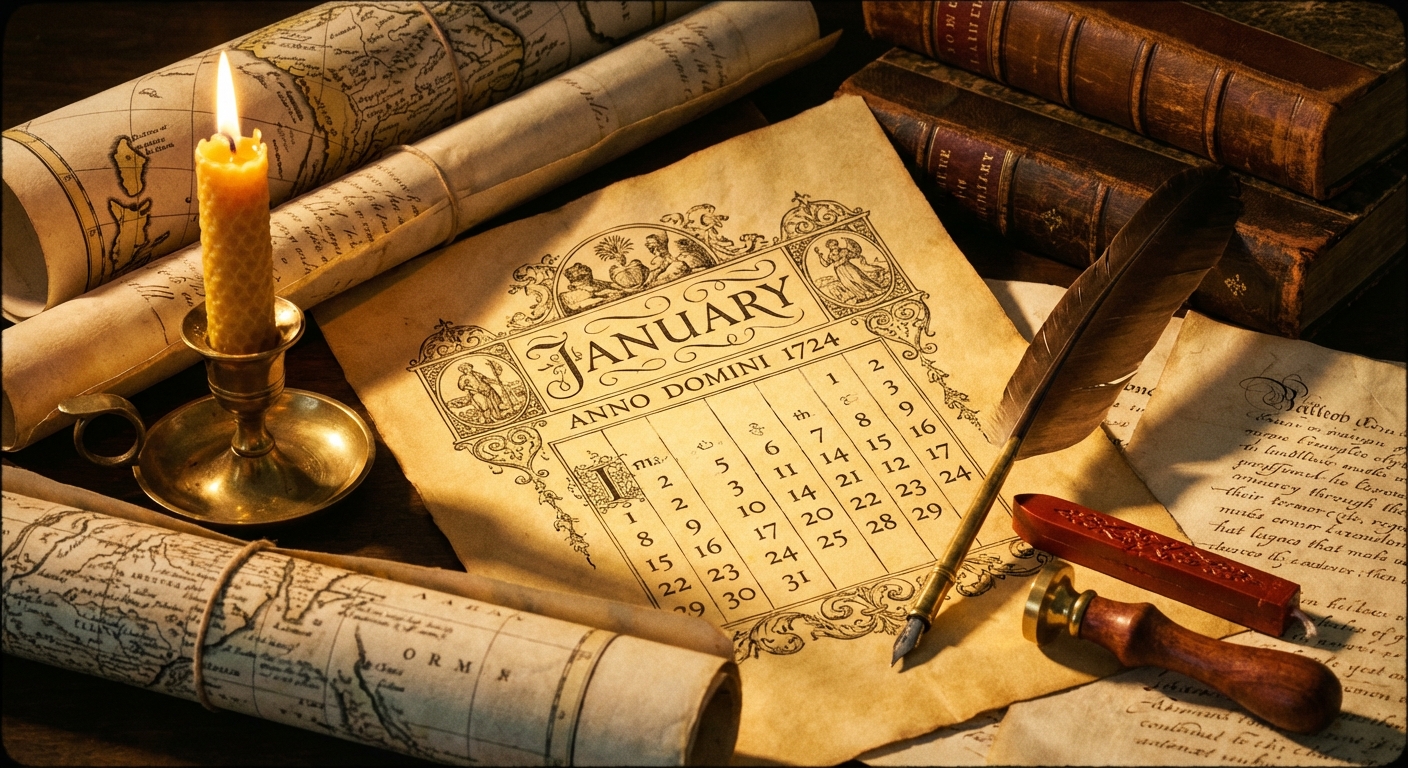
In 1707, a British naval fleet under Admiral Sir Cloudesley Shovell ran aground off the Isles of Scilly. Nearly 2,000 sailors drowned in the disaster, including the Admiral himself. The cause wasn’t a storm or enemy attack. It was an inability to determine longitude at sea. Navigation in the 18th century relied on dead reckoning and celestial observations, but without accurate timekeeping, sailors couldn’t calculate their east-west position with any reliability. Ships got lost. People died.
The Longitude Problem, as it came to be known, wasn’t just a technical puzzle. It was a matter of empire, commerce, and survival. In 1714, the British government established the Board of Longitude and offered a £20,000 prize (roughly £3 million today) to anyone who could solve it. The solution that eventually claimed the prize wasn’t astronomical. It was mechanical. A self-educated Yorkshire carpenter named John Harrison built a clock accurate enough to keep time at sea. In doing so, he didn’t just solve a navigation problem. He helped create the modern world.
The Longitude Problem
Finding your latitude at sea is relatively straightforward. The angle of the sun at noon, or the position of Polaris at night, tells you how far north or south of the equator you are. Longitude is different. The Earth rotates 360 degrees every 24 hours, which means it rotates 15 degrees every hour. If you know the exact time at a reference location (say, Greenwich) and the local time at your current position (determined by the sun’s position), you can calculate the difference and convert it to longitude.

The catch: this method requires knowing the exact time at your reference location while you’re thousands of miles away. Pendulum clocks, the most accurate timekeepers of the era, couldn’t function on the rolling deck of a ship. Temperature changes caused metal components to expand and contract, throwing off their precision. Humidity affected the balance springs. The motion of the vessel disrupted the pendulum’s swing. Every existing clock technology failed at sea.
The astronomical approach, championed by the Royal Astronomer Nevil Maskelyne, proposed using the positions of celestial bodies, particularly the moon’s position relative to the stars, to determine time. This method worked in theory but required extensive mathematical calculations, accurate star charts, and clear skies. It was complex, time-consuming, and prone to error.
Harrison’s approach was different. If pendulum clocks failed at sea, he would build a different kind of clock.
Harrison’s Revolution
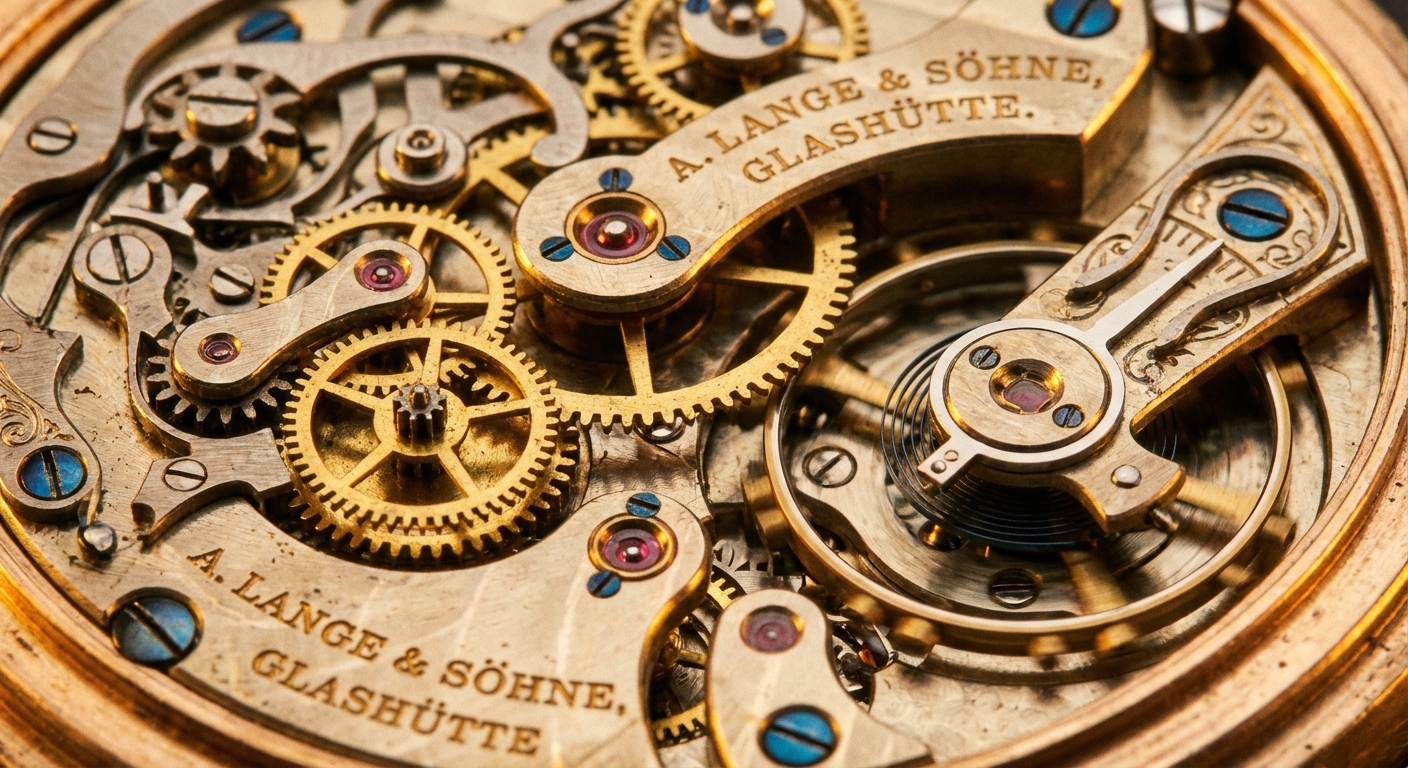
John Harrison spent over 40 years perfecting his marine chronometers, creating four increasingly refined versions designated H1 through H4. Each represented significant innovations in precision engineering. H1, completed in 1735, used two interconnected swinging balances that compensated for the ship’s motion. It contained no pendulum at all, eliminating the core vulnerability of existing designs.
Harrison’s real breakthrough came with H4, completed in 1759. Abandoning the large, complex mechanisms of his earlier designs, H4 was a relatively compact pocket watch just five inches in diameter. It incorporated temperature compensation through a bimetallic strip, a novel escapement design, and diamonds as bearings to reduce friction. On its sea trial voyage to Jamaica in 1761-62, H4 lost only 5.1 seconds over 81 days, well within the accuracy requirements for the longitude prize.

The Board of Longitude, dominated by astronomers favoring the lunar distance method, delayed Harrison’s prize money for years. Harrison eventually received most of his reward only after petitioning King George III directly. But the significance of his achievement was undeniable. By the late 18th century, marine chronometers based on Harrison’s principles had become standard navigational equipment. Ships could finally determine their position accurately. Ocean voyages became safer and more predictable. Global trade and naval power transformed.
The Time Standard War
Accurate portable timekeeping created a new problem: which time was “right”? Before chronometers and railroads, time was inherently local. When the sun was directly overhead, it was noon, wherever you were. A city just 30 miles to the east would observe noon minutes later. This discrepancy didn’t matter much when travel was slow and communication limited. It became critical with the arrival of trains.
In 1840, the Great Western Railway in Britain became one of the first to adopt a standardized “railway time” based on Greenwich Mean Time for all its timetables and station clocks. The alternative, calculating arrivals and departures in different local times, was a scheduling nightmare. Other railways followed, and by 1847, most British railways had adopted GMT.
But adoption wasn’t universal or immediate. Legal time in many cities remained local time. When it was noon in London, it was 12:11 in Bristol. Travelers and businesses had to track multiple times simultaneously. Some public clocks displayed both local and railway time. The situation was chaotic enough that, in 1858, Sanford Fleming missed a train in Ireland because the printed schedule was in the wrong time system.
The International Meridian Conference of 1884 established Greenwich as the Prime Meridian and formalized the system of 24 time zones that, with modifications, we still use today. This represented an extraordinary act of global coordination, with 25 nations agreeing to synchronize their clocks to a common reference. Time itself became standardized, a prerequisite for the increasingly interconnected world that followed.
From Seconds to Nanoseconds
The 20th century brought timekeeping accuracy unimaginable to Harrison. Quartz crystal oscillators, developed in the 1920s, used the piezoelectric properties of quartz, its ability to vibrate at a consistent frequency when electric current is applied, to keep time far more accurately than any mechanical device. The quartz watches that emerged in the 1960s were accurate to within a few seconds per month, compared to the best mechanical watches that might drift several seconds per day.

Atomic clocks, first developed in 1955, pushed accuracy into territory that has philosophical as well as practical implications. These clocks measure time based on the oscillation frequency of atoms, typically cesium-133, which oscillates 9,192,631,770 times per second. Modern cesium clocks are accurate to about one second in 100 million years. Optical atomic clocks under development are even more precise, potentially accurate to one second in 15 billion years, longer than the current age of the universe.
This extreme accuracy enables technologies we now take for granted. GPS satellites each contain atomic clocks and continuously broadcast their time and position. Your phone’s GPS receiver compares signals from multiple satellites, calculating your position based on tiny differences in signal arrival times. A timing error of just one microsecond translates to a position error of about 300 meters. Without atomic-level timekeeping accuracy, the entire GPS system would be useless.
The Bigger Picture
The quest for accurate timekeeping reveals something fundamental about technological progress: solutions to specific problems often reorganize society in ways no one anticipated. Harrison built a clock to help sailors find their longitude. His invention contributed to the rise of global trade, the expansion of colonial empires, and the standardization of time itself. The atomic clocks developed for scientific research now enable everything from financial trading (which depends on precisely timestamped transactions) to electrical grid synchronization to the autonomous vehicles currently under development.
Modern life runs on coordinated time in ways most people never consider. Your phone adjusts for time zones automatically. Your computer synchronizes its clock to atomic standards via the Network Time Protocol. The video call you take for granted requires precise timing to synchronize audio and video streams across continents. Financial markets process millions of transactions per second, each requiring accurate timestamps to establish priority and prevent fraud.
Einstein’s general relativity adds another layer to the story. Clocks at different altitudes run at measurably different speeds because gravity affects time itself. GPS satellites, orbiting about 20,200 kilometers above Earth, experience weaker gravity and thus run slightly faster than clocks on the surface, about 45 microseconds per day faster. The system must correct for this relativistic effect. Our navigation technology literally depends on applying corrections derived from the physics of spacetime.
From John Harrison’s workshop to NIST atomic clocks accurate to femtoseconds, the story of timekeeping is the story of our relationship with precision itself. Each advance in accuracy opened possibilities that seemed unrelated to clocks: safer navigation, faster trains, global communication, satellite positioning. The next generation of optical atomic clocks promises timekeeping so precise it could detect gravitational waves and map changes in Earth’s gravitational field. What that will enable, we can only guess.
Sources: NIST Time and Frequency Division, Royal Observatory Greenwich, Dava Sobel, “Longitude: The True Story of a Lone Genius Who Solved the Greatest Scientific Problem of His Time”, IEEE Transactions on Ultrasonics, Ferroelectrics, and Frequency Control