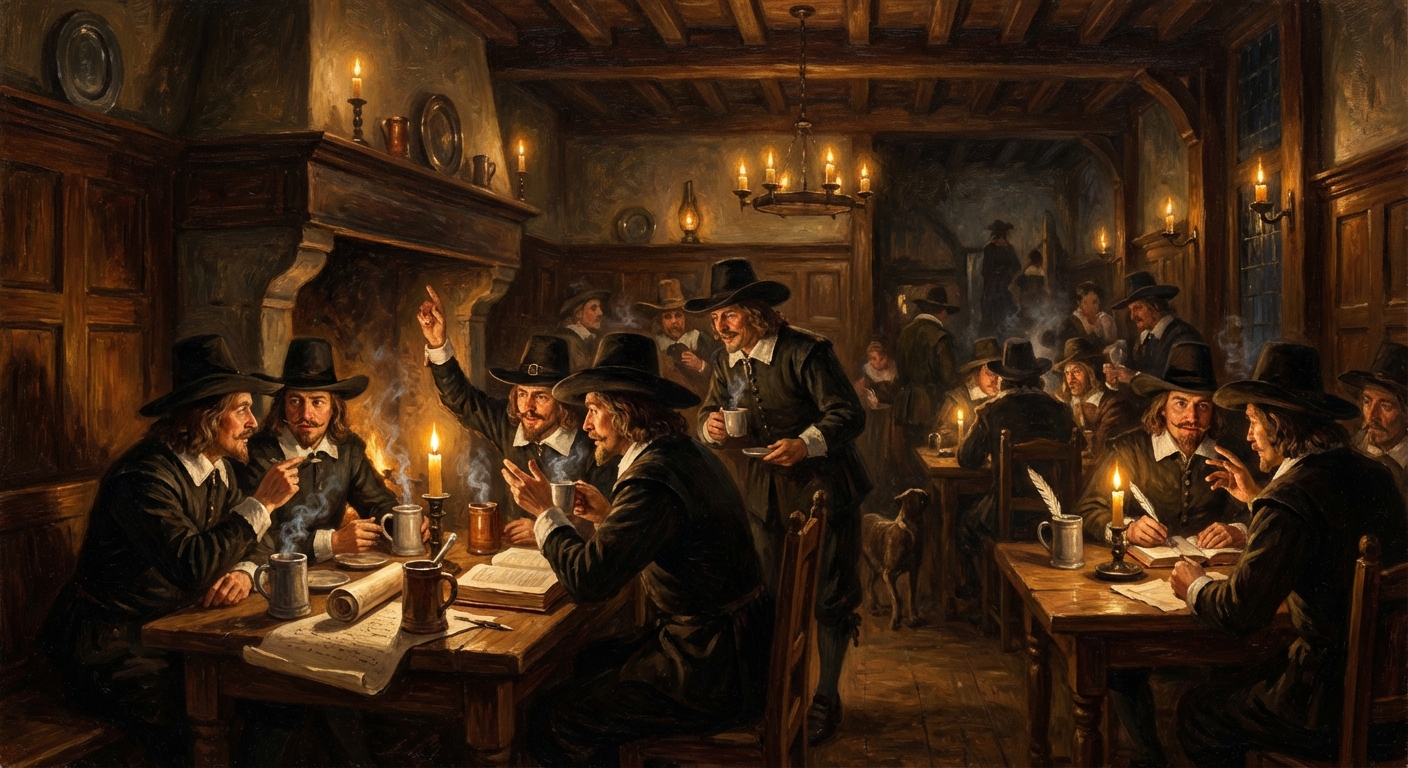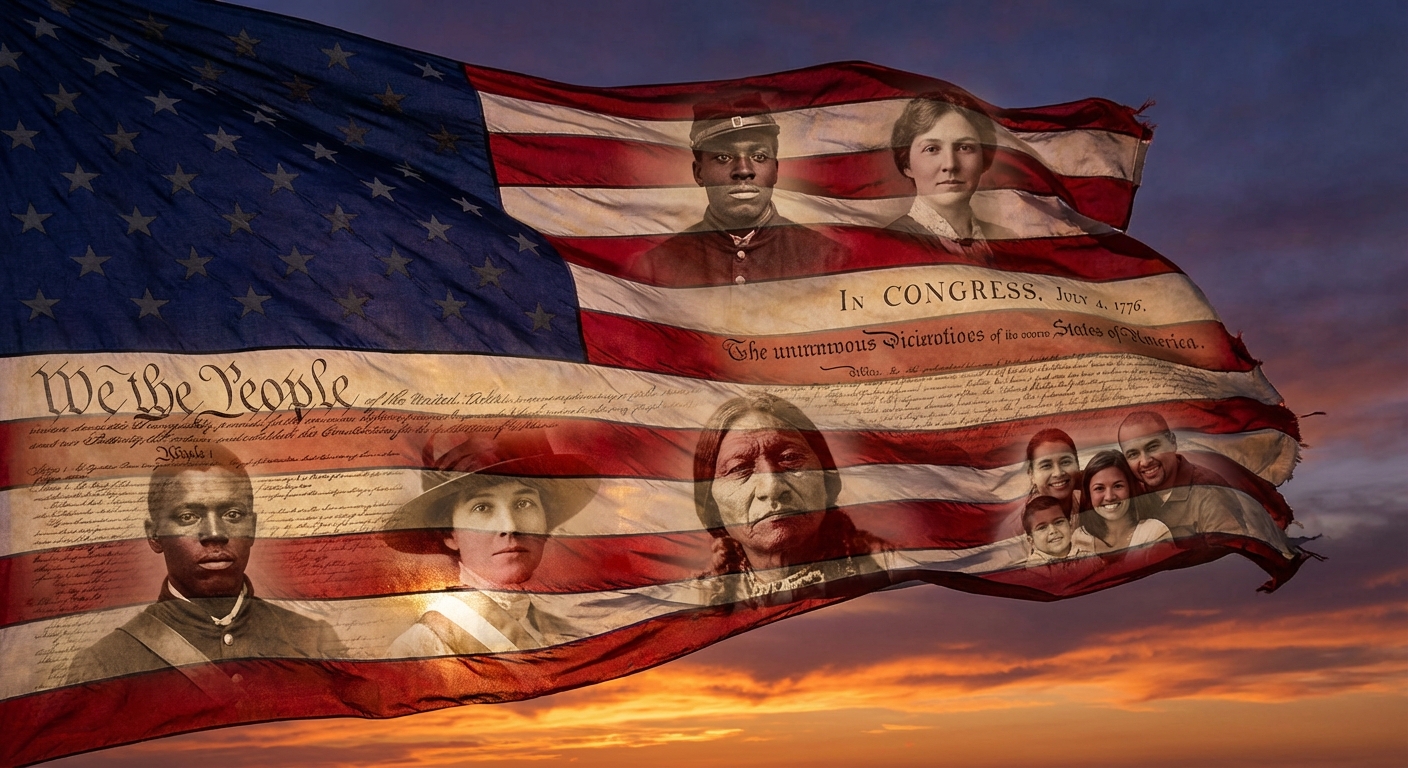
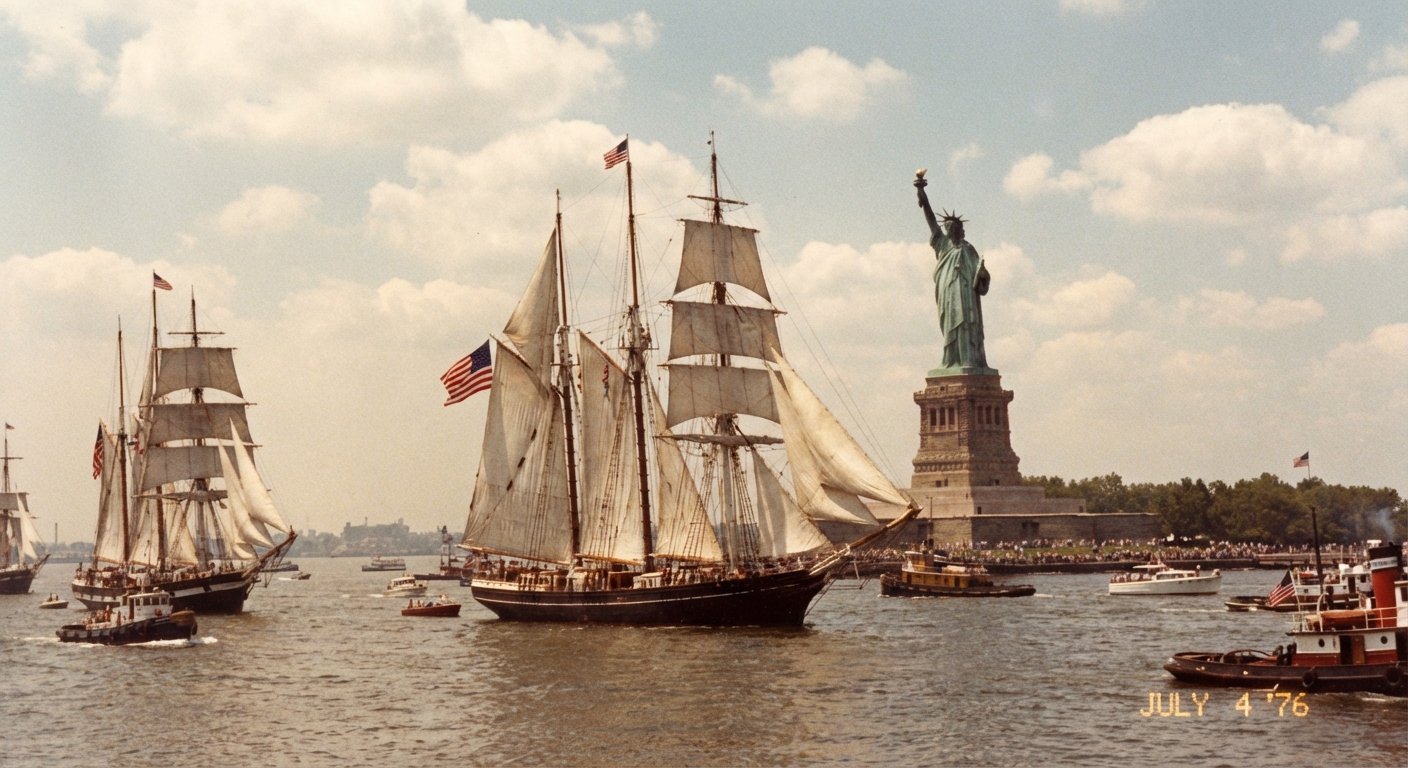
On July 4, 1976, the United States celebrated its 200th birthday with fireworks, tall ships sailing into New York Harbor, and a general mood of optimism that seems almost unimaginable today. The Bicentennial came after Watergate, Vietnam, and the turbulence of the 1960s, yet Americans mostly agreed on what they were celebrating: a story of freedom expanding outward from Philadelphia, of immigrants building a nation, of democracy triumphant despite occasional setbacks. The narrative had rough edges, but the center held.
Fifty years later, America arrives at its 250th anniversary in a very different condition. The story the nation tells itself is being contested at every level, from school board meetings to congressional hearings. Historians, activists, and ordinary citizens are asking whose story gets told, whose suffering gets acknowledged, and whether the traditional narrative of progress and freedom was ever accurate to begin with. The semi-quincentennial, a mouthful of a word that literally means “250th year,” has become not just a celebration but a referendum on American historical memory itself.
Understanding what changed between 1976 and 2026 requires examining how nations construct their foundational stories, why those stories evolve, and what happens when a society can no longer agree on a common past. The semi-quincentennial isn’t just a birthday party; it’s a mirror in which America sees itself, and the reflection is more complicated than many expected.
The Bicentennial: A Celebration of Consensus
The 1976 Bicentennial remains, in retrospect, a remarkable achievement of national unity. Coming after the most divisive decade since the Civil War, the celebration managed to paper over deep divisions with a shared reverence for founding ideals. The American Revolution Bicentennial Administration, established by Congress in 1966, coordinated thousands of local events, historical restorations, and commemorative projects. An estimated 200 million Americans participated in some Bicentennial activity.
The story told in 1976 was essentially triumphalist. America had been founded on unprecedented principles of liberty and self-governance. Yes, the founders had compromised with slavery; yes, the nation had done wrong to Native Americans; yes, women had been excluded from full citizenship. But these were flaws being corrected through the arc of progress. The Civil Rights Movement, whose victories were still fresh, seemed to prove that American democracy was capable of self-improvement. Martin Luther King Jr.’s dream was understood as continuous with Jefferson’s dream, a fulfillment rather than a repudiation.
This consensus was real but fragile. It depended on certain topics remaining at the margins. The Bicentennial materials largely ignored the genocide of indigenous peoples, the centuries of chattel slavery, and the violent suppression of labor and civil rights movements. When these subjects appeared, they were framed as problems solved rather than wounds still open. The narrative assumed a national “we” that not everyone recognized themselves in, but dissenting voices lacked the platform and political power to challenge the official story.
Academic historians had already begun the revisionist work that would eventually transform public understanding. Howard Zinn published “A People’s History of the United States” in 1980, deliberately inverting the traditional narrative to center the experiences of workers, slaves, and the colonized. But in 1976, this scholarship hadn’t yet reached mainstream consciousness. The gap between what historians knew and what the public believed remained wide.
What Changed in Fifty Years
The transformation between 1976 and 2026 resulted from multiple overlapping shifts: demographic change, new historical scholarship, technological revolution, and political realignment. Each of these factors disrupted the old consensus in different ways, and their combined effect was to make the triumphalist narrative increasingly untenable.
Demographics played a fundamental role. In 1976, non-Hispanic whites comprised about 80 percent of the U.S. population. By 2026, that figure has fallen to roughly 58 percent. Immigration from Latin America, Asia, and Africa brought millions of Americans whose ancestral stories didn’t fit neatly into the Ellis Island template. Their histories involved different empires, different migrations, and different relationships to the American project. The descendants of enslaved Africans, meanwhile, became increasingly vocal about the gap between American ideals and American practices.
Historical scholarship evolved dramatically during this period. The “new social history” that emerged in the 1960s and 1970s centered marginalized groups and challenged earlier narratives of inevitable progress. This approach, refined over decades, produced research that was impossible to ignore: detailed documentation of colonial violence, slavery’s economic centrality to American development, and the systematic dispossession of indigenous peoples. The 1619 Project, published by the New York Times in 2019, brought this scholarship to a mass audience, sparking intense controversy but also widespread engagement with alternative framings of American history.
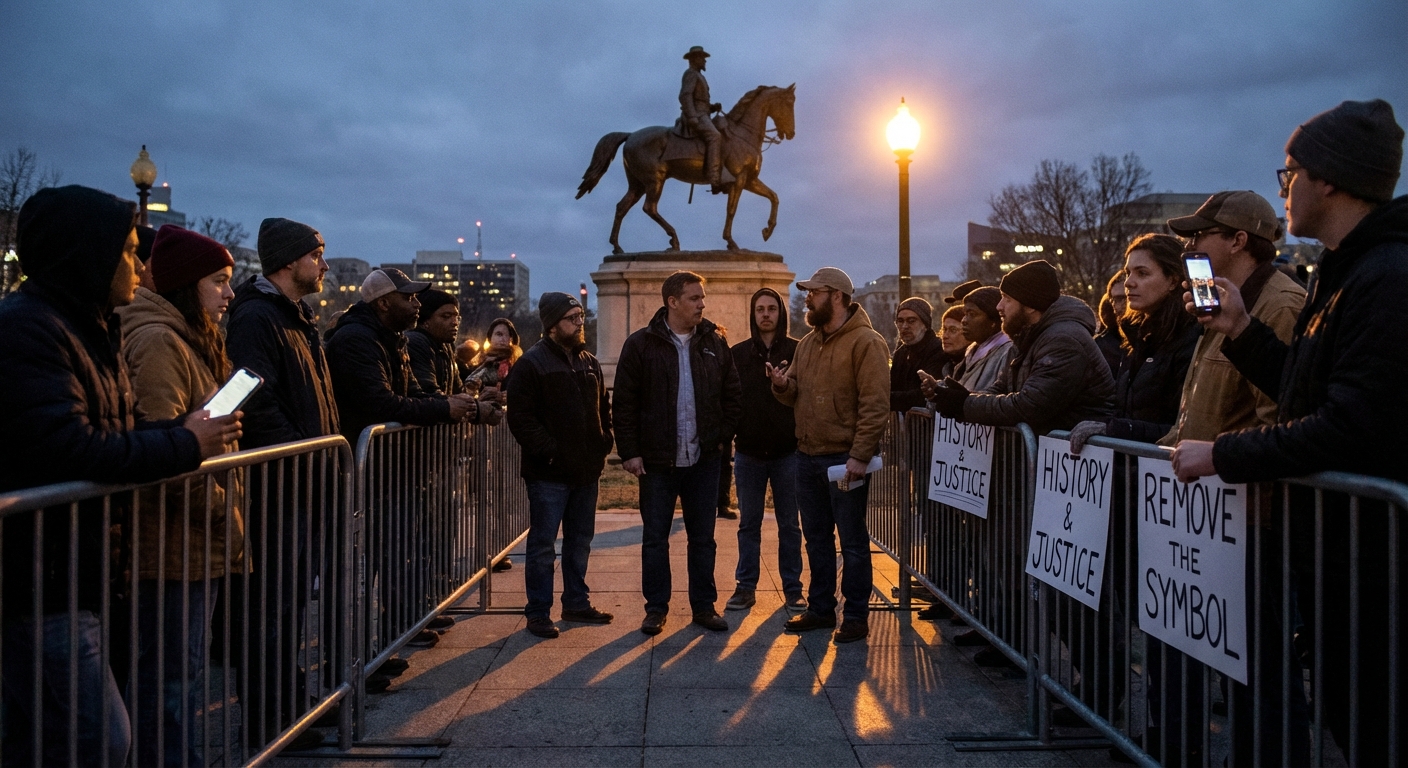
Technology accelerated these changes by democratizing both access to information and the power to shape narratives. Social media allowed perspectives that traditional gatekeepers might have filtered to reach wide audiences. Viral videos of police violence made abstract discussions of systemic racism viscerally concrete. Online archives made primary sources available to anyone with an internet connection, enabling amateur historians to discover and share findings that complicated official accounts. The same platforms that spread misinformation also spread genuine historical knowledge that had previously been confined to academic journals.
Political polarization transformed historical debates into identity conflicts. As the parties sorted along cultural lines, views on American history became markers of tribal affiliation. Teaching about slavery’s centrality became “critical race theory”; acknowledging Native genocide became “anti-American.” Positions that historians across the political spectrum would have accepted as factual became flashpoints for culture war. History education became a battleground because historical narratives shape present-day politics, determining which grievances are legitimate and which policies are conceivable.
The Semi-Quincentennial Takes Shape
The official planning for America 250 began in 2016, when Congress established the U.S. Semiquincentennial Commission to coordinate federal efforts. From the start, organizers faced challenges that their Bicentennial predecessors hadn’t encountered. The commission’s original vision emphasized unity and celebration, but the political environment made consensus impossible. By the time planning accelerated in the early 2020s, any historical framing would inevitably be seen as taking sides.
The commission’s approach has evolved toward what it calls “inclusive commemoration,” acknowledging multiple perspectives and experiences rather than imposing a single narrative. This framework recognizes that different Americans have different relationships to the founding era: some are descendants of founders, some of enslaved people, some of indigenous nations, some of recent immigrants. The goal is to create spaces where these different stories can coexist rather than compete.
Not everyone is satisfied with this approach. Critics from the right argue that equivocation about American exceptionalism undermines national cohesion and disrespects the genuine achievements of the founding era. The United States was, after all, a radical experiment in self-governance that inspired democratic movements worldwide. Focusing on failures, they contend, produces not useful self-criticism but corrosive self-hatred. Critics from the left argue that “inclusive commemoration” is a euphemism for avoiding uncomfortable truths, allowing traditional narratives to persist alongside rather than being replaced by more accurate accounts.
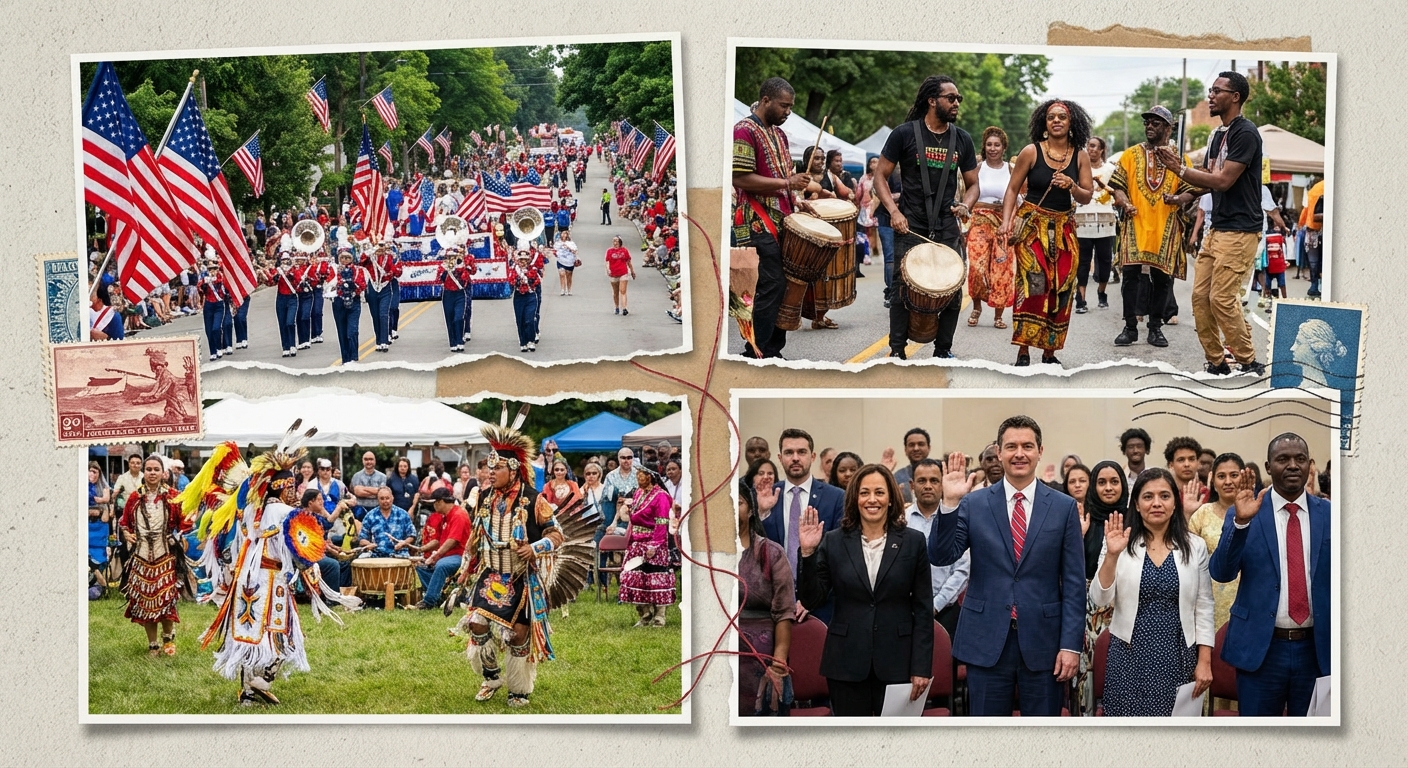
The grassroots response has been more varied than the official program. Some communities have embraced the anniversary as an opportunity for historical reckoning, organizing events that center previously marginalized stories. Others have doubled down on traditional celebrations, treating the anniversary as an occasion to affirm patriotic narratives against perceived threats. Many Americans seem fatigued by the constant controversy and would prefer simply to enjoy fireworks and cookouts without being asked to choose sides in culture war.
What Commemoration Reveals
The way a nation commemorates its past reveals a great deal about its present condition. The Bicentennial’s confident triumphalism reflected a society that, despite recent traumas, still believed in a shared story of progress. The semi-quincentennial’s contested terrain reflects a society struggling to find common ground on basic questions of historical fact and moral judgment. Just as the sunk cost fallacy traps individuals in commitments they should abandon, societies can become trapped in historical narratives that no longer serve them but feel impossible to discard.
This isn’t necessarily cause for despair. The conflicts over America 250 indicate that people care deeply about history, that they understand how past narratives shape present possibilities. The intensity of the debate suggests engagement, not indifference. A society arguing about its past is at least grappling with questions that matter, unlike one that simply ignores history or accepts whatever story authorities provide.
Moreover, the historical scholarship that has challenged traditional narratives represents genuine intellectual progress. We know more about the American past than we did in 1976, and much of what we’ve learned is uncomfortable because reality was uncomfortable. Acknowledging that discomfort isn’t weakness; it’s a precondition for addressing problems whose roots extend deep into history. A doctor who ignores symptoms does patients no favors; a nation that ignores its historical pathologies cannot heal them.
Other countries have navigated similar transitions. Germany’s relationship to its Nazi past evolved over decades, from silence and denial to increasingly frank acknowledgment. South Africa’s Truth and Reconciliation Commission attempted to create shared historical understanding as a foundation for post-apartheid coexistence. These processes remain incomplete and contested, but they suggest that societies can develop more complex historical narratives without disintegrating.
The Bigger Picture
America at 250 isn’t unique in facing these challenges. Across the democratic world, nations are grappling with legacies of colonialism, slavery, and exclusion that their traditional narratives minimized or ignored. The same technologies that enable historical research and dissemination also enable backlash and disinformation. The same demographic changes that diversify national stories also provoke nativist reaction. What happens in America reflects and influences parallel struggles elsewhere.
The fundamental question isn’t whether America will develop a new consensus about its past. The old consensus, maintained by excluding dissenting voices and uncomfortable facts, isn’t coming back. Too many people know too much, and too many have platforms to share what they know. The question is whether Americans can develop a relationship to their history that is honest about failures without abandoning pride in achievements, that acknowledges multiple perspectives without dissolving into incoherence, that learns from the past without being paralyzed by it.
The deep ocean remains largely unexplored, but we know enough to know how much we don’t know. American history is similar: decades of new scholarship have revealed how much the traditional narrative omitted, but the work of integration and synthesis continues. Future generations will look back on our current debates the way we look back on the Bicentennial’s confident certainties, seeing both the genuine insights and the blind spots we couldn’t perceive.
The semi-quincentennial arrives at a moment when America is, in many ways, remaking itself. The country of 2076, should it reach its tercentennial, will be different again, with its own historical understanding shaped by experiences we can’t predict. What we can do now is engage seriously with the questions the anniversary raises: What stories do we tell? Whose experiences count? What do we owe to those who came before and those who will come after? These aren’t questions with easy answers, but they’re worth asking. A nation’s birthday should be more than a party. It should be an occasion for reflection, gratitude, and recommitment to ideals that remain works in progress.
On July 4, 2026, fireworks will explode over cities and towns across America. Some will see them as celebrating unambiguous greatness; others as marking a more complicated legacy. Most, probably, will simply enjoy the spectacle without thinking too deeply about historical narratives. All of these responses are authentically American. The experiment continues.